





ScamsNOW!
The SCARS Institute Magazine about Scam Victims-Survivors, Scams, Fraud & Cybercrime




Attachment Trauma and Its Effects in Scam Victimization
Attachment Trauma and Scam Victimization – the Significant Consequences to Scam Victims
Primary Category: Psychology of Scams & Scam Victim Recovery
Author:
• Tim McGuinness, Ph.D., DFin, MCPO, MAnth – Anthropologist, Scientist, Polymath, Director of the Society of Citizens Against Relationship Scams Inc.
Author Biographies Below
About This Article
Attachment trauma represents a developmental disruption that alters how individuals perceive safety, trust, self-worth, and relationships across the lifespan. When this early injury intersects with the betrayal inherent in relationship scams, the psychological impact intensifies, reinforcing shame, emotional dysregulation, mistrust, and impaired self-regulation. Internal working models shaped by early caregiving failures make some individuals more vulnerable to manipulation, grooming, and prolonged involvement in scams, while also complicating recovery afterward. The aftermath often includes profound grief, identity disruption, dissociation, and difficulty engaging in support or treatment. Recovery requires recognizing these patterns as trauma-driven responses rather than personal failures and addressing both attachment and betrayal trauma through trauma-informed therapy, structured support, and gradual rebuilding of safety, boundaries, and self-trust.
Note: This article is intended for informational purposes and does not replace professional medical advice. If you are experiencing distress, please consult a qualified mental health professional.

Attachment Trauma and Scam Victimization – the Significant Consequences to Scam Victims
Attachment trauma is a profound developmental injury that occurs when the foundational bond between a child and their primary caregiver is disrupted, inconsistent, or unsafe.
It is not a single event but a chronic relational failure that imprints deep, lasting wounds on the psyche. Unlike a physical wound, this trauma reshapes the very architecture of the developing brain, forging a blueprint for future relationships that is colored by fear, mistrust, and a pervasive sense of unworthiness.
Its effects are not confined to childhood; they echo throughout an individual’s entire life, manifesting as a persistent inability to form secure connections, a chronic state of emotional dysregulation, and a deeply ingrained belief that the world is an inherently unsafe place and that they, themselves, are fundamentally flawed.
It is also easily manipulated by scammers to achieve their goals.
1. Attachment Trauma in Psychological Terms
In psychological terms, attachment trauma is a specific form of complex developmental trauma resulting from a significant and persistent disruption in the bond between a child and their primary caregiver. This disruption is not a single event but a chronic relational failure, where the caregiver is simultaneously a source of comfort and a source of fear, neglect, or unreliability. It is a failure of the co-regulatory function that is essential for healthy psychological development, leading to profound and enduring deficits in an individual’s ability to form a coherent sense of self, regulate emotion, and establish secure interpersonal relationships.
Core Psychological Constructs:
Disrupted Internal Working Models (IWMs)
The foundational concept in attachment theory, developed by John Bowlby, is the Internal Working Model. This is a set of unconscious mental representations and expectations that a child constructs about themselves, others, and the world based on their interactions with caregivers.
-
- Model of Self: In a secure attachment, the child develops a model of self as “worthy of love and care.” In attachment trauma, this model is corrupted to “I am unworthy, unlovable, fundamentally flawed, or bad.” The child internalizes the caregiver’s failure as their own deficit.
- Model of Others: A secure model holds that “others are generally reliable, available, and supportive.” The traumatized model becomes “others are dangerous, untrustworthy, rejecting, and will inevitably abandon or harm me.”
- Model of the World: This extends to a worldview that is perceived as fundamentally unsafe, chaotic, and hostile. These IWMs operate automatically in adulthood, dictating emotional responses, behavioral patterns, and relationship choices without conscious awareness.
A Failure of Co-Regulation and the Development of Affective Dysregulation
A primary function of a secure caregiver is to serve as an external regulator for the child’s immature nervous system. When an infant is distressed, the caregiver’s soothing presence (through touch, tone of voice, and facial expression) helps down-regulate the child’s stress response. Through this repeated process of co-regulation, the child slowly internalizes the caregiver’s regulatory function and develops the capacity for self-regulation. In attachment trauma, this process is absent or perverse. The caregiver is the source of the distress, or they are emotionally unavailable and unable to soothe. The result is a failure to develop a robust internal regulatory system. This leads to chronic affective (emotional) dysregulation, where the individual is easily overwhelmed by emotions, cannot soothe themselves, and remains in a state of persistent emotional chaos.
Dissociation as a Defensive Structure
When a caregiver is a source of terror, a child cannot physically escape. The only viable escape is psychological. Dissociation is a defense mechanism where the psyche compartmentalizes overwhelming experience, detaching thoughts, feelings, memories, and sense of self from the conscious mind. In attachment trauma, this is not a one-time event but a conditioned, adaptive response to chronic stress. It becomes the primary, albeit pathological, coping mechanism. This results in a fragmented sense of self, where parts of the experience (and parts of the self) are walled off. In adulthood, this manifests as numbness, feeling disconnected from one’s body or emotions, memory gaps, and a sense of observing oneself from a distance.
The Development of a Disorganized Attachment Style
According to the work of Mary Main and Mary Solomon, attachment trauma most directly leads to a disorganized (or Type D – see below) attachment style. This style is characterized by a lack of a coherent strategy for dealing with stress. The child is caught in an “unsolvable paradox”: the figure they are biologically programmed to turn to for safety is the source of their fear. This results in contradictory, bizarre, or apprehensive behaviors, such as freezing, approaching the caregiver while looking away, or stereotyped rocking movements. In adulthood, this disorganization manifests as a chaotic approach to relationships, a simultaneous and desperate craving for connection and an intense, paralyzing fear of it.
Impaired Mentalization and Reflective Functioning
Mentalization, or reflective functioning, is the psychological capacity to understand one’s own and others’ behavior in terms of underlying mental states, thoughts, feelings, desires, and intentions. This skill is learned through being “mentalized” by a caregiver who accurately reflects the child’s internal experience (“I see you are sad because your toy broke”). In the context of trauma, the caregiver is either misattuned or actively malevolent, so the child never learns to accurately identify or understand their own internal states or those of others. This leads to profound difficulties in interpersonal relationships, an inability to make sense of one’s own chaotic emotions, and a tendency to misinterpret the intentions of others, often projecting negative intent.
The Creation of a Traumatophiliac Identity
Paradoxically, the trauma becomes a core part of the individual’s identity. The chaos, drama, and intensity of dysfunctional relationships feel “normal” and familiar, while safety and security can feel boring, alien, or even threatening. This can lead to a subconscious attraction to relationships and situations that replicate the original trauma, in an unconscious attempt to master the original failure. This is not a conscious choice but a powerful psychological drive rooted in the neurobiology of the trauma-bonded brain.
Attachment trauma, in psychological terms, is a complex developmental injury that sabotages the formation of the core self. It is the failure to internalize safety, which results in a psyche structured around fear, shame, and dysregulation, governed by faulty internal working models and defended by primitive mechanisms like dissociation, leading to a lifetime of relational and emotional suffering.
2. Attachment Styles
According to the foundational work of Mary Main and Mary Solomon, who expanded on John Bowlby’s and Mary Ainsworth’s initial theories, there are four defined attachment styles. These were identified through the Adult Attachment Interview (AAI), a sophisticated tool designed to assess an adult’s state of mind regarding attachment. The styles are not just about behaviors but about the underlying internal narrative and coherence with which a person discusses their childhood relationships.
The four attachment styles are:
- Secure (or Autonomous) Individuals with a secure attachment style have a coherent, balanced, and integrated view of their past relationships. They can describe both positive and negative childhood experiences with objectivity and insight. They value attachment and recognize its importance in their development. When discussing difficult memories, they do so without becoming overwhelmed or dismissing the pain. Their narrative is collaborative and makes logical sense; they have come to terms with their history. This coherence allows them to approach adult relationships with a healthy balance of intimacy and autonomy, feeling worthy of love and trusting that others are generally available and supportive.
- Dismissing (or Avoidant) The dismissing style is characterized by an idealized, often devalued, and incoherent narrative of their childhood. When asked about their relationships with caregivers, these individuals tend to insist they cannot remember or that their parents were “perfect” and their childhood was uneventful. They often downplay the impact of any negative experiences, stating things like, “I was fine on my own.” Their narrative is brief, generalized, and lacks the emotional detail and evidence to support their positive claims. This psychological defense serves to keep them at a distance from their own attachment needs. In adult relationships, this manifests as emotional distance, a high need for independence, and a tendency to suppress or devalue the importance of close connections.
- Preoccupied (or Anxious-Ambivalent) The preoccupied style is marked by a narrative that is incoherent due to its entanglement in past anxiety and anger. These individuals are often still very much “caught up” in their childhood relationships. Their stories are long, rambling, and filled with passivity, helplessness, and unresolved anger toward their caregivers. They may blame their parents for their current struggles but simultaneously express a desperate, childlike longing for their love and approval. Their lack of coherence stems from being emotionally overwhelmed by the memories. In their adult lives, this translates to a hypervigilant anxiety about relationships, a fear of abandonment, and a tendency to be clingy, demanding, and overly dependent on their partners for validation and self-worth.
- Unresolved (or Disorganized) The unresolved style is the most directly linked to trauma, abuse, or loss. It is defined by a fundamental breakdown in the strategy for discussing attachment. While the person may show moments of coherence from one of the other three styles, their narrative is derailed when discussing trauma. They display lapses in reason or discourse, such as believing a deceased person is still physically present, describing a traumatic event with a detached, flat affect, or becoming so frightened that they cannot continue the interview. This indicates that the trauma has not been integrated and continues to intrude on their consciousness. In relationships, this leads to a “fear without a solution”, a simultaneous, desperate craving for closeness and a paralyzing fear of it, resulting in chaotic, unpredictable, and often contradictory behaviors. This is the adult counterpart to the disorganized attachment style seen in infants.
3. Neurobiology of Attachment Trauma
Attachment trauma stems from disruptions in the very early bond between a child and their primary caregiver. When this bond is inconsistent, unsafe, or abusive, it doesn’t just cause psychological wounds; it imprints profound and lasting changes onto the very neurobiology of the developing brain. The brain, especially during infancy, is exquisitely plastic, wiring itself based on its environment. An environment of relational terror forces the brain to adapt for survival in a world it perceives as fundamentally unsafe.
The primary systems impacted are the neurobiological circuits responsible for stress regulation, emotional processing, and social connection.
The HPA Axis and the Stress Response System
The body’s central stress response system is the Hypothalamic-Pituitary-Adrenal (HPA) axis. In a secure attachment, a caregiver’s co-regulation helps the child’s HPA axis develop a healthy set point, allowing it to activate in response to a threat and then return to baseline. In the context of attachment trauma, this system is chronically dysregulated. The caregiver, who should be the source of comfort, is the source of the threat. This leads to:
- Hyper-reactivity: The HPA axis becomes permanently sensitized. It perceives threat everywhere and floods the body with stress hormones like cortisol and adrenaline, even in non-threatening situations. This results in a state of chronic hypervigilance, anxiety, and an exaggerated startle response.
- Hypo-reactivity: In some cases, particularly with prolonged trauma, the system can become blunted or “shut down.” The child learns that calling for help is useless, so the body conserves energy by numbing out. This can manifest as dissociation, emotional flatness, and a feeling of being disconnected from one’s own body and emotions.
The Limbic System: Fear, Emotion, and Memory
The limbic system, particularly the amygdala and hippocampus, is profoundly affected.
- The Amygdala: This is the brain’s smoke detector for emotional and physical threat. In individuals with attachment trauma, the amygdala becomes overactive and enlarged. It is primed to detect anger, fear, or rejection in others’ facial expressions and body language, often misinterpreting neutral cues as hostile.
- The Hippocampus: This structure is critical for contextual memory and regulating the HPA axis. Chronic exposure to cortisol can be toxic to the hippocampus, leading to a reduction in its volume. This impairs the ability to place memories in a proper time and context, which is why trauma can feel like it is happening “now” rather than in the past. It also contributes to the fragmentation of memory and difficulty with autobiographical recall.
The Prefrontal Cortex (PFC) – The Executive Function
The PFC is the brain’s rational, executive center, responsible for emotional regulation, impulse control, decision-making, and social cognition. It has strong inhibitory connections to the amygdala. In a healthy brain, the PFC can tell the amygdala to stand down when a perceived threat is deemed non-threatening. In the traumatized brain, this top-down control is weakened. The constant amygdala activation effectively hijacks the PFC, leading to:
- Emotional Dysregulation: An inability to manage intense emotions.
- Poor Impulse Control: Reacting impulsively without thinking through consequences.
- Difficulty with Relationships: Challenges in understanding social cues and maintaining stable relationships.
Neurochemical and Connectivity Imbalances
Attachment trauma also disrupts the brain’s chemical messengers and structural wiring.
- Opioid System: Secure attachment releases endogenous opioids (like endorphins), creating feelings of safety and contentment. Trauma disrupts this system, leading to a chronic sense of unease and a craving for external sources of comfort or numbing.
- Dopamine: The reward system is wired around the caregiver. When that caregiver is a source of pain, the brain’s reward circuitry becomes disordered, potentially leading to addictions or seeking high-risk behaviors to feel anything at all.
- Corpus Callosum: This bundle of nerve fibers connects the brain’s left and right hemispheres. Trauma can impair its integration, leading to a disconnect between logical thought (left hemisphere) and emotional and somatic experience (right hemisphere).
Attachment trauma creates a brain that is structurally and functionally optimized for survival in a dangerous world. The nervous system is stuck in a state of high alert, the threat detector is over-calibrated, and the rational brain is chronically offline. Healing from attachment trauma, therefore, is not just a psychological process but a neurobiological one, involving therapies like EMDR, somatic experiencing, and trauma-focused CBT that aim to help regulate the nervous system, integrate the hemispheres, and slowly rewire the brain toward safety, connection, and trust.
4. Attachment Trauma in Adulthood
Attachment trauma, forged in the crucible of early developmental relationships, doesn’t remain a childhood memory; it becomes the foundational blueprint for how an adult perceives themselves, others, and the very nature of intimacy. The neurobiological changes create a persistent internal state of dysregulation that manifests in nearly every facet of adult life, often in ways that feel confusing and uncontrollable to the individual.
Dysregulated Relationships and Intimacy Issues
This is the most direct and painful manifestation. The internal working model of relationships is one of danger and unreliability. Adults with attachment trauma often exhibit a push-pull dynamic in their partnerships. They may desperately crave love and connection but simultaneously fear it, believing intimacy will inevitably lead to abandonment, engulfment, or betrayal. This can lead to:
- Avoidance: They may avoid close relationships altogether, preferring the safety of solitude to the perceived danger of connection.
- Anxious-Preoccupation: They may become clingy, demanding constant reassurance, and testing their partner’s love in ways that inadvertently push them away.
- Disorganized Attachment: A chaotic mix of both, where they desire closeness but are terrified of it, leading to confusing and self-sabotaging behavior.
Chronic Emotional Dysregulation
The hyperactive amygdala and weakened prefrontal cortex create a life lived on an emotional rollercoaster. Individuals may experience emotions with overwhelming intensity and have little ability to soothe themselves. This can manifest as explosive anger, profound sadness that feels bottomless, or paralyzing anxiety. Small slights can feel like major betrayals, and they may struggle to “bounce back” from emotional upsets, remaining in a state of distress for hours or days.
Pervasive Shame and Negative Self-Image
A child who is neglected or abused inevitably concludes, “I am not worthy of love.” This core belief of being fundamentally flawed, unlovable, or “bad” becomes a pervasive sense of shame in adulthood. They may be their own harshest critic, engaging in relentless negative self-talk. This shame drives them to hide their perceived flaws, making authentic connections impossible because they believe if anyone saw the “real” them, they would be rejected.
Hypervigilance and Mistrust
The nervous system is wired for threat detection. As adults, this translates into a state of constant hypervigilance. They are always scanning their environment and the people in it for signs of danger, disappointment, or deceit. They may misinterpret neutral facial expressions as anger or dismissal. This makes it impossible to feel safe and relaxed, even in loving relationships, and leads to a profound, often unshakable, mistrust of others’ intentions.
Difficulty with Boundaries
Because their personal boundaries were repeatedly violated in childhood, they often have no healthy model for themselves. This can lead to two extremes:
- Enmeshment: They have porous boundaries and cannot differentiate where they end and others begin, taking on others’ emotions and responsibilities as their own.
- Rigid Walls: They build impenetrable walls to keep everyone out, refusing to ask for help or let anyone get close.
Somatic Symptoms and Dissociation
The unprocessed trauma lives in the body. Many adults with attachment trauma suffer from chronic, unexplained physical ailments like migraines, digestive issues (IBS), fibromyalgia, or chronic pain. Dissociation, the childhood survival mechanism of “checking out,” can persist into adulthood. This can manifest as feeling spaced out, numb, disconnected from one’s body, or having gaps in memory, especially during times of stress.
Self-Sabotage and Addictive Tendencies
The drive to soothe the unsoothable pain of their dysregulated nervous system can lead to compulsive behaviors. This includes substance abuse, gambling, overeating, or other process addictions. They may also unconsciously sabotage their own success in careers, relationships, or personal goals, because their internal script dictates that they do not deserve happiness or stability.
Attachment trauma in adulthood is a lived experience of being out of sync with oneself and the world. It is the constant, exhausting effort to manage a nervous system that is always on high alert, while navigating relationships through a lens of fear and shame, all the while believing that the fault lies within.
5. Internal Working Models (IWMs)
Internal Working Models (IWMs) are one of the most fundamental and influential concepts in developmental psychology, originating from John Bowlby’s Attachment Theory. In essence, they are the subconscious, mental blueprints we construct in infancy and early childhood that guide our expectations, perceptions, and behaviors in all our subsequent relationships throughout our lives.
What Are Internal Working Models (IWMs)?
Think of an IWM as a set of deeply ingrained, operating rules or a “database” stored in your brain’s implicit memory system. It is not a set of conscious thoughts or memories you can easily recall, but rather a feeling-based, automatic framework that answers three core questions:
- Are others generally reliable and available? (Model of Others)
- Am I worthy of love, care, and support? (Model of Self)
- How does the world work? Is it a safe or dangerous place?
These models are formed through the thousands of micro-interactions a child has with their primary caregiver(s). They are built not from what the parent says, but from what they do, their consistency, responsiveness, and emotional attunement.
How Do They Work?
The formation and function of Internal Working Models is a dynamic, developmental process.
The Formation Process: Co-Regulation and Internalization
In infancy, a child’s nervous system is immature and incapable of self-regulation. When a baby cries from distress (hunger, fear, discomfort), they are entirely dependent on a caregiver to soothe them. This process is called co-regulation.
-
- Secure Attachment: If the caregiver is consistently responsive and soothing, the baby’s nervous system calms down. Through this repeated, positive experience, the baby internalizes the caregiver’s soothing function. They learn, “When I am in distress, help comes. I am worthy of being helped.” This forms a positive Model of Self (“I am worthy”) and a positive Model of Others (“Others are reliable”).
- Insecure Attachment: If the caregiver is inconsistent, rejecting, or frightening, the baby’s attempts at co-regulation fail. The baby learns, “When I am in distress, no one comes, or the person who comes makes it worse.” This forms a negative Model of Self (“I am not worthy,” “Something is wrong with me”) and a negative Model of Others (“Others are unreliable,” “Others are dangerous”).
This internalization process is the core of how IWMs are built. The child essentially absorbs the relational dynamic and makes it an internal part of their psychological structure.
The Function: Information Filtering and Behavioral Guidance
Once formed, IWMs operate automatically as a powerful filter and a behavioral guide.
As a Filter:
An IWM filters all new social information. It biases our perception to confirm what we already believe to be true.
-
-
- Someone with a secure IWM will notice a partner’s small acts of kindness, interpreting them as evidence of care.
- Someone with an insecure IWM (e.g., believing others are untrustworthy) will be hyper-vigilant for signs of rejection, potentially misinterpreting a partner’s preoccupation as a sign of abandonment. The IWM literally changes what they see.
-
As a Behavioral Guide:
IWMs dictate our automatic, knee-jerk reactions in relationships, especially under stress. They provide the “script” for how to act to get our needs met.
-
-
- A person with a secure IWM might feel comfortable expressing their needs directly, believing they will be heard.
- A person with an anxious IWM might resort to protesting or “clinging” behaviors, as their script says, “I must fight to get attention.”
- A person with an avoidant IWM might shut down and withdraw, as their script says, “It’s safer not to need anyone at all.”
-
The Self-Fulfilling Prophecy
This is the most powerful aspect of IWMs. Because they guide our behavior and shape our perception, they often create the very outcome we fear. A person who believes they are unlovable (negative Model of Self) may act in ways that are needy or insecure, which can push others away, “proving” their original belief that they are, in fact, unlovable. The IWM becomes a closed loop, continuously reinforcing itself.
Stability and Change
IWMs are designed to be stable. This is an evolutionary feature; having a consistent model of the world helps a child navigate it more efficiently. However, this stability also means they are resistant to change. A negative IWM formed in childhood can persist into adulthood, governing relationships with partners, friends, and even one’s own children. The good news is that through therapeutic experiences like a strong, corrective therapeutic alliance or a consistently loving and secure adult relationship, it is possible to create a “earned secure attachment.” These new, repeated positive experiences can slowly update and revise the old, maladaptive Internal Working Models, creating new pathways for connection and well-being.
6. Attachment Trauma Contributes to Initial Scam Vulnerability
Attachment trauma is not just a contributing factor; for many individuals, it is a primary and foundational element of the initial vulnerability that makes them a prime target for relationship scams. The psychological blueprint created by attachment trauma aligns almost perfectly with the manipulative playbook of a romance scammer. It creates a perfect storm of unmet needs, distorted perceptions, and ingrained behaviors that a scammer can expertly exploit.
Here is a breakdown of how this connection works:
A Profound Hunger for the Idealized Attachment
At its core, an individual with attachment trauma carries a deep, unmet, and often unconscious yearning for the secure, loving connection they never received. This creates an intense emotional void. The romance scammer doesn’t just offer a relationship; they offer a fantasy. They present as the perfectly attuned, endlessly available, and unconditionally loving figure that the trauma survivor’s inner child has been craving their entire life. This “love bombing” phase is not just pleasant; it is profoundly therapeutic for the wounded attachment system. It feels like a corrective emotional experience, a chance to finally get the love and validation they have always deserved. This powerful hope makes them exceptionally receptive and willing to overlook red flags.
A Compromised “Gut Instinct” and Threat Detection System
A securely attached individual has a well-calibrated internal alarm system. If something feels “off” in a new relationship, they trust that feeling, investigate it, and are more likely to disengage. Attachment trauma, however, scrambles this system. The individual’s Internal Working Model of “others are dangerous” is paradoxically paired with a desperate hope that “this one might be different.” This cognitive dissonance makes them prone to dismissing their own intuition. When their gut screams that the scammer’s story is too good to be true, their conscious mind overrides it, rationalizing, “You’re just being paranoid because of your past” or “You don’t want to sabotage this chance at happiness.” The scammer exploits this by creating a reality where the victim feels they must choose between their “damaged” past and a hopeful future.
Negative Self-Image as a Tool for Manipulation
The internalized shame from attachment trauma (“I am unworthy,” “I am unlovable”) is a vulnerability a scammer weaponizes with masterful precision. The scammer’s initial intense affection serves to temporarily silence this inner critic. However, when the scammer begins to introduce subtle tests of loyalty, requests for money, or small criticisms, the victim’s pre-existing shame is activated. They think, “If I don’t help them, I am proving I am a selfish, unworthy person.” The scammer frames the financial request as a test of love and trust, and the victim, desperate to prove their worth and not be “abandoned” again, is highly motivated to comply. They pay not just to help the scammer, but to silence their own inner critic.
Familiarity with Dysregulation and Chaos
For someone whose developmental environment was chaotic, unpredictable, or even frightening, a degree of emotional drama can feel strangely “normal” or even stimulating. A secure, calm relationship might feel boring or flat. The scammer’s manufactured crises, “I’m in an emergency,” “My business deal has gone wrong,” “My rival is trying to ruin me”, create the exact kind of high-stakes emotional drama that the traumatized nervous system is wired for. The victim gets to step into the role of the savior, the only one who can help, which feels familiar and purposeful, even as it drains them.
Fear of Abandonment Overrides Logic
The central fear of those with attachment trauma is being left alone. Scammers are masters of the “threat of abandonment.” When a victim expresses doubt or hesitation, the scammer’s immediate response is often emotional blackmail: “If you really loved me, you would trust me,” or “I can’t believe you would doubt me after everything,” followed by the threat of withdrawal or ending the relationship. For the trauma survivor, this triggers their deepest, most primal fear. The terror of being abandoned by this seemingly perfect source of love is so overwhelming that they will do almost anything to prevent it, including suspending logic and sending money.
The attachment-traumatized individual doesn’t just fall for a scam; they fall for a meticulously crafted illusion that directly targets their deepest wounds and unmet developmental needs. The scammer provides a temporary, high-intensity simulation of a secure attachment, which the victim’s psyche clings to with desperate hope, making them blind to the manipulation and highly resistant to any evidence that suggests the relationship is not real.
7. Exploited by Scammers During the Grooming Phase
The grooming phase of a relationship scam is a masterclass in psychological manipulation, and for individuals with a history of attachment trauma, it is devastatingly effective. Scammers, whether through innate intuition or learned practice, operate as exploitative attachment figures, mirroring the very dynamics that created the original trauma. They don’t just build a relationship; they systematically dismantle the victim’s defenses by targeting the specific vulnerabilities of their wounded attachment system.
The Manufacture of the “Corrective Emotional Experience”
The core of attachment trauma is the unmet need for a secure, attuned caregiver. The grooming phase begins by offering a powerful, intoxicating simulation of this. The scammer engages in intense “love bombing,” providing a level of attention, validation, and affection that the victim has likely never experienced. They are endlessly available, seemingly empathetic, and mirror the victim’s desires and values perfectly. This is not just flattery; it is a targeted assault on the victim’s negative Internal Working Model of Self (“I am unworthy”). By showering the victim with praise and affection, the scammer provides a temporary but profound sense of worthiness, making the victim feel, for the first time, truly seen and cherished. This creates a powerful emotional hook, as the victim becomes addicted to the feeling of finally getting the love they always craved.
Hyper-Attunement as a Tool for Information Gathering
A securely attached caregiver is attuned to their child’s needs. A scammer performs a dark mimicry of this. They listen with an intensity that feels like deep empathy, but their goal is data extraction. They ask probing questions about past relationships, family dynamics, dreams, and, most importantly, past hurts. Every detail about a previous betrayal, a neglectful parent, or a time of loneliness is cataloged. The victim, feeling safe and understood for the first time, willingly hands over the blueprint to their own psychological vulnerabilities. The scammer then uses this very information to tailor their narrative and manipulation, ensuring that every subsequent action resonates with the victim’s deepest wounds and desires.
Exploiting the Fear of Abandonment Through Conditional Availability
Once the victim is hooked, the scammer subtly begins to introduce a dynamic of inconsistency, a hallmark of an abusive attachment figure. They may become slightly less available, use the silent treatment as a punishment for a perceived slight, or create small, manufactured dramas. For a person with attachment trauma, this triggers their profound fear of abandonment. The victim’s entire focus shifts from the relationship’s red flags to preventing the withdrawal of affection. They become hyper-vigilant, analyzing every word and action to ensure they haven’t displeased their new love. This fear makes them compliant and willing to do anything, including sending money, to re-secure the connection and prove their loyalty.
Weaponizing Shame and the Savior Narrative
The victim’s internalized shame (“I am broken,” “I am not good enough”) is a primary vulnerability. The scammer uses the information gathered during grooming to create situations where the victim can “prove” their worth. The scammer will present a crisis, a business deal gone wrong, a medical emergency, a legal issue, that only the victim can solve. The request for money is framed not as a transaction, but as a test of their love, trust, and competence. For the trauma survivor, this activates their core wound. They think, “If I can fix this for them, I will finally be a good partner. I will earn my place in their life and silence the voice that says I am unworthy.” The grooming has positioned the scammer as the only source of validation, and the victim will go to extreme lengths to protect that role.
Isolation from External Support Systems
A key tactic in any abusive relationship is isolation. During grooming, the scammer subtly works to sever the victim’s connections to friends and family. They might plant seeds of doubt: “Your friends don’t understand what we have,” or “Your family is just jealous of our happiness.” They demand so much time and attention that the victim neglects their real-world relationships. This is critically important because friends and family are the reality-checkers. They are the ones who would say, “This is moving too fast,” or “This story sounds crazy.” By isolating the victim, the scammer ensures that their distorted reality is the only one the victim hears, making it nearly impossible for them to break free from the illusion.
8. Holds the Victim in the Relationship Scam
Attachment trauma is a powerful psychological glue that holds a victim within a relationship scam, long after logical evidence should have prompted an escape. It creates a self-perpetuating prison where the victim’s own mind works against them, actively ignoring clues and red flags to protect the fragile hope that the relationship is real. This is not a failure of intelligence, but a powerful, trauma-driven survival mechanism.
The Overwhelming Fear of Abandonment Overcomes Reality
The most potent force holding the victim in place is the terror of re-abandonment. For someone with attachment trauma, the scammer, despite the red flags, has become the primary source of the validation and affection they never received. The prospect of losing this person is not just a breakup; it is a re-enactment of the original, catastrophic childhood abandonment. The emotional pain of confronting the scam and walking away is perceived as far greater than the pain of staying. Therefore, the brain’s primary directive becomes maintaining the attachment at all costs. Red flags are not seen as warnings of criminality, but as threats to the relationship’s survival. Acknowledging a red flag means risking abandonment, which is psychologically intolerable.
Cognitive Dissonance and the Sunk Cost Fallacy
The brain abhors a contradiction between belief and action. The victim has invested immense emotional energy, time, and often money into this relationship. To accept that it is a scam is to admit that this investment was a complete and humiliating waste. This creates intense cognitive dissonance. The easiest way to resolve this dissonance is not to change the belief (the relationship is real), but to dismiss the contradictory evidence (the red flags). Each red flag that is ignored strengthens the commitment to the illusion. The victim thinks, “I’ve already sent $5,000; it can’t be a scam. I must be wrong to doubt them.” This is the sunk cost fallacy cognitive bias on an emotional level, where the more they invest, the more they are psychologically compelled to continue investing to justify their previous actions.
The Hope for a “Corrective Emotional Experience”
The victim is not just in love with the scammer; they are in love with the potential of the relationship. They are holding out for the day when the crisis is over, the money is paid back, and they can finally live happily ever after with the perfect person who “saw” their worth. This fantasy of a corrective emotional experience, the chance to finally “win” at love and heal their original wound, is incredibly powerful. It acts as a psychological filter, actively seeking out and magnifying any “evidence” that supports the fantasy (e.g., a sweet message, a promise of a future meeting) while aggressively dismissing or rationalizing away anything that contradicts it.
The Internalization of Blame and Shame
Attachment trauma instills a deep-seated belief that “I am the problem.” When red flags appear, the victim’s default programming is to internalize the blame. Instead of thinking, “They are lying,” they think, “I am being paranoid,” “I am not trusting enough,” or “My past trauma is making me see problems that aren’t there.” They believe their own perceived brokenness is the reason the relationship is difficult. This shame is so painful that they will do anything to avoid confirming it, including ignoring blatant evidence of the scam. To admit they are being scammed is to admit they are once again a failure, a fool who is unlovable, a confirmation of their deepest, most feared core belief.
Dissociation and Compartmentalization
Dissociation, the primary defense mechanism of childhood trauma, is employed to manage the overwhelming cognitive dissonance of the scam. The victim may mentally compartmentalize the relationship. They create a “box” for the loving, idealized version of the scammer and another “box” for the suspicious requests and inconsistencies. They operate primarily out of the “love box,” while the “red flag box” is kept locked away. This allows them to function and continue sending money without having to integrate the horrifying truth that their beloved is a criminal. This psychological splitting is a survival strategy that allows them to stay in the relationship without their entire sense of reality collapsing.
Attachment trauma rewires the brain to prioritize the maintenance of an attachment bond above all else, even safety and self-preservation. The victim is not choosing to ignore the clues; their trauma is compelling them to. The scammer has hijacked their attachment system, and the victim’s own mind becomes the warden of their prison, fiercely guarding the illusion to protect themselves from the unbearable pain of what it means to be abandoned and alone once more.
9. Effects On the Initial Discovery and the Immediate Aftermath of Discovery
When the pressure of evidence becomes overwhelming, and the illusion shatters, the discovery that the relationship was a scam is not just a moment of realization; it is a catastrophic psychological event. For an individual with attachment trauma, this moment and its immediate aftermath are not just the pain of being deceived, but a full-blown re-traumatization that echoes their earliest wounds. The effects are amplified, complex, and deeply rooted in their developmental history.
The Collapse of the Corrective Fantasy and Re-Triggering of the Original Wound
The scam relationship was, for the victim, a desperate attempt to achieve a “corrective emotional experience”, a chance to finally have the secure, unconditional love that was missing in their past. The discovery that this was all a lie doesn’t just invalidate the scammer; it invalidates the hope of healing itself. It confirms their deepest, most feared Internal Working Model: “See? I am fundamentally unlovable. The idea that someone could truly love me was a ridiculous fantasy.” This is not just the pain of a breakup; it is the agonizing re-opening of the original attachment wound, with the added layer of public shame and self-blame. The message they internalize is, “Even my attempt to heal was a foolish failure.”
Intensified and Complicated Grief
The grief process is profoundly complicated. The victim is not just mourning the loss of a person, but the loss of a future, the loss of hope, and the death of an idealized version of themselves that was finally “worthy of love.” This grief is often disenfranchised; friends and family may say, “Good riddance, you’re lucky to be rid of them,” failing to understand that the victim is mourning a real emotional connection, regardless of its fraudulent basis. For the trauma survivor, this grief is layered with the grief for the childhood they never had, creating a bottomless well of sorrow.
Catastrophic Shame and Self-Annihilation
While any scam victim feels shame, for someone with attachment trauma, it is annihilating. Their pre-existing belief that they are inherently flawed is now “proven” beyond a shadow of a doubt. The discovery doesn’t say, “You were tricked by a criminal”; it screams, “Your brokenness is so visible and pathetic that a predator saw you as an easy target from miles away.” This can lead to a complete psychological collapse, where the victim’s sense of self is obliterated. They may feel worthless, stupid, and irredeemable, making it incredibly difficult to reach out for help, as they feel they deserve the isolation and pain.
Extreme Dissociation and Emotional Numbness
The psychic pain of this discovery is so overwhelming that the brain’s primary defense, dissociation, can kick into overdrive. The immediate aftermath may be characterized by a profound sense of numbness, unreality, and emotional detachment. The victim may feel like they are watching a movie about their own life, or that the events happened to someone else. This is the mind’s way of protecting itself from an emotion that feels fatal. While protective, this dissociation can also be frightening, making the victim feel even more broken and disconnected from reality.
The Impulse to Re-Engage or “Fix” It
In a desperate attempt to undo the trauma and avoid the finality of the abandonment, the victim’s first impulse may be to contact the scammer. This is not about denial; it is a frantic attempt to control the narrative. They might think, “If I can just talk to them, maybe they’ll explain, maybe it’s not as bad as it seems, maybe I can fix it.” This is a trauma response, a re-enactment of the childhood dynamic where the child desperately tries to win the love of an unavailable or abusive caregiver to stop the pain of abandonment.
A Profound Shattering of Reality
The scammer was the victim’s entire emotional world. The discovery forces a complete reality restructuring. The victim must now re-evaluate every memory, every intimate conversation, every expression of love. The mind is thrown into chaos as it tries to integrate the fact that moments of profound joy were moments of deliberate manipulation. For a person whose sense of reality was already shaky due to early trauma, this can be a final, devastating blow, making it difficult to trust their own mind, perceptions, or judgment ever again.
In the immediate aftermath, the victim with attachment trauma is left standing in the rubble of two destroyed worlds: the fake world of the scam and the fragile hope of their own healing. The path forward is not just about recovering from a crime, but about surviving a profound re-traumatization that has confirmed their deepest fears about themselves and the world.
10. Role in Limiting or Preventing Scam Victims from Joining or Participating in Support Groups Or Recovery Programs
Attachment trauma is one of the most significant yet often overlooked barriers that prevent scam victims from seeking or benefiting from support groups and recovery programs. The very same psychological patterns that made them vulnerable to the scam in the first place become powerful obstacles to their own healing. It is a tragic paradox where the solution is perceived as another threat.
The Core Fear of Shame and Judgment
This is the most formidable barrier. Attachment trauma instills a deep-seated belief of being inherently flawed, broken, and unworthy. A support group requires a level of vulnerability that feels existentially threatening to someone carrying this shame. The thought of admitting their story to a group of strangers triggers intense anxiety. Their internal narrative screams, “They will see how stupid I was. They will judge me. They will confirm what I already know: that I am a fool.” The fear of being judged by the group is often more painful than the isolation of their trauma, so they choose the “safety” of solitude.
Profound Mistrust of Others and Group Dynamics
A person with attachment trauma has an Internal Working Model that dictates “others are dangerous, unreliable, and will ultimately hurt you.” A support group is, by definition, a collection of “others.” The victim’s brain is wired to be hyper-vigilant for signs of disapproval, hidden agendas, or betrayal within the group. They may question the motives of the facilitator or other members, thinking, “What do they really want from me?” This pervasive mistrust makes it impossible to feel safe enough to let their guard down, which is a prerequisite for any therapeutic work.
Difficulty with Boundaries and Fear of Enmeshment
Support groups require a delicate balance of sharing and listening, of giving and receiving support. Individuals with attachment trauma often have severe boundary issues. They may fear being completely enmeshed and overwhelmed by the trauma of others (a common experience for those with poor boundaries), feeling they must absorb everyone’s pain. Alternatively, they may keep their walls so high that they cannot participate at all, unable to share or connect in a meaningful way. The group setting can feel like a chaotic emotional threat that they are unequipped to navigate.
The “Savior” Dynamic and Avoidance of Their Own Pain
Some victims cope with their trauma by over-identifying with the “savior” role. In a support group, this can manifest as immediately trying to “fix” newer members, offering advice, and focusing on everyone else’s problems but their own. This is a sophisticated avoidance strategy. By becoming the group’s expert or helper, they sidestep the terrifying work of sitting with their own vulnerability, shame, and pain. They remain in control but never actually heal.
Re-Triggering and Emotional Dysregulation
Hearing other victims’ stories, while potentially validating, can also be intensely re-triggering. It can force them to relive their own trauma in a raw and uncontrolled way. For someone with a poorly regulated nervous system, this flood of emotion can be overwhelming and lead to dissociation or a complete shutdown. They may attend one meeting, find it emotionally devastating, and conclude that the group itself is the source of the pain, not the healing.
A Belief that They Don’t Deserve Help
This is the insidious voice of attachment trauma. The victim may believe on a fundamental level that they are not worthy of the time, effort, and compassion required for recovery. They may see others in the group as “real victims” who deserve support, while they themselves were just “stupid” or “gullible.” This sense of being undeserving prevents them from taking up space in the group or even believing that a program could possibly work for someone as broken as they perceive themselves to be.
Attachment trauma programs the victim to see a potential source of healing, a support group, as a high-risk environment filled with judgment, danger, and emotional overwhelm. Overcoming this barrier requires a recovery program or therapist that is explicitly trauma-informed, one that understands that the first and most important step is not just sharing a story, but slowly and painstakingly building a foundation of safety and trust, and knowledge about the psychological issues involved.
11. Recognizing Suffering & Affects of Attachment Trauma
Recognizing that you suffer from attachment trauma can be a difficult and profound revelation, as its patterns are deeply ingrained and often feel like an unchangeable part of your personality. It’s not about a single memory but about recognizing persistent, lifelong patterns in how you relate to yourself and others. Here is a guide to help a scam victim, or anyone, identify the signs of attachment trauma.
The process is one of self-observation, not self-diagnosis. It involves looking at the consistent themes of your life, particularly in relationships and moments of stress.
Key Areas to Examine for Patterns
Your Core Beliefs About Yourself and Others (Internal Working Models)
Ask yourself what your automatic, gut-level beliefs are. These are the thoughts that surface when you’re feeling stressed or rejected.
About Yourself
Do you have a persistent, underlying feeling that you are…
-
- Unlovable or fundamentally flawed?
- Not “good enough” and must constantly earn love and approval?
- A burden to others?
- Deeply shameful, and you fear if people knew the “real you,” they would reject you?
About Others
Do you generally expect that people will…
-
- Eventually leave, betray, or disappoint you?
- Take advantage of you if you show weakness?
- Are untrustworthy and have hidden agendas?
- Are inherently unreliable, and you can only truly depend on yourself?
Your Relationship Patterns
Look at the history of your romantic and close friendships. Do the same stories play out repeatedly?
- Push-Pull Dynamic: Do you desperately crave intimacy but simultaneously fear it, leading you to sabotage relationships when they get too close?
- Attraction to the “Unavailable”: Are you consistently drawn to partners who are emotionally distant, commitment-phobic, or in some way unavailable, recreating the familiar dynamic of having to fight for love?
- The “Fixer” or “Savior”: Do you often enter relationships feeling a powerful need to “fix” or “rescue” your partner? Is your sense of worth tied to how much you are needed?
- Inability to Set Boundaries: Do you struggle to say “no,” even when you are exhausted or resentful? Do you let others violate your boundaries because you fear conflict or abandonment more than you fear being taken advantage of?
Your Emotional and Behavioral Responses to Stress
How do you react when you feel threatened, rejected, or abandoned?
- Emotional Dysregulation: Do your emotions feel overwhelming and unmanageable? Do you swing from intense anxiety to deep depression with little provocation? Do you have a very long “recovery time” after an emotional upset?
- Panic and Protest: When you perceive a threat to your relationship (e.g., your partner is quiet), do you become intensely anxious, demanding, or “protest” through calls, texts, or accusations? This is a hallmark of anxious attachment.
- Emotional Shutdown: When conflict arises, is your first instinct to shut down, withdraw, go silent, and detach emotionally? Do you feel numb or “nothing at all”? This is a classic avoidant response.
- Dissociation: Do you sometimes feel disconnected from your body, your emotions, or your surroundings, especially during stress? Do you have gaps in your memory or feel like you’re watching your life from a distance?
Your Relationship with Yourself
How you treat yourself is often a mirror of how you were treated.
- Harsh Inner Critic: Is your internal voice relentlessly critical, judgmental, and punishing? Does it call you names and blame you for things that go wrong?
- Self-Neglect: Do you struggle to prioritize your own needs, including rest, nutrition, and emotional well-being? Do you feel guilty for taking time for yourself?
- Difficulty Identifying Your Own Feelings: When asked, “How do you feel?” is it hard to find an answer? Do you often intellectualize your emotions (“I know I should be sad”) rather than actually feeling them in your body?
The Scam-Specific Connection
For a scam victim, recognizing these patterns is vital. Ask yourself:
- Did the scammer’s “love bombing” feel less like a nice surprise and more like a deep, desperate thirst being finally quenched?
- During the scam, did you ignore your own “gut feelings” of doubt because your fear of losing the relationship was stronger than your fear of being scammed?
- In the aftermath, is your shame less about the money lost and more about the confirmation that you are a “fool” who is unworthy of real love?
If you recognize yourself in many of these patterns, it is a strong indication that you are dealing with the effects of attachment trauma. This is not a diagnosis of a flaw, but the identification of a wound. The most important next step is to seek out a trauma-informed therapist who can help you understand these patterns and guide you on the path toward developing earned security and healing.
12. Recognize Their Attachment Trauma and Overcome It During Their Recovery
Recognizing and overcoming attachment trauma during recovery is a delicate balancing act. It requires the victim to engage in deep self-reflection while simultaneously staying connected to the very support systems that their trauma might be telling them to flee. The goal is to use the recovery process as a laboratory to heal, rather than allowing the old patterns to sabotage it. Here is a strategic approach to achieve this.
Step 1: Recognition Through the Lens of Recovery
The first step is not to diagnose yourself in a vacuum, but to see your attachment trauma patterns play out within the safety of your recovery program.
Use the Support Group as a Mirror
Pay attention to your automatic reactions in your support group or therapy. Do you feel an urge to flee before it’s your turn to share? Do you find yourself judging others or feeling judged? Do you try to “save” newer members instead of focusing on your own story? These reactions are not failures; they are your attachment system showing itself. Recognize them as data: “Ah, there’s my fear of shame. There’s my savior impulse. There’s my mistrust.”
Connect the Scam to the Pattern
Consciously make the link between why the scam felt so necessary and your attachment wounds. Say to yourself, “The scammer’s intense attention felt like life-or-death because it was filling the void of the love I never got.” This reframes the scam from a personal failure to a predictable outcome of a deeper wound, which is the first step toward self-compassion.
Journal Specifically About Triggers
Keep a recovery journal. After each support group or therapy session, write down not just what happened, but how it felt in your body and mind. Note moments of anxiety, shame, numbness, or the urge to withdraw. This practice builds the “observing self” that can separate the trauma response from your core identity.
Step 2: Overcoming the Trauma by Engaging with the Support
This is the active, difficult part. It involves intentionally doing the opposite of what your trauma-driven instincts are screaming at you to do.
Treat Therapy as a “Corrective Attachment Experience”
View your therapist and the support group as a new, safer attachment figure. The goal is to slowly learn that these people can be trusted. The way to do this is by taking small, calculated risks. Share something small and slightly vulnerable. Notice that you are not judged. Share something a little bigger next time. Each time you show a piece of yourself and are met with empathy instead of rejection, you are building a new neural pathway that challenges your old Internal Working Model.
Practice “Opposite Action”
When you feel the urge to shut down or run away, practice the DBT skill of “opposite action.” If you want to flee, force yourself to stay for five more minutes. If you want to hide, force yourself to raise your hand and say, “I’m having a hard time today.” This is not about faking it; it’s about physically and behaviorally proving to your nervous system that you can survive the feeling of vulnerability.
Communicate Your Fears to Your Support Provider
This is the most powerful tool. Be explicit with your therapist or group facilitator. Say, “My attachment trauma is telling me that you think I’m stupid, and it makes me want to quit. Can you help me work through that?” By verbalizing the fear, you bring it into the light. A good, trauma-informed provider will not be scared off by this; they will see it as the exact work that needs to be done and will meet you with validation and support, which is the corrective experience you need.
Focus on Boundaries, Not Just Sharing
A key part of healing is learning that you have control. Practice setting small boundaries in the safe environment of the group. “I’m not comfortable sharing that detail right now,” or “I need to sit this one out.” This teaches you that you can be in a relationship with others without being consumed by them, directly counteracting the enmeshment or avoidance patterns of your trauma.
Step 3: Integrating the Benefits and Solidifying the New Path
Keep a “Evidence Journal”
Alongside your trigger journal, keep an “evidence journal.” Every time you have a positive experience in therapy or the group, write it down. “Today, I shared and the facilitator nodded with understanding. I did not get judged.” “Today, I listened to someone else’s story and felt connected, not overwhelmed.” When your trauma voice tells you that no one can be trusted, you have a written log of evidence to the contrary.
Self-Compassion as a Daily Practice
Understand that your attachment trauma will not disappear overnight. There will be days you regress and feel the old shame and fear intensely. On these days, treat yourself with the compassion you never received. Say, “Of course I feel this way. This is my old wound flaring up. It’s okay. I am safe, and I am healing.” This kindness is the antidote to the harsh inner critic.
By following this process, you transform your recovery from a passive event into an active re-parenting of yourself. You use the support provider and therapy not just to talk about the scam, but to directly challenge and heal the underlying attachment wounds that made you vulnerable. In doing so, you ensure you don’t just recover from the crime, but you build the foundation for the secure, loving relationships you have always deserved.
13. How Important is Therapy
Therapy is not just important for understanding and managing attachment trauma; for most individuals, it is essential. Attachment trauma is not a surface-level wound that can be healed with simple positive thinking or self-help books. It is a foundational injury embedded deep within the brain’s structure, the nervous system’s responses, and the core of one’s identity. Healing requires the guided, relational work that only a trained therapist can provide.
The Indispensable Role of Therapy
Providing a Safe, Corrective Attachment Experience
The single most critical element of healing attachment trauma is the therapeutic relationship itself. A trauma-informed therapist provides a consistent, safe, and non-judgmental relationship that the client never had in childhood. This is not about the therapist being a “new parent,” but about modeling what a secure, attuned connection feels like. Through this relationship, the client’s brain slowly begins to learn that others can be safe, that their needs are valid, and that they will not be abandoned for expressing vulnerability. This new experience begins to rewrite the faulty Internal Working Models.
Co-Regulation of the Nervous System
A victim of attachment trauma has a dysregulated nervous system. They cannot self-soothe effectively. In therapy, the therapist’s calm, attuned presence acts as an external regulator. When the client becomes overwhelmed by emotion or dissociates, the therapist can help guide them back to a state of calm. This repeated process of co-regulation allows the client’s brain to slowly internalize the capacity for self-regulation, building new neural pathways that were absent in childhood.
Making the Unconscious Conscious
Attachment trauma operates through unconscious, automatic patterns. A therapist’s role is to help the client see these patterns clearly. They act as a mirror, reflecting the client’s thoughts, behaviors, and relationship dynamics so the client can understand why they do what they do. This insight is liberating; it transforms the feeling of “I am broken” to “I am operating from a learned wound, and I can learn a new way.”
Providing a Structured, Evidence-Based Roadmap
Therapy is not just talk. It provides specific, structured modalities designed to target the mechanisms of trauma. Approaches like:
-
- EMDR (Eye Movement Desensitization and Reprocessing): Helps process the traumatic memories that are “stuck” in the nervous system, reducing their emotional charge.
- Somatic Experiencing: Focuses on releasing traumatic shock from the body to resolve nervous system dysregulation.
- Internal Family Systems (IFS): Helps the client connect with and heal the “exiled parts” of themselves that hold the shame and pain of the trauma.
- Trauma-Focused CBT: Helps identify and challenge the distorted beliefs and negative self-talk that stem from the trauma.
How to Obtain the Maximum Benefit from Therapy
Simply attending therapy is not enough. The survivor’s mindset and approach are vital for maximizing its effectiveness.
Find the Right Therapist, This is Non-Negotiable
This is the single most important factor. You need a therapist who is explicitly trauma-informed and has experience with attachment wounds and dissonance. Don’t be afraid to “shop around.” Interview potential therapists. Ask them directly about their approach to attachment trauma. If you don’t feel a sense of safety and rapport in the first session, they are not the right fit. The therapeutic relationship is the primary tool for healing; it must be strong.
Commit to Radical Honesty and Vulnerability
Your therapist cannot help you with what you don’t share. This means being willing to voice the things you are most ashamed of, the “stupid” decisions, the dark thoughts, the deep-seated fears. Remember, a good therapist has heard it all and will not judge you. Your vulnerability is the key that unlocks the door to healing. The more you bring into the light, the less power it has over you.
Do the Work Between Sessions
Therapy is not a once-a-week class; it’s an active process. The real change often happens when you apply what you’ve learned in your daily life. This means doing the homework: journaling about your triggers, practicing mindfulness when you feel anxious, trying to use a new communication skill with your partner, or simply observing your reactions without judgment. Therapy provides the map, but you have to walk the path.
Embrace the Discomfort
Healing attachment trauma is not comfortable. It will bring up intense grief, anger, and shame. There will be sessions where you leave feeling emotionally raw. This is a sign that you are touching the wound, which is a necessary part of cleaning it out. Learn to tolerate this discomfort, knowing that it is temporary and a sign of progress, not a sign to stop.
Practice Patience and Self-Compassion
This is not a quick fix. Healing from developmental trauma is a long, non-linear journey. There will be periods of great progress followed by setbacks where you feel like you’re back at square one. This is normal. Be patient and fiercely compassionate with yourself. Celebrate the small victories, a moment where you set a boundary, a day where you didn’t spiral into shame. Treat yourself with the same kindness and understanding that your therapist shows you.
Therapy is the essential scaffolding that allows an individual to safely deconstruct their old, trauma-based identity and build a new, secure one. By finding the right guide, committing to the process with honesty and courage, and treating yourself with compassion, you can move from being a prisoner of your past to becoming the architect of your own resilient future.
14. The Intersection of Attachment Trauma and Betrayal Trauma
The intersection of attachment trauma and betrayal trauma creates a devastatingly potent psychological and neurological cocktail. While they are distinct concepts, their convergence, especially in the context of a relationship scam, creates a “perfect storm” of injury that is far more than the sum of its parts. It’s the difference between a house built on a shaky foundation (attachment trauma) and that same house being demolished by a controlled explosion (betrayal trauma) that was deliberately set by the person you thought was helping you rebuild it.
Understanding the Two Traumas
Attachment Trauma
This is a developmental injury. It occurs in infancy and early childhood when a primary caregiver is inconsistent, unsafe, or abusive. It establishes a faulty blueprint for all future relationships, creating core beliefs like “I am unworthy” and “Others are untrustworthy.” It is a wound of omission and commission, the absence of safety and the presence of fear during the brain’s most critical period of development.
Betrayal Trauma
This is an event-based injury. It occurs when someone you depend on for survival, safety, or well-being violates that trust in a significant way. It is defined by the profound conflict between the reality of the abuse and the necessity of the relationship. In a relationship scam, it is the shattering discovery that the person you loved and depended on for emotional support was a deceptive criminal.
The Psychological Impact of the Intersection
When betrayal trauma strikes an individual already carrying attachment trauma, the psychological impact is a catastrophic collapse of their entire reality system.
The Ultimate Confirmation of Core Beliefs
Attachment trauma leaves a person with a core, often subconscious, belief that they are unlovable and that the world is inherently unsafe. The betrayal of a relationship scam doesn’t just hurt; it provides horrific, undeniable “proof” that these core beliefs are true. The victim’s mind screams, “See! I knew it! I was right all along to not trust. My attempt at love was a pathetic illusion. I am, in fact, fundamentally broken and unlovable.” This confirmation is psychologically annihilating and makes future hope feel impossible.
Complicated and Inhibited Grief
Normal grief is painful but navigable. The grief from this intersection is “complicated” because the object of grief (the scammer) is both a loved one and a perpetrator. The victim is mourning a person who never existed, which creates a cognitive dissonance that is nearly impossible to resolve. Furthermore, the grief is often “inhibited” because the shame and self-blame are so overwhelming that the victim feels they do not deserve to grieve. They believe their pain is a just punishment for their own stupidity, so they suppress it, leading to depression and somatic symptoms.
The Destruction of the “Corrective Fantasy”
Many with attachment trauma unconsciously enter relationships hoping for a “corrective emotional experience”, a chance to finally get the love they missed and heal their original wound. The scam is a dark mimicry of this. The scammer’s love bombing and intense affection feel like the correction is finally happening. The discovery of the betrayal is therefore not just a breakup; it is the violent destruction of the hope of healing itself. It sends the message: “Not only are you unlovable, but you are not even worthy of healing.”
Profound Self-Alienation and Fragmentation
The victim becomes alienated from their own mind and judgment. They think, “How could I have been so stupid? How could I not have seen it?” This leads to a complete shattering of self-trust. The mind fragments, with one part holding the loving memories and another holding the horrifying truth. This internal war is exhausting and can lead to severe dissociation, where the victim feels disconnected from their own life as a defense against the unbearable reality.
The Neurological Impact of the Intersection
Neurologically, this intersection creates a state of profound and lasting dysregulation, essentially trapping the brain in a trauma loop.
The Amygdala on High Alert
The amygdala, the brain’s smoke detector, is already sensitized by attachment trauma. The betrayal trauma acts like pouring gasoline on a fire. The amygdala becomes hyperactive to an extreme degree, perceiving threat everywhere. The world is no longer just unsafe; it is actively hostile. This leads to severe hypervigilance, paranoia, and an inability to feel safe even in secure environments.
Hippocampal Impairment and Fragmented Memory
The hippocampus, responsible for contextual memory, is already compromised by the cortisol associated with attachment trauma. The intense shock of the betrayal floods the system with even more cortisol, further impairing its function. This makes it incredibly difficult to integrate the traumatic memory. The memory remains “stuck,” unprocessed, and fragmented, which is why victims can experience flashbacks and feel as if the betrayal is happening now, rather than in the past.
Prefrontal Cortex (PFC) Hijacking
The PFC, the rational, thinking brain, is already in a weakened position to regulate the hyperactive amygdala due to the developmental trauma. The overwhelming emotional shock of the betrayal completely hijacks the PFC. The victim is rendered incapable of rational thought or emotional regulation. They are trapped in a state of pure emotional reaction, unable to talk themselves down or gain perspective.
The Collapse of the Neurochemical System of Trust
Trust is not just a feeling; it is a neurochemical state involving hormones like oxytocin and dopamine. The scammer deliberately manipulated this system to create a powerful bond of attachment and reward. The discovery of the betrayal causes this entire system to collapse. The brain learns that the very neurochemicals that signal love and safety are linked to deception and pain. This creates a profound biochemical aversion to trust, making it neurologically difficult for the victim to form secure bonds in the future.
The intersection of attachment and betrayal trauma creates a multi-layered catastrophe where the original developmental injury is violently reopened, validated, and deepened by an acute interpersonal betrayal. Psychologically, it obliterates hope and self-worth. Neurologically, it locks the brain into a state of high alert, fragmented memory, and profound dysregulation, making recovery one of the most challenging psychological journeys a person can undertake.
15. Attachment Trauma is Affected & Amplified by Past Failed Relationships
Attachment trauma is not a static wound from childhood; it is a dynamic, living pattern that is profoundly affected and amplified by each subsequent failed relationship. Past relationships do not exist in a vacuum; they are interpreted and experienced through the filter of the original attachment trauma. Each failed relationship, particularly those that end in betrayal, abandonment, or conflict, acts as a powerful piece of evidence that reinforces the core, false beliefs established in childhood.
Here is a thorough breakdown of how this amplification process works.
The Confirmation Bias of the Internal Working Model
An Internal Working Model (IWM) is essentially a hypothesis about the world that the brain formed in early childhood: “I am unworthy” and “Others are untrustworthy.” The human brain is designed to look for evidence that confirms its existing beliefs. When a person with attachment trauma enters a relationship, they are unconsciously looking for proof that their IWM is correct.
- How it Amplifies: A neutral event, like a partner being quiet after a long day, is not seen as neutral. It is filtered through the IWM and interpreted as, “They are pulling away. I’ve done something wrong. They are going to leave me.” When the relationship eventually fails, the brain doesn’t think, “We were incompatible.” It concludes, “I was right all along. I am unlovable, and people always leave.” Each failed relationship adds another data point, strengthening the IWM until it feels like an unshakeable law of the universe.
The Re-Triggering and Re-Consolidation of Trauma
Each failed relationship, especially a painful one, is not just a new memory; it is a re-triggering of the original attachment trauma. The emotional pain of the breakup activates the same neural pathways of abandonment, shame, and fear that were created in childhood.
- How it Amplifies: This process is called “re-consolidation.” Each time the traumatic memory is reactivated, it can be altered and strengthened by the current emotional experience. The new pain of the adult breakup gets layered on top of the old pain of childhood abandonment. Over time, these layers fuse into a single, monolithic feeling of “relationship pain” that is more intense and overwhelming than the current event alone would warrant. The victim is not just mourning their ex-partner; they are mourning every abandonment they have ever experienced, all at once.
The Deepening of Shame
The core of attachment trauma is shame, the belief that one is inherently flawed. Failed relationships are a primary source of shame for most people, but for someone with an attachment wound, it is devastating.
- How it Amplifies: The victim internalizes the failure completely. They don’t think, “We were a bad match.” They think, “I am the bad match. I am broken. I am toxic.” Each failed relationship adds another coat of this toxic shame, making it harder to believe they are worthy of love in the future. This growing shame makes them more desperate in subsequent relationships, which can lead them to ignore red flags, thus increasing the likelihood of another failure, a vicious, self-perpetuating cycle.
The Reinforcement of Maladaptive Coping Strategies
Attachment trauma forces a child to develop survival strategies like people-pleasing, clinging, or emotional shutdown. These strategies are then deployed in adult relationships.
- How it Amplifies: A person who tends to people-please might enter a new relationship and suppress their own needs completely to avoid conflict. When the relationship inevitably fails because their needs were never met, they don’t blame the strategy. They blame themselves, thinking, “I didn’t try hard enough.” The next relationship, they double down on the people-pleasing, making the pattern even more entrenched. Each failure reinforces the belief that the only way to survive is to use these same ineffective, self-sabotaging strategies.
The Erosion of Hope and Resilience
Perhaps the most damaging effect is the cumulative erosion of hope. Every failed relationship chips away at the person’s belief that a secure, loving connection is possible for them.
- How it Amplifies: After one or two painful endings, a person might still have hope. After five or six, that hope can be completely extinguished. They develop a sense of “learned helplessness” regarding relationships. They stop believing things can be different and may become cynical, withdrawn, or avoidant of intimacy altogether. This lack of hope makes them less resilient; they have no positive expectation to buffer against the pain of the next setback, so each one feels more catastrophic than the last.
Past failed relationships do not just happen to a person with attachment trauma; they are actively integrated into the trauma itself. They become a series of reinforcing chapters in a story whose ending was written in childhood. Each failed relationship strengthens the psychological prison, making the walls thicker and the hope for escape dimmer. This is why healing often requires not just addressing the original childhood wound, but also consciously and deliberately re-evaluating and re-framing the narrative of every subsequent failed relationship.
16. Developing the Strength to Move Forward
Developing the strength to move forward after the dual devastation of attachment and betrayal trauma is not about finding a sudden, heroic burst of power. It is a slow, deliberate, and deeply compassionate process of rebuilding from the ground up. It is the act of becoming your own secure attachment figure, the one you never had, and learning to hold hope for yourself when no one else will. This strength is forged in the crucible of small, daily acts of courage.
The Foundation: Radical Acceptance and Self-Compassion
The journey does not begin with fighting the pain, but with accepting it. This is the radical act of acknowledging, “This happened. It was horrible. It broke me, and my pain is justified.” For someone with attachment trauma, this must be paired with self-compassion. Your inner critic is likely a cruel echo of past caregivers. You must consciously cultivate a new inner voice. When you think, “I was so stupid,” you must learn to respond, “I was a vulnerable person with an unhealed wound, and a predator took advantage of that. I can forgive myself for being human.” This is not weakness; it is the foundational strength of refusing to abuse yourself any further.
The Cornerstone: Trauma-Informed Therapy as a Corrective Relationship
You cannot heal this alone because the injury is relational. The single most important step is finding a trauma-informed therapist who understands the intersection of attachment and betrayal. This relationship becomes the living laboratory for your recovery. The therapist’s consistency, non-judgment, and attunement provide a corrective emotional experience. Each time you show your vulnerability and are met with empathy instead of rejection, you are building a new neural pathway that challenges your old belief that “others are dangerous.” This relationship is the scaffold upon which you will rebuild your trust in yourself and the world.
The Practice: Intentional Re-Parenting and Nervous System Regulation
Healing attachment trauma means giving yourself what you never received. This is the practice of re-parenting.
Co-regulation to Self-regulation
Work with your therapist to learn techniques that calm your nervous system. This could be grounding exercises, deep breathing, or somatic experiencing. When you feel overwhelmed, you learn to say, “I am feeling unsafe right now. I am going to take a moment to soothe myself.” You become the calm, responsive caregiver for your own terrified inner child.
Setting Boundaries as an Act of Self-Love
Boundaries are not for keeping people out; they are for keeping you safe. Start small. “I need 10 minutes to myself.” “I am not comfortable discussing that.” Each boundary you set is a declaration that your needs matter, directly fighting the core wound of being unworthy.
The Reframe: Integrating the Story and Finding Meaning
The trauma will always be part of your story, but it does not have to be the entire story. The strength here is in integration, not eradication. This involves journaling, talking in therapy, or using creative outlets to weave the narrative of your life. You move from seeing yourself as a “broken victim” to a “survivor who is healing.” You can begin to find meaning in your suffering by recognizing your own resilience. The hope emerges not from pretending the trauma didn’t happen, but from acknowledging that you are still here, fighting for your own peace.
The Fuel: Cultivating Hope as an Action, Not a Feeling
Hope after this kind of trauma is not a passive feeling that washes over you. It is an active choice you make every single day. It is a discipline.
Keep an “Evidence Log”
Your brain is wired to see only the negative. You must actively fight this. At the end of each day, write down one piece of evidence that contradicts your negative beliefs. “I held a boundary today.” “My therapist listened to me and didn’t judge me.” “I laughed at a movie for five minutes.” Over time, this log becomes undeniable proof that healing is possible.
Connect with Others Who Understand
Isolation is the fuel of trauma. Find a support group for scam victims or trauma survivors. Seeing others who are further along in their journey provides a tangible vision of what is possible. Their hope becomes a mirror in which you can see your own future.
Focus on the Next Right Step
Don’t get lost in the overwhelming question of “Will I ever be fully healed?” Instead, ask, “What is the next right thing I can do for myself right now?” Maybe it’s a glass of water, a short walk, or sending an email to your therapist. Hope is built one small, manageable step at a time.
Moving forward is the act of turning toward your wounds with compassion, allowing a safe person to witness them, and slowly, painstakingly, building a new internal world where you are worthy, you are safe, and you are, finally, enough.
17. Conclusion
Attachment trauma leaves deep and lasting marks on how a person understands safety, trust, worth, and connection. When this developmental wound intersects with the deliberate betrayal of a relationship scam, the impact is not merely additive. It reshapes identity, distorts perception, and overwhelms the nervous system in ways that can feel permanent and inescapable. The patterns described throughout this work explain why many scam victims struggle far beyond the loss itself and why recovery often feels confusing, nonlinear, and emotionally exhausting.
Yet these patterns are not evidence of weakness, failure, or defect. They are adaptive responses formed in unsafe environments and reinforced by repeated relational harm. The same nervous system that learned to survive chaos can also learn safety, regulation, and connection when given the right conditions. Healing does not require erasing the past or forcing trust prematurely. It requires understanding what happened at a psychological and biological level, recognizing how old attachment wounds were activated and exploited, and responding to those wounds with structure, compassion, and support.
Recovery becomes possible when victims are no longer asking, “What is wrong with me?” and instead begin asking, “What happened to me, and what does my nervous system need now?” Trauma-informed therapy, appropriate support programs, and safe relational experiences allow the brain to gradually revise internal working models that once felt immutable. With time, consistency, and skilled guidance, emotional regulation improves, shame softens, and trust becomes something that can be rebuilt deliberately rather than avoided entirely.
Moving forward does not mean returning to who you were before. It means developing a more grounded, resilient version of yourself that understands boundaries, recognizes manipulation, and no longer equates attachment with danger. Strength emerges not from suppressing pain but from learning how to hold it without being consumed by it. Recovery is not a single breakthrough moment but a series of stabilizing steps that restore agency, dignity, and choice.
When attachment trauma is acknowledged rather than ignored, scam recovery becomes more than loss management. It becomes a process of rebuilding the internal foundation that was compromised long before the crime occurred. With the right support and sustained effort, long-term healing is not only possible. It is achievable.

Glossary
- Affective Dysregulation — A condition in which emotions feel overwhelming, unpredictable, or difficult to manage. It often develops after trauma and can cause intense reactions to stress that feel out of proportion to the situation.
- Attachment Trauma — A developmental injury that occurs when early caregiving relationships are unsafe, inconsistent, or neglectful. It shapes how a person understands trust, safety, and emotional connection throughout life.
- Avoidant Coping — A pattern of dealing with distress by withdrawing, numbing emotions, or avoiding reminders of pain. While protective in the short term, it often prevents healing and emotional processing.
- Betrayal Trauma — Psychological harm caused by deception or exploitation by someone trusted or depended upon. In scams, it deeply disrupts a victim’s sense of reality, trust, and self-worth.
- Boundary Confusion — Difficulty recognizing or maintaining personal limits in relationships. Trauma survivors may either allow repeated violations or isolate themselves to feel safe.
- Cognitive Dissonance — Mental distress that arises when facts conflict with deeply held beliefs or emotional investments. Scam victims may dismiss evidence to protect hope or attachment.
- Complicated Grief — A prolonged and intensified grief response that interferes with daily functioning. It often includes longing, shame, anger, and difficulty accepting loss.
- Co-Regulation — The process by which one person helps another calm their nervous system through presence, tone, and responsiveness. Secure relationships support emotional regulation through this mechanism.
- Dissociation — A psychological response where thoughts, emotions, or bodily sensations become disconnected from awareness. It develops as a survival response to overwhelming stress.
- Emotional Numbing — A reduced ability to feel pleasure, connection, or emotional intensity. It often follows prolonged trauma and serves as a protective shutdown response.
- Emotional Reasoning — The belief that feelings represent objective truth. Trauma survivors may assume that shame or fear reflects reality rather than a stress response.
- Hypervigilance — A constant state of alertness for threat or danger. It results from a nervous system conditioned by trauma to expect harm.
- Identity Fragmentation — A disrupted sense of self where different emotional states or beliefs feel disconnected. Trauma can prevent the integration of experiences into a coherent identity.
- Internal Working Models — Unconscious beliefs formed in early relationships about self-worth, trust, and safety. These models guide adult relationship expectations and behaviors.
- Learned Helplessness — A state in which repeated adversity leads to the belief that actions no longer matter. It can reduce motivation and reinforce passivity during recovery.
- Mentalization — The ability to understand behavior in terms of thoughts, feelings, and intentions. Trauma can impair this capacity, leading to misunderstandings in relationships.
- Neurobiological Dysregulation — Disruption in brain and nervous system functioning caused by chronic stress. It affects emotion, memory, decision-making, and threat perception.
- Negative Self-Concept — A persistent belief of being flawed, unworthy, or defective. It is common in trauma survivors and reinforces shame and self-blame.
- People-Pleasing — A survival strategy involving excessive compliance to avoid rejection or conflict. It often develops in unsafe relational environments.
- Post-Traumatic Shame — A deep sense of defectiveness following trauma. It differs from guilt by targeting identity rather than actions.
- Psychological Re-Traumatization — The reactivation of trauma responses through reminders, losses, or new stressors. It can occur even without new harm.
- Reality Shattering — A collapse of previously held assumptions about safety, trust, or identity. Scams frequently produce this effect through prolonged deception.
- Relational Trauma — Harm that occurs within close relationships rather than from isolated events. It alters expectations about connection and emotional safety.
- Self-Abandonment — The habit of ignoring personal needs to preserve attachment or approval. It often mirrors early relational neglect.
- Shame Spiral — A self-reinforcing cycle where negative self-judgment intensifies emotional distress. It can lead to withdrawal, rumination, or self-punishment.
- Somatic Symptoms — Physical sensations or illnesses linked to emotional distress. Trauma is often expressed through the body when feelings are unprocessed.
- Sunk Cost Fallacy — The tendency to continue investing due to past losses rather than current evidence. It plays a major role in prolonged scam involvement.
- Threat Response — Automatic physiological reactions such as fight, flight, freeze, or collapse. Trauma sensitizes this system, making calm difficult.
- Trauma Bonding — Emotional attachment formed through cycles of reward and distress. It strengthens dependency on harmful or deceptive relationships.
- Trust Collapse — The inability to rely on one’s own judgment or others after betrayal. It often leads to isolation and fear of connection.
- Vicarious Trauma — Emotional harm caused by repeated exposure to others’ trauma. It frequently affects helpers, support group participants, medical professionals, law enforcement, and first responders.
Reference
1. Differences Between Internal Working Models (IWMs), Internal Family Systems (IFS) “Parts,” and Psychological Schemas
While Internal Working Models (IWMs), Internal Family Systems (IFS) “Parts,” and Psychological Schemas all deal with the deep, often unconscious structures that shape our personality and reactions, they come from different theoretical schools and describe distinct psychological mechanisms. Understanding their differences is key to navigating the landscape of modern psychology.
Here is a breakdown of each concept and a summary of their differences.
Internal Working Models (IWMs)
-
- Origin: Attachment Theory (John Bowlby, Mary Ainsworth).
- Core Concept: An Internal Working Model is a set of unconscious, mental representations (or blueprints) that we form in infancy about ourselves, others, and the world based on our interactions with our primary caregivers. It is the “expectation” file our brain writes about how relationships work.
- What it Does: IWMs are primarily relational and predictive. They guide our perceptions, emotions, and behaviors in all subsequent relationships, especially under stress. They are the “operating system” for attachment.
- Key Questions it Answers:
- “Are others generally reliable and available?” (Model of Others)
- “Am I worthy of love and care?” (Model of Self)
- Example: A person with an insecure IWM might enter a new relationship and, despite evidence to the contrary, operate on the unconscious assumption that their partner will inevitably abandon them. This model will cause them to interpret neutral events (like their partner being quiet) as proof of impending abandonment, leading to anxiety and behaviors that might actually push the partner away.
Internal Family Systems (IFS) “Parts”
-
- Origin: Internal Family Systems therapy (Richard Schwartz).
- Core Concept: IFS posits that the human psyche is not a single, unified entity but a multiplicity of sub-personalities or “Parts.” It views the mind as a family of internal parts, each with its own feelings, thoughts, and roles. This is considered a normal and healthy state of being.
- What it Does: IFS is a motivational and protective model. It explains why we do things by understanding the positive (though often extreme) intent of each part. The goal is not to eliminate parts but to understand them and help them relax into their intended, healthy roles under the leadership of the core “Self.”
- Key Categories of Parts:
- Exiles: Young, vulnerable parts that hold the pain, shame, and trauma from the past. They are forced out of consciousness by other parts.
- Managers: Proactive parts that work to keep the exiles buried by controlling the environment and the person’s behavior (e.g., the inner critic, the perfectionist, the planner).
- Firefighters: Reactive parts that jump in when an exile’s pain breaks through. They use extreme measures to douse the emotional fire, such as rage, binge-eating, substance abuse, or self-harm.
- Example: A person who was shamed for crying as a child might have a “Crying Child” Exile. To protect this part, they might have a “Stoic Manager” who keeps them from feeling or showing any emotion. If they do start to feel sad, a “Binge-Eating Firefighter” might take over to numb the feeling immediately.
Psychological Schemas
-
- Origin: Schema Therapy (Jeffrey Young).
- Core Concept: A schema is a broad, pervasive theme or pattern of thought, feeling, and behavior regarding oneself and one’s relationships with others. Schemas are dysfunctional beliefs that are formed in childhood or adolescence when core emotional needs were not met. They are deeply entrenched and resistant to change.
- What it Does: Schemas are cognitive and emotional filters. They organize how we interpret experiences and give meaning to them. They are the “lenses” through which we see the world, and they are self-perpetuating.
- Example of Common Schemas:
- Abandonment/Instability: The belief that significant others will leave and that one cannot be alone.
- Defectiveness/Shame: The belief that one is defective, bad, or unlovable.
- Emotional Deprivation: The belief that one’s need for emotional nurturance will never be met by others.
- Subjugation: The belief that one must surrender control to others or be punished.
- Example: A person with a strong “Defectiveness/Shame” schema might interpret a friend’s cancellation of plans as definitive proof that the friend finds them boring and unlikable, rather than considering the friend might simply be busy.
Summary of Key Differences
Internal Working Models (IWMs)
-
- Primary Focus: Relational Expectations
- Theoretical Origin: Attachment Theory
- Core Metaphor: Blueprint or Operating System
- What it Explains: Why we expect relationships to be a certain way.
- Nature of the Concept: Unconscious, predictive models of self/other.
- Example in Action: Assuming a new partner will be critical.
Internal Family Systems (Parts)
-
- Primary Focus: Sub-personalities & Motivation
- Theoretical Origin: IFS Therapy
- Core Metaphor: Internal Family or Team
- What it Explains: Why we have conflicting impulses and motivations.
- Nature of the Concept: Discrete, semi-autonomous sub-personalities with intent.
- Example in Action: An inner “Critic” part attacks you to prevent you from making a mistake.
Psychological Schemas
-
- Primary Focus: Dysfunctional Beliefs & Themes
- Theoretical Origin: Schema Therapy
- Core Metaphor: Lens or Filter
- What it Explains: Why we have consistent, negative patterns of thought and feeling.
- Nature of the Concept: Broad, pervasive, and self-reinforcing dysfunctional beliefs.
- Example in Action: The lens of “I’m unlovable” colors every interaction.
Overview
Internal Working Models (IWMs) come from Attachment Theory. An IWM is best thought of as an unconscious blueprint or operating system for relationships. Formed in infancy through interactions with caregivers, it creates core expectations about oneself and others. Its primary focus is on relational expectations. An IWM answers fundamental questions like, “Am I worthy of love?” and “Are others reliable?” For example, a person with an insecure IWM might unconsciously expect any new partner to eventually abandon them, causing them to interpret neutral events as proof of impending rejection.
Internal Family Systems (IFS) “Parts” is a concept from IFS therapy. This model views the psyche as a multiplicity of sub-personalities, like an internal family. The core focus here is on motivation and protection. These “Parts” are not flaws but are seen as protectors with positive intentions, even if their methods are extreme. IFS identifies “Exiles” (young parts holding trauma), “Managers” (proactive parts that control life to keep exiles hidden), and “Firefighters” (reactive parts that douse emotional pain with extreme behaviors like rage or bingeing). For instance, a “Stoic Manager” part might work to keep a vulnerable “Crying Child” exile from feeling pain.
Psychological Schemas are central to Schema Therapy. A schema is a broad, pervasive lens or filter through which we see the world. It is a dysfunctional belief or theme about oneself and relationships, formed when core emotional needs were not met in childhood. The focus is on these dysfunctional beliefs and themes, which are deeply entrenched and self-perpetuating. Examples include the “Defectiveness/Shame” schema (the belief “I am unlovable”) or the “Abandonment” schema (the belief “People I love will leave me”). A person with the Defectiveness schema might interpret a friend’s canceled plans as definitive proof that they are boring and unlikable.
How They Interact:
While distinct, these concepts are not mutually exclusive and often work together. A person’s Schema (e.g., “I am unlovable”) was likely formed because of their Internal Working Model (a caregiver who was emotionally unavailable). To cope with the pain of this schema, their IFS system might develop a “Manager” part that is a perfectionist, trying to earn love by being flawless, and a “Firefighter” part that drinks to numb the pain when the perfectionism fails.
Summary
While they often work together, their core functions differ. An IWM is the expectation you have about relationships. A Schema is the negative lens you use to interpret events within those relationships. And IFS Parts are the internal actors and protectors that try to manage the pain caused by those unmet expectations and negative beliefs.
2. Attachment Trauma and Suicide
There is a profound and well-documented correlation between attachment trauma and suicide. The link is not merely coincidental; attachment trauma is considered a fundamental risk factor that creates the deep-seated psychological and neurobiological conditions from which suicidal ideation and behaviors can emerge. It is not that attachment trauma causes suicide in a direct A-to-B fashion, but rather that it systematically dismantles the very foundations of a person’s will to live.
Here is a breakdown of the mechanisms that create this powerful correlation.
The Creation of Unbearable Psychological Pain:
At its core, suicide is often an escape from unbearable, unending psychological pain. Attachment trauma is a primary generator of this pain. The core beliefs formed are “I am unworthy of love,” “I am fundamentally broken,” and “I am alone.” This is not just sadness; it is a deep, existential shame and self-loathing that permeates every aspect of life. When a person’s internal monologue is a constant stream of self-criticism and hopelessness, life can become an agony that feels impossible to endure.
The Erosion of Reasons for Living (Thwarted Belongingness and Perceived Burdensomeness)
According to the Interpersonal Theory of Suicide, two key states lead to suicidal desire: thwarted belongingness and perceived burdensomeness. Attachment trauma directly creates both.
Thwarted Belongingness
The trauma teaches the individual that they do not belong and cannot form secure, lasting connections. They may be surrounded by people but feel fundamentally alone and disconnected, unable to trust or receive love.
Perceived Burdensomeness
The belief that “I am flawed” often morphs into the belief that “I am a burden to others.” The person feels that their needs, their emotional dysregulation, and their very presence are a drain on their friends, family, and society. This creates a twisted but powerful logic: “The world would be better off without me.”
The Absence of a Secure Base and Co-Regulation
A secure attachment provides a “safe haven” to retreat to when life becomes overwhelming. It provides co-regulation, the calming presence of another person that helps soothe a dysregulated nervous system. An individual with attachment trauma lacks this internal and external resource. When they are in crisis, they have no internal sense of safety and often believe there is no one they can turn to for help. They are left to manage overwhelming emotional pain entirely on their own, which can feel impossible.
Chronic Emotional Dysregulation and Hopelessness
Attachment trauma wires the brain for a state of chronic threat. The amygdala is overactive, and the prefrontal cortex is weakened, making it incredibly difficult to regulate emotions. This leads to intense, prolonged states of anxiety, despair, and rage that feel like they will never end. This is coupled with a profound sense of hopelessness, the belief that nothing can ever change. This hopelessness is the final nail in the coffin, as it convinces the person that the unbearable pain they are in is permanent.
Dissociation and Self-Destruction
Dissociation, a primary defense against childhood trauma, can become a chronic state. This detachment from one’s body, emotions, and sense of self can create a feeling of being unreal or already dead. In this state, the act of suicide can feel less like a choice and more like a logical conclusion to a life that already feels unreal. Furthermore, the self-hatred born from the trauma can turn inward, leading to self-destructive behaviors where suicide feels like the ultimate act of self-punishment for being “so flawed.”
The Vicious Cycle
The risk is often cyclical. A person with attachment trauma may enter into chaotic or abusive relationships that re-traumatize them, further confirming their beliefs that they are unlovable and that the world is unsafe. Each re-traumatization deepens the despair and hopelessness, increasing the risk of suicide.
Attachment trauma creates a perfect storm of risk factors. It generates unbearable pain, removes the reasons for living and the resources to cope, and instills a deep sense of hopelessness. It is a foundational wound that makes a person profoundly vulnerable to suicidal ideation, and it is critical that any treatment for suicidality includes an assessment and treatment for underlying attachment wounds.
If you are struggling with thoughts of suicide or are in crisis, please know that help is available and you are not alone. You can connect with people who can support you by calling or texting 988 anytime in the US and Canada. In the UK, you can call 111. There are similar services in most countries. These services are free, confidential, and available 24/7. Please reach out.
Author Biographies
-/ 30 /-
What do you think about this?
Please share your thoughts in a comment below!
2 Comments
Leave A Comment
TABLE OF CONTENTS








CATEGORIES
ARTICLE META
Important Information for New Scam Victims
- Please visit www.ScamVictimsSupport.org – a SCARS Website for New Scam Victims & Sextortion Victims.
- SCARS Institute now offers its free, safe, and private Scam Survivor’s Support Community at www.SCARScommunity.org – this is not on a social media platform, it is our own safe & secure platform created by the SCARS Institute especially for scam victims & survivors.
- SCARS Institute now offers a free recovery learning program at www.SCARSeducation.org.
- Please visit www.ScamPsychology.org – to more fully understand the psychological concepts involved in scams and scam victim recovery.
If you are looking for local trauma counselors, please visit counseling.AgainstScams.org
If you need to speak with someone now, you can dial 988 or find phone numbers for crisis hotlines all around the world here: www.opencounseling.com/suicide-hotlines
Statement About Victim Blaming
Some of our articles discuss various aspects of victims. This is both about better understanding victims (the science of victimology) and their behaviors and psychology. This helps us to educate victims/survivors about why these crimes happened and not to blame themselves, better develop recovery programs, and help victims avoid scams in the future. At times, this may sound like blaming the victim, but it does not blame scam victims; we are simply explaining the hows and whys of the experience victims have.
These articles, about the Psychology of Scams or Victim Psychology – meaning that all humans have psychological or cognitive characteristics in common that can either be exploited or work against us – help us all to understand the unique challenges victims face before, during, and after scams, fraud, or cybercrimes. These sometimes talk about some of the vulnerabilities the scammers exploit. Victims rarely have control of them or are even aware of them, until something like a scam happens, and then they can learn how their mind works and how to overcome these mechanisms.
Articles like these help victims and others understand these processes and how to help prevent them from being exploited again or to help them recover more easily by understanding their post-scam behaviors. Learn more about the Psychology of Scams at www.ScamPsychology.org
SCARS INSTITUTE RESOURCES:
If You Have Been Victimized By A Scam Or Cybercrime
♦ If you are a victim of scams, go to www.ScamVictimsSupport.org for real knowledge and help
♦ SCARS Institute now offers its free, safe, and private Scam Survivor’s Support Community at www.SCARScommunity.org/register – this is not on a social media platform, it is our own safe & secure platform created by the SCARS Institute especially for scam victims & survivors.
♦ Enroll in SCARS Scam Survivor’s School now at www.SCARSeducation.org
♦ To report criminals, visit https://reporting.AgainstScams.org – we will NEVER give your data to money recovery companies like some do!
♦ Follow us and find our podcasts, webinars, and helpful videos on YouTube: https://www.youtube.com/@RomancescamsNowcom
♦ Learn about the Psychology of Scams at www.ScamPsychology.org
♦ Dig deeper into the reality of scams, fraud, and cybercrime at www.ScamsNOW.com and www.RomanceScamsNOW.com
♦ Scam Survivor’s Stories: www.ScamSurvivorStories.org
♦ For Scam Victim Advocates visit www.ScamVictimsAdvocates.org
♦ See more scammer photos on www.ScammerPhotos.com
You can also find the SCARS Institute’s knowledge and information on Facebook, Instagram, X, LinkedIn, and TruthSocial
Psychology Disclaimer:
All articles about psychology and the human brain on this website are for information & education only
The information provided in this and other SCARS articles are intended for educational and self-help purposes only and should not be construed as a substitute for professional therapy or counseling.
Note about Mindfulness: Mindfulness practices have the potential to create psychological distress for some individuals. Please consult a mental health professional or experienced meditation instructor for guidance should you encounter difficulties.
While any self-help techniques outlined herein may be beneficial for scam victims seeking to recover from their experience and move towards recovery, it is important to consult with a qualified mental health professional before initiating any course of action. Each individual’s experience and needs are unique, and what works for one person may not be suitable for another.
Additionally, any approach may not be appropriate for individuals with certain pre-existing mental health conditions or trauma histories. It is advisable to seek guidance from a licensed therapist or counselor who can provide personalized support, guidance, and treatment tailored to your specific needs.
If you are experiencing significant distress or emotional difficulties related to a scam or other traumatic event, please consult your doctor or mental health provider for appropriate care and support.
Also read our SCARS Institute Statement about Professional Care for Scam Victims – click here
If you are in crisis, feeling desperate, or in despair, please call 988 or your local crisis hotline – international numbers here.
More ScamsNOW.com Articles


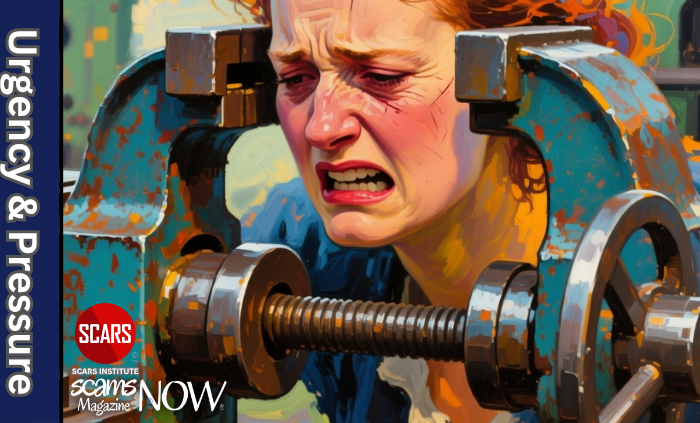





A Question of Trust
At the SCARS Institute, we invite you to do your own research on the topics we speak about and publish. Our team investigates the subject being discussed, especially when it comes to understanding the scam victims-survivors’ experience. You can do Google searches, but in many cases, you will have to wade through scientific papers and studies. However, remember that biases and perspectives matter and influence the outcome. Regardless, we encourage you to explore these topics as thoroughly as you can for your own awareness.



In part #11 I recognize myself in many of the areas described. I’m curious. Is there evidence that reveals those with attachment trauma are the first child? Or that the caregiver may have lost a first child and have difficulty in consistency with a 2nd child? Just today in my therapy session I was able to fully disclose that I’ve never felt safe and have always felt unworthy. My mother was Native American and French, whose 2nd child had fair skin, red hair and green eyes. The first child a son didn’t last 3 days after birth. I am the 2nd child. I was a baby with bad colic. My mother didn’t know what to do. We lived with her parents, my dad was in the Navy during the Korean War. I can see that a screaming child would add to my mother’s stress. My unworthiness stems from my European appearance, instead of being dark haired, dark eyed and more coppery skin tones. My two siblings possessed these traits. Later between the ages of 8 and 10 my paternal grandmother insisted on telling me a family “secret”. That secret was manipulation, telling me that my mother didn’t want me. She proceeded to spin a tale of lies that interfered with and later destroyed my trust in my mother that has lasted to this day. I was too young to realize that my grandmother was attempting to ruin my parents marriage any way she could. I later learned that she manipulated my siblings and all my cousins. My grandmother had 3 sons and objected to each of them marrying. She wanted them home to care for her. She destroyed the family. One summer we realized we no longer saw our cousins. Now we are all adults. We ask what happened that we no longer saw one another. I’m not sure if there are levels of attachment trauma but I do know that all my life I have felt “off” or out of step. I feel like I love hard and have realized that I have driven people away. Anyway, my therapist was able to get me to identify the feeling that I thought I had pushed down. Maybe it wasn’t pushed down or unacknowledged, maybe it was that numbness this article describes. In any event, I have more work to do.
Thank you for sharing that so honestly. We are here to support you.