




Scam Victim Recovery Insights
From the SCARS Institute
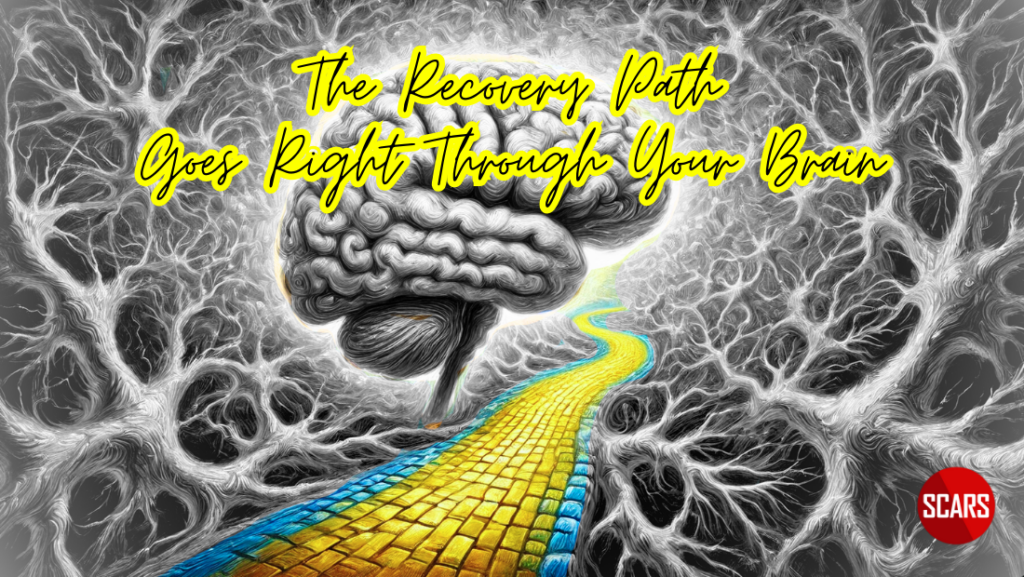
The Recovery Path Goes Right Through Your Brain
Imagine your mind after a scam as a house ransacked by an intruder. The windows are shattered, the furniture is overturned, and the walls are covered in graffiti of shame, blame, and guilt. Every room echoes with the intruder’s voice, telling you that you were foolish, that it was your fault, and that you can never trust yourself again. You can try to clean up the mess, but the intruder’s narrative is still etched into the very structure of your home.
How do you truly reclaim this space? You don’t just clean; you rebuild. And the single most powerful tool you have for this reconstruction is education.
Education is not just about learning facts; it is the process of systematically replacing the intruder’s lies with the truth. Each article you read, each concept you understand about psychological manipulation, is like bringing in a crew of expert renovators. When you learn about love bombing, you are not just acquiring a definition; you are scrubbing the graffiti of “I was so desperate for love” off your walls and replacing it with the knowledge that “I was targeted by a powerful, calculated criminal attack.” When you understand the neuroscience of trauma bonds, you are not just absorbing information; you are reinforcing the door frames that the intruder broke, proving to yourself that your reactions were biological, not personal failings. Education directs your mind, giving it the specific knowledge needed to counteract the toxic negativity that has taken root.
But this process does something even more miraculous. It doesn’t just clean the house; it rewires its entire electrical system.
When you engage in serious study and contemplation, you are activating multiple systems in your brain at once. The learning centers in your hippocampus are firing, the analytical parts of your prefrontal cortex are working to understand new concepts, and the emotional centers in your amygdala are being soothed and recontextualized. This is where the real magic happens, especially when you go beyond passive reading.
When you take the recommended step to stop and seriously think about an article, and then put your thoughts into words by commenting, you are initiating a powerful process called neuroplasticity. This is your brain’s incredible ability to reorganize itself by forming new neural connections.
Commenting is not a simple act; it is a high-level cognitive task. It enables you to synthesize information, clarify your own thoughts, and articulate your unique experience. This act of creation builds a new, stronger neural pathway. Think of it as paving a smooth, resilient road through the wreckage of your old thought patterns. The more you use this road, the more ingrained it becomes, making it easier to stay on the path of recovery and harder to fall back into the old, overgrown trails of shame and guilt.
This is how you build knowledge-based resiliency. This new, fortified neural architecture doesn’t just help you heal from the past; it makes you resistant to future deception. The manipulator’s tactics, which once felt like an invisible force, become recognizable patterns.
Your brain, now trained and primed, spots the inconsistencies and red flags automatically. You are no longer just a survivor; you have become an expert in your own defense. By committing to your education, you are not just learning about scams; you are actively rebuilding your mind into a stronger, wiser, and more resilient version of itself.
Prof. Tim McGuinness, Ph.D.
December 2025
This is but one component, one piece of the puzzle …
Understanding how the human mind is manipulated and controlled involves recognizing that the tactics employed by deceivers are multifaceted and complex. This information is just one aspect of a broader spectrum of vulnerabilities, tendencies, and techniques that permit us to be influenced and deceived. To grasp the full extent of how our minds can be influenced, it is essential to examine all the various processes and functions of our brains and minds, methods and strategies used the criminals, and our psychological tendencies (such as cognitive biases) that enable deception. Each part contributes to a larger puzzle, revealing how our perceptions and decisions can be subtly swayed. By appreciating the diverse ways in which manipulation occurs, we gain a more comprehensive understanding of the challenges we face in avoiding deception in its many forms.
“Thufir Hawat: Now, remember, the first step in avoiding a *trap* – is knowing of its existence.” — DUNE
“If you can fully understand your own mind, you can avoid any deception!” — Tim McGuinness, Ph.D.
“The essence of bravery is being without self-deception.” — Pema Chödrön