





ScamsNOW!
The SCARS Institute Magazine about Scam Victims-Survivors, Scams, Fraud & Cybercrime



Demoralization in Scam Victims
Demoralization And Why Facts Often Stop Working After A Scam
Primary Category: Scam Victim Recovery Psychology
Authors:
• Tim McGuinness, Ph.D., DFin, MCPO, MAnth – Anthropologist, Scientist, Polymath, Director of the Society of Citizens Against Relationship Scams Inc.
Author Biographies Below
About This Article
Demoralization following a scam reflects a collapse in psychological organization caused by profound betrayal, loss of trust, and disruption of meaning. It differs from depression in that it centers on hopelessness, helplessness, and a conviction that effort is futile. This state impairs judgment, attention, motivation, and the ability to absorb information, making facts feel irrelevant or overwhelming. Trauma reduces cognitive capacity and damages trust broadly, causing evidence to feel unsafe rather than stabilizing. As a result, victims may experience confusion, rigid certainty, withdrawal, or compulsive information seeking. Demoralization increases vulnerability to further harm because internal safety systems are compromised. Recovery improves when stabilization, pacing, and emotional safety are prioritized before analysis. As physiological and psychological capacity returns, clarity, discernment, and the ability to use accurate information gradually reemerge.
Note: This article is intended for informational purposes and does not replace professional medical advice. If you are experiencing distress, please consult a qualified mental health professional.

Demoralization And Why Facts Often Stop Working After A Scam
After a scam, demoralization sets in, and many victims discover something deeply unsettling about themselves and about others. Clear information does not seem to land.
The evidence does not feel convincing. Logical explanations fail to bring relief. Even when facts are accurate and well supported, they can feel irrelevant, confusing, or emotionally threatening. This experience is not a sign of low intelligence, denial in a moral sense, or unwillingness to learn. It is often the result of demoralization, a psychological state that can follow profound betrayal and loss of trust.
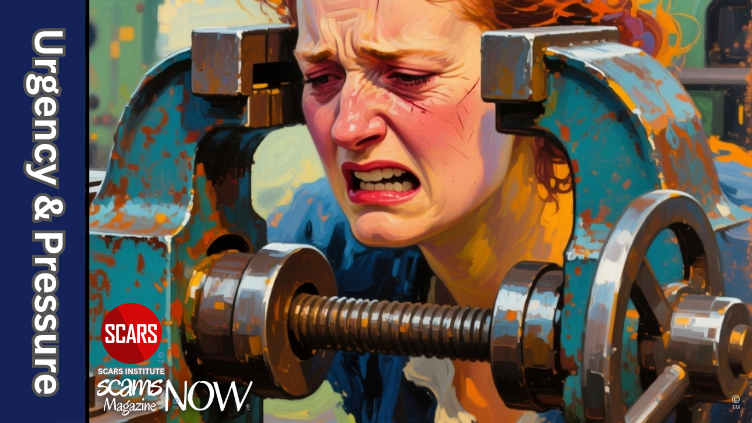
Demoralization is not simply sadness or discouragement. It is a deeper collapse in the mind’s ability to evaluate reality in a steady and organized way. It can affect judgment, attention, motivation, and the capacity to absorb new information. For scam victims, demoralization often emerges because the crime attacked core human systems that normally support meaning and orientation in the world, including trust, attachment, social intuition, and confidence in one’s own perceptions.
Understanding demoralization can help explain why recovery feels confusing, why advice can feel overwhelming, and why well-intended facts sometimes make things worse instead of better.
What is Demoralization?
Psychological demoralization is a profound state of emotional and existential distress characterized by a pervasive sense of hopelessness, helplessness, and a loss of meaning and purpose. It is not simply sadness or depression, though it can coexist with them. Rather, it is a specific and deeply painful condition where an individual’s spirit and will to endure are eroded or disappears entirely, leaving them feeling incompetent, worthless, and convinced that they have failed at life.
The core components of demoralization can be broken down into several key feelings:
- Hopelessness and Helplessness: This is the central pillar. The person believes their situation is unchangeable and that nothing they do will make a difference. They feel powerless to alter their circumstances or their own inner state.
- Loss of Meaning and Purpose: Life feels empty, pointless, and absurd. The goals, values, and beliefs that once provided structure and direction have crumbled, leaving a void. The individual can no longer answer the question, “Why bother?”
- Subjective Incompetence and Discouragement: This is a crushing feeling of personal failure. The individual perceives themselves as inadequate and incapable of meeting life’s challenges, even in areas where they may have previously succeeded. It’s a global sense of “I can’t do it” that colors every aspect of their existence.
- Existential Distress: Demoralization often triggers a deep crisis of faith in oneself, others, and the world. It can lead to feelings of alienation, isolation, and a sense that one has become a burden to others.
Demoralization vs. Depression
While they share symptoms like low mood and fatigue, demoralization and depression are distinct. A person with primary depression might feel anhedonia (an inability to feel pleasure) and low energy, but they may still hold onto the belief that things could get better if only they weren’t depressed. A demoralized person, by contrast, has lost that belief entirely. Their pain stems not from a lack of feeling, but from a profound sense of futility and the conviction that their life has gone irrevocably off track.
Demoralization is often seen in individuals facing protracted and uncontrollable stressors. This includes people with chronic or terminal illnesses, those experiencing persistent financial hardship, individuals trapped in abusive relationships, veterans with PTSD, and, very commonly, survivors of significant trauma like a devastating scam. For a scam victim, the financial ruin and the shattering of trust can trigger a perfect storm of helplessness and subjective incompetence, making demoralization a very real and dangerous part of their recovery process. It is the state of being not just sad about what happened, but utterly defeated by it.
What Demoralization Looks Like In Human Experience
In everyday language, demoralization is often described as feeling defeated or hopeless. Psychologically, it can be more complex and more disruptive. A demoralized person may experience a collapse of confidence in their own judgment, a belief that effort is pointless, and a sense that the world no longer responds to fairness, logic, or good intentions. Learning may feel futile because harm has already occurred despite doing what seemed reasonable at the time.
This state often includes a loss of internal energy needed to carefully evaluate information. When the mind is overwhelmed, it looks for shortcuts (cognitive biases, logical fallacies, and false schemas). These shortcuts may appear as emotional shutdown, rigid certainty, constant anger, or obsessive searching for answers. None of these responses is chosen deliberately. They are protective strategies that emerge when the nervous system feels unsafe.
After a scam, demoralization is common because the crime rewrote reality in a painful way. What felt real was not real. What felt safe was dangerous and not safe. What felt loving or promising was manipulative. When that realization settles in, the brain must rebuild its understanding of the world. During that rebuilding phase, the ability to assess new information can be impaired.
Why Accurate Information Can Feel Meaningless
When a person is demoralized, information does not function the way people expect. Facts alone rarely reduce distress. Proof rarely restores safety. This happens for several reasons that are important to understand.
- First, information does not regulate the nervous system. A traumatized brain is often searching for emotional relief, not intellectual clarity. Even correct information can feel empty if it does not reduce fear, shame, or grief.
- Second, accurate information can threaten fragile coping strategies. Some victims survive by minimizing what happened, staying angry, or clinging to a single explanation. New information can feel like an attack on the only structure holding them together.
- Third, trust is often damaged broadly after a scam. Even credible sources may feel unsafe. When trust is compromised, the brain treats information as potentially dangerous rather than helpful.
- Fourth, trauma reduces cognitive capacity. Concentration, memory, and mental organization can be impaired. Reading, sorting, and prioritizing information can feel exhausting. When the brain is overloaded, it may reject what it cannot easily process.
- Finally, information often implies responsibility or action. Learning something new may carry the pressure to decide, report, change behavior, or face loss. A demoralized mind may avoid facts to avoid that pressure.
These dynamics explain why scam victims are often flooded with advice at exactly the wrong time. Banks, law enforcement, online communities, friends, and family may all offer guidance. Some of it is helpful. Some of it is inaccurate. Much of it is overwhelming. To a demoralized nervous system, volume alone can feel like danger.
Why Evidence Can Increase Resistance
Demoralization does not always look passive. It can look loud, confident, or even aggressive. A person may dig in harder when confronted with evidence that contradicts their current belief. This is not because the evidence is weak, but because accepting it would destabilize an already fragile emotional structure.
For scam victims, this may appear internally as persistent hope that the scammer will return and explain everything, even when evidence says otherwise. It may appear as harsh self-blame, even when evidence shows that highly skilled criminals use systematic manipulation. It may appear as a certainty that recovery is impossible, despite many documented recoveries.
Externally, it may appear when loved ones minimize the crime because acknowledging it would challenge their worldview, or when online groups cling to false explanations because outrage feels more energizing than grief.
In each case, the resistance is not about truth versus falsehood. It is about safety versus collapse. The mind chooses what feels survivable.
How Demoralization Commonly Appears In Scam Recovery
For scam victims, demoralization often shows up in recognizable patterns.
- Difficulty prioritizing is common. Everything feels urgent. Every warning feels essential. Every story feels like it might contain the missing key. This leads to scattered effort and exhaustion.
- Compulsive information seeking is another sign. Victims may spend hours reading, watching, and searching. Relief is brief or nonexistent, but the urge to continue remains.
- Cognitive fog is frequent. Victims may struggle to retain what they read, organize steps, or make decisions. They may reread the same material repeatedly without clarity.
- Rigid certainty can develop. Locking onto one explanation or strategy can feel stabilizing, even if it limits growth.
- Hopeless conclusions may take hold. One devastating event can be misinterpreted as proof that nothing can improve.
- Withdrawal can occur. Communication stops. Questions feel dangerous. Support feels pointless or humiliating.
These patterns do not reflect weakness. They reflect a nervous system trying to regain orientation after profound betrayal.
Why Demoralization Increases Vulnerability
Demoralization can trap a person in a loop where help becomes difficult to receive. If information cannot be evaluated, the next steps cannot be chosen confidently. If trust is broken broadly, the loudest voice may be followed rather than the most credible one. If uncertainty is intolerable, the simplest explanation may be chosen over the most accurate one.
This is one reason scammers re-target victims. Confusion, urgency, shame, and exhaustion create openings. Anyone offering certainty, rescue, or a quick fix can appear appealing. Demoralization increases risk not because the victim is careless, but because their internal safety systems are impaired.
Working With Demoralization Instead Of Fighting It
- Recovery improves when demoralization is recognized and addressed rather than argued against.
- Stabilization comes before analysis. Sleep, hydration, nutrition, and routine are not minor details. They restore the biological foundation for thinking.
- Reducing input is essential. Limiting information sources reduces cognitive overload. A small number of credible sources is safer than constant exposure.
- Simple filters help. Before engaging with new information, it helps to ask whether it is actionable now, whether it comes from an accountable source, and whether it increases clarity rather than distress.
- Time is a tool. Trauma creates false urgency. Delaying decisions, even briefly, can restore perspective.
- Comfort and truth must be distinguished. Some ideas soothe temporarily but distort reality. Some truths hurt but stabilize over time.
- External supports matter. Writing down key facts, steps, and boundaries can compensate for impaired working memory. Trusted people can help reality-check when judgment feels unreliable.
Supporting Someone Who Is Demoralized
When supporting a scam victim, persuasion is rarely effective. Pacing and empathy are more helpful.
- Validation does not require agreement. Emotional reality can be acknowledged without endorsing harmful beliefs.
- Small steps are better than comprehensive plans. Demoralization limits planning capacity.
- Permission matters. Asking whether information is welcome reduces defensiveness.
- Repetition helps. Trauma impairs memory, not intelligence.
- Shame must be avoided. Humiliation deepens withdrawal.
- Boundaries remain necessary. Support does not mean enabling unsafe behavior.
Capacity Comes Before Knowledge
One of the most important distinctions in recovery is the difference between not knowing and not being able to know yet. The issue is often not a lack of information, but a lack of capacity to process it.
Capacity returns gradually with safety, rest, consistency, and guided support. Forcing learning too soon can deepen exhaustion and confusion.
Signs that capacity is returning include the ability to summarize information, tolerate uncertainty, pause before reacting, ask questions without shame, and hold more than one possibility at a time. These are indicators of healing, not prerequisites for it.
Moving Forward
Demoralization is not permanent. It is a phase that reflects injury, not identity. With stabilization, pacing, and support, the ability to evaluate reality returns. Judgment sharpens. Trust becomes more selective rather than absent. Information becomes usable again.
Recovery is not about forcing clarity. It is about rebuilding the conditions that allow clarity to emerge. When those conditions are restored, facts begin to matter again, not because they are louder, but because the mind is ready to receive them.
Conclusion
Demoralization following a scam is not a failure of intelligence, morality, or character. It is a predictable psychological response to profound betrayal, loss, and disruption of meaning.
When trust collapses and personal reality is overturned, the mind temporarily loses its ability to evaluate information in a stable and organized way. In this state, facts may feel hollow, overwhelming, or even threatening, not because they are wrong, but because the nervous system is focused on survival rather than analysis. Judgment, motivation, attention, and confidence in one’s own perceptions are all affected.
Recovery depends on restoring capacity before demanding clarity. Stabilization of sleep, hydration, nutrition, and routine rebuilds the biological foundation needed for thinking. Reducing informational overload, slowing decisions, and relying on structured external supports help compensate for temporary cognitive impairment. Emotional validation without reinforcing false beliefs allows safety to return without distorting reality. Over time, as stress physiology settles and meaning is gradually rebuilt, the ability to tolerate uncertainty improves. Facts regain usefulness not through force, but through readiness.
Demoralization is a phase, not a destination. With pacing, support, and respect for the limits imposed by trauma, cognitive organization and discernment return. When capacity is restored, learning becomes possible again, trust becomes selective rather than absent, and recovery moves forward with steadiness rather than urgency.

Glossary
- Adaptive Withdrawal — A temporary reduction in engagement used by the nervous system to conserve energy after trauma. It becomes problematic when it prevents access to support or accurate information.
- Affective Overload — An emotional state in which feelings exceed the brain’s capacity to regulate them. It interferes with reasoning and makes facts feel threatening.
- Alienation — A sense of disconnection from others and from shared reality. Demoralization often produces alienation by damaging trust and belonging.
- Analytical Capacity — The ability to evaluate information logically and sequentially. Trauma and demoralization reduce this capacity even in highly intelligent individuals.
- Attachment Disruption — Damage to the ability to form or trust emotional bonds. Scams exploit attachment systems, and demoralization follows when those systems collapse.
- Attentional Narrowing — Reduced scope of focus caused by stress. It limits the ability to consider multiple perspectives or options.
- Avoidance Coping — Efforts to reduce distress by avoiding information or decisions. While protective short term, it can delay recovery.
- Belief Rigidity — Difficulty revising beliefs even when new information is available. It often develops as a stabilizing response to chaos.
- Cognitive Capacity — The overall mental ability to process, store, and apply information. Demoralization temporarily lowers this capacity.
- Cognitive Disorganization — Loss of coherent mental structure for sorting and prioritizing information. It makes learning feel confusing and exhausting.
- Cognitive Fog — Subjective experience of slowed or unclear thinking. It reflects impaired attention and working memory.
- Cognitive Overload — A state where incoming information exceeds processing ability. It leads to the shutdown or rejection of new input.
- Compulsive Information Seeking — Repetitive searching for answers without relief. It reflects distress rather than effective learning.
- Confidence Collapse — Loss of trust in one’s own judgment. It often follows the realization of manipulation.
- Decision Paralysis — Inability to choose due to fear of error or overload. Demoralization makes decisions feel dangerous.
- Defensive Certainty — Rigid confidence used to ward off uncertainty. It can block corrective learning.
- Demoralization — A psychological state marked by hopelessness, helplessness, and loss of meaning. It impairs judgment and learning after trauma.
- Emotional Dysregulation — Difficulty managing emotional responses. It reduces tolerance for facts that provoke distress.
- Emotional Threat Response — Perception of information as dangerous rather than helpful. It occurs when trust is damaged.
- Existential Distress — A crisis involving meaning, identity, and purpose. Demoralization often includes this dimension.
- External Orientation — Reliance on outside voices for direction. It increases vulnerability when internal judgment feels unreliable.
- Fact Resistance — Emotional rejection of accurate information. It reflects safety concerns, not ignorance.
- False Stability — Temporary emotional relief gained through rigid beliefs. It prevents adaptive recovery.
- Global Distrust — Loss of confidence in people, institutions, and systems. It follows betrayal-based trauma.
- Helplessness — Belief that personal action cannot change outcomes. It is central to demoralization.
- Hopelessness — Conviction that improvement is impossible. It differs from sadness by its permanence.
- Identity Disruption — Loss of coherent self-concept. Scams damage identity by violating trust and competence.
- Information Avoidance — Intentional disengagement from facts that feel overwhelming. It is a protective but limiting response.
- Internal Safety Systems — Cognitive and emotional processes that regulate risk and trust. Demoralization weakens these systems.
- Judgment Impairment — Reduced ability to evaluate credibility and risk. It increases susceptibility to manipulation.
- Learned Futility — Expectation that effort will not matter. It discourages problem-solving.
- Meaning Collapse — Loss of guiding values or purpose. It leaves behavior unanchored.
- Mental Energy Depletion — Reduced capacity for sustained thought. It limits learning and decision-making.
- Motivational Shutdown — Loss of drive to engage or act. It reflects exhaustion rather than laziness.
- Nervous System Overactivation — Persistent stress response that prioritizes survival. It suppresses reasoning.
- Overgeneralization — Applying one traumatic outcome to all situations. It distorts risk assessment.
- Protective Belief Formation — Adoption of ideas that reduce distress but distort reality. They feel safe but limit recovery.
- Psychological Orientation — Ability to understand one’s place in reality. Demoralization disrupts this orientation.
- Reality Testing — Evaluation of beliefs against evidence. It weakens under trauma.
- Resistance to Evidence — Emotional defense against destabilizing facts. It reflects fear of collapse.
- Rumination — Repetitive focus on distressing thoughts. It maintains demoralization.
- Subjective Incompetence — Belief that one is incapable of coping. It undermines confidence.
- Survivability Bias — Preference for beliefs that feel emotionally survivable. Accuracy becomes secondary.
- Trust Injury — Damage to the ability to rely on others. It generalizes beyond the scammer.
- Uncertainty Intolerance — Difficulty enduring ambiguity. It drives rigid conclusions.
- Validation Seeking — Need for reassurance to confirm reality. It increases dependence on others.
- Volitional Collapse — Loss of perceived ability to act intentionally. It reflects exhaustion of will.
- Working Memory Impairment — Reduced ability to hold information briefly. It complicates learning and planning.
Author Biographies
-/ 30 /-
What do you think about this?
Please share your thoughts in a comment below!
2 Comments
Leave A Comment
TABLE OF CONTENTS






CATEGORIES
ARTICLE META
Important Information for New Scam Victims
- Please visit www.ScamVictimsSupport.org – a SCARS Website for New Scam Victims & Sextortion Victims.
- SCARS Institute now offers its free, safe, and private Scam Survivor’s Support Community at www.SCARScommunity.org – this is not on a social media platform, it is our own safe & secure platform created by the SCARS Institute especially for scam victims & survivors.
- SCARS Institute now offers a free recovery learning program at www.SCARSeducation.org.
- Please visit www.ScamPsychology.org – to more fully understand the psychological concepts involved in scams and scam victim recovery.
If you are looking for local trauma counselors, please visit counseling.AgainstScams.org
If you need to speak with someone now, you can dial 988 or find phone numbers for crisis hotlines all around the world here: www.opencounseling.com/suicide-hotlines
Statement About Victim Blaming
Some of our articles discuss various aspects of victims. This is both about better understanding victims (the science of victimology) and their behaviors and psychology. This helps us to educate victims/survivors about why these crimes happened and not to blame themselves, better develop recovery programs, and help victims avoid scams in the future. At times, this may sound like blaming the victim, but it does not blame scam victims; we are simply explaining the hows and whys of the experience victims have.
These articles, about the Psychology of Scams or Victim Psychology – meaning that all humans have psychological or cognitive characteristics in common that can either be exploited or work against us – help us all to understand the unique challenges victims face before, during, and after scams, fraud, or cybercrimes. These sometimes talk about some of the vulnerabilities the scammers exploit. Victims rarely have control of them or are even aware of them, until something like a scam happens, and then they can learn how their mind works and how to overcome these mechanisms.
Articles like these help victims and others understand these processes and how to help prevent them from being exploited again or to help them recover more easily by understanding their post-scam behaviors. Learn more about the Psychology of Scams at www.ScamPsychology.org
SCARS INSTITUTE RESOURCES:
If You Have Been Victimized By A Scam Or Cybercrime
♦ If you are a victim of scams, go to www.ScamVictimsSupport.org for real knowledge and help
♦ SCARS Institute now offers its free, safe, and private Scam Survivor’s Support Community at www.SCARScommunity.org/register – this is not on a social media platform, it is our own safe & secure platform created by the SCARS Institute especially for scam victims & survivors.
♦ Enroll in SCARS Scam Survivor’s School now at www.SCARSeducation.org
♦ To report criminals, visit https://reporting.AgainstScams.org – we will NEVER give your data to money recovery companies like some do!
♦ Follow us and find our podcasts, webinars, and helpful videos on YouTube: https://www.youtube.com/@RomancescamsNowcom
♦ Learn about the Psychology of Scams at www.ScamPsychology.org
♦ Dig deeper into the reality of scams, fraud, and cybercrime at www.ScamsNOW.com and www.RomanceScamsNOW.com
♦ Scam Survivor’s Stories: www.ScamSurvivorStories.org
♦ For Scam Victim Advocates visit www.ScamVictimsAdvocates.org
♦ See more scammer photos on www.ScammerPhotos.com
You can also find the SCARS Institute’s knowledge and information on Facebook, Instagram, X, LinkedIn, and TruthSocial
Psychology Disclaimer:
All articles about psychology and the human brain on this website are for information & education only
The information provided in this and other SCARS articles are intended for educational and self-help purposes only and should not be construed as a substitute for professional therapy or counseling.
Note about Mindfulness: Mindfulness practices have the potential to create psychological distress for some individuals. Please consult a mental health professional or experienced meditation instructor for guidance should you encounter difficulties.
While any self-help techniques outlined herein may be beneficial for scam victims seeking to recover from their experience and move towards recovery, it is important to consult with a qualified mental health professional before initiating any course of action. Each individual’s experience and needs are unique, and what works for one person may not be suitable for another.
Additionally, any approach may not be appropriate for individuals with certain pre-existing mental health conditions or trauma histories. It is advisable to seek guidance from a licensed therapist or counselor who can provide personalized support, guidance, and treatment tailored to your specific needs.
If you are experiencing significant distress or emotional difficulties related to a scam or other traumatic event, please consult your doctor or mental health provider for appropriate care and support.
Also read our SCARS Institute Statement about Professional Care for Scam Victims – click here
If you are in crisis, feeling desperate, or in despair, please call 988 or your local crisis hotline – international numbers here.
More ScamsNOW.com Articles







A Question of Trust
At the SCARS Institute, we invite you to do your own research on the topics we speak about and publish. Our team investigates the subject being discussed, especially when it comes to understanding the scam victims-survivors’ experience. You can do Google searches, but in many cases, you will have to wade through scientific papers and studies. However, remember that biases and perspectives matter and influence the outcome. Regardless, we encourage you to explore these topics as thoroughly as you can for your own awareness.



This article explained so much to me and helped to realize why l still struggle trusting men.
Thank you for this explanation. The article is an encouragement to achieving healing.