




Scam Victim Recovery Insights
From the SCARS Institute
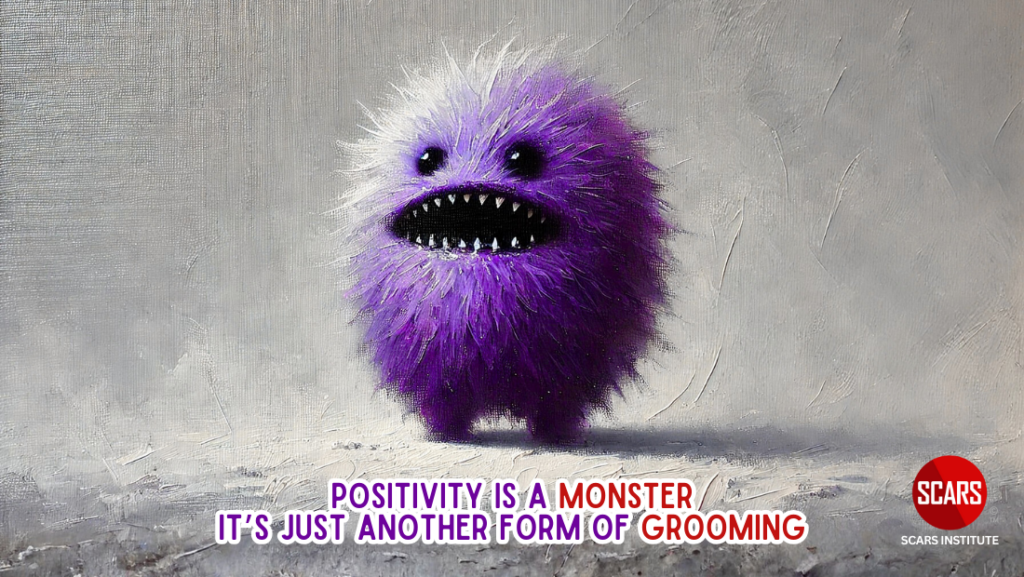
Positivity is a Monster – Warm and Fuzzy, but at the Same Time Deadly
For a scam victim drowning in the aftermath of betrayal, the allure of relentless positivity is a powerful, almost gravitational pull. It arrives like a warm, weighted blanket on the coldest night, promising comfort and an escape from the biting chill of reality. Messages like “Look on the bright side!” or “Everything happens for a reason!” feel like a lifeline. In that moment of profound pain and shame, this brand of warm, fuzzy positivity is infinitely more appealing than the cold, hard truth. The truth is a jagged pill to swallow: you were violated, you suffered a devastating loss, and the road ahead is arduous and uncertain. Positivity, by contrast, offers a gentle, anesthetizing balm. It feels nicer, so it is willingly embraced.
Understand this: Most positivity is not intended for someone who has experienced what a scam victim has experienced.
The danger, however, is that this comfort is a trap. What feels like a supportive embrace is actually a form of indoctrination into a state of false hope. It teaches the victim to bypass their pain rather than process it. When a well-meaning friend says, “At least you learned a valuable lesson,” “What doesn’t kill you makes you stronger,” “You are going to be just fine,” they are inadvertently invalidating the victim’s profound grief. The victim, desperate to believe they are on the right track, internalizes this message. They begin to perform recovery, putting on a brave face and parroting platitudes about strength and resilience, while the deep, unaddressed trauma festers beneath the surface. This fake encouragement becomes a performance for others and, eventually, for themselves, creating a fragile facade that can shatter at the slightest provocation.
Understand this: Positivity is just another form of Grooming.
The process of genuine recovery was never promised to be easy; it promised to be real. There are moments in the healing journey that are so profoundly dark and feel so endless that the human mind will grasp for any source of light, even if it’s a cheap, battery-powered imitation. In those moments, false hope feels like a necessity. It is a psychological survival mechanism, a way to keep going when the thought of facing the true depth of the despair feels suicidal. It is the only thing that makes the next breath, the next step, feel possible. It is a temporary shield against a truth that feels too overwhelming to bear.
Understand this: Trauma does not teach any lessons; it just injures. You have to teach yourself your lessons through learning and doing the hard work.
But this reliance on toxic positivity and false hope is a borrowed crutch that will eventually break. It will not heal you because healing is not about avoiding the darkness; it is about journeying through it. True recovery is forged in the crucible of acknowledging the pain, validating the loss, and sitting with the uncomfortable feelings of shame, anger, and grief. It is in the messy, ugly, and profoundly difficult work of self-compassion and acceptance that real strength is built. The warm, fuzzy blanket of positivity may keep you warm for a night, but only the difficult, slow, and painstaking process of building a new foundation from the rubble can provide a permanent home. False hope may feel nicer, but only the truth can set you free.
Overcoming the seductive pull of toxic positivity and false hope requires a radical act of turning toward the very pain you’ve been taught to avoid. The first step is to stop running and to sit with your pain, not as an enemy, but as a misunderstood part of yourself. Get to know it. Give it a name, Grief, Ang Save er, Shame, Fear, and treat it like a loyal but unruly pet that has followed you home from a terrible war. This pet may make a mess on the carpet, snarl at strangers, and refuse to be house-trained, but its presence is a testament to your survival. It is not there to destroy you; it is there to protect you, albeit clumsily, by reminding you of the wound that needs care. Acknowledge its presence without judgment. When it acts up, instead of shooing it away with a platitude, sit with it quietly. Observe its behavior, listen to what it is trying to communicate, and offer it the compassion it has been desperate for. By treating your pain with this kind of gentle, patient curiosity, you transform it from a terrifying monster into a wounded companion. You learn its triggers and its needs, and in doing so, you reclaim your power not by erasing it, but by integrating it, finally allowing it to rest peacefully at your feet instead of chasing you through the dark.
When the work of sitting with your pain becomes overwhelming, it is not only okay to take a break, it is essential for your survival. Healing is not a sprint but a grueling marathon, and no runner can complete the race without pausing to catch their breath. A break is not a surrender; it is a strategic retreat to regroup and gather your strength. Step away from the intensity, watch a mindless movie, go for a walk, or engage in a hobby that allows your mind to rest. The critical distinction, however, is between a pause and a full stop. A break is temporary; you intend to return to the work. Stopping is a permanent decision, a conscious choice to abandon the path and let the pain win. It is the decision to let the trauma define the rest of your life. To stop is to decide that the pain is too great and the future not worth fighting for, which is the only true way to fail at recovery. So rest when you must, but never, ever stop. The promise you make to yourself is not that the journey will be easy, but that you will always, always come back to it.
However, as always, the decision is yours. Will you keep moving forward? Or will you stop?
Prof. Tim McGuinness, Ph.D.
December 2025
This is but one component, one piece of the puzzle …
Understanding how the human mind is manipulated and controlled involves recognizing that the tactics employed by deceivers are multifaceted and complex. This information is just one aspect of a broader spectrum of vulnerabilities, tendencies, and techniques that permit us to be influenced and deceived. To grasp the full extent of how our minds can be influenced, it is essential to examine all the various processes and functions of our brains and minds, methods and strategies used the criminals, and our psychological tendencies (such as cognitive biases) that enable deception. Each part contributes to a larger puzzle, revealing how our perceptions and decisions can be subtly swayed. By appreciating the diverse ways in which manipulation occurs, we gain a more comprehensive understanding of the challenges we face in avoiding deception in its many forms.
“Thufir Hawat: Now, remember, the first step in avoiding a *trap* – is knowing of its existence.” — DUNE
“If you can fully understand your own mind, you can avoid any deception!” — Tim McGuinness, Ph.D.
“The essence of bravery is being without self-deception.” — Pema Chödrön