



Scam Victim Recovery Insights
From the SCARS Institute
The Importance of Adaptive Flexibility & Education in Scam Victim Recovery
Neuroplasticity, or Adaptive Flexibility, as it is more correctly called, is the brain’s remarkable ability to reorganize itself by forming new neural connections throughout life.
When a person experiences the profound betrayal trauma of a scam, their brain undergoes changes designed for survival in a perceived hostile environment. The amygdala, the brain’s threat-detection center, becomes overactive, while the prefrontal cortex, responsible for rational thought and emotional regulation, is suppressed. This creates a state of high alert, where every unknown email or phone call triggers a cascade of anxiety. Understanding that this is a learned, plastic response, and not a permanent psychological flaw, is the first step toward reclaiming agency. It reframes the victim’s experience from “I am broken” to “My brain has adapted to a threat, and now I can adapt it back.”
However, simply knowing about Neuroplasticity or Adaptive Flexibility is not enough.
The knowledge must be actively employed through specific techniques that guide the brain’s rewiring process. This is where therapeutic tools become essential.
The SCARS Institute leverages the principles of active learning as a core technique to help scam victims rewire their brains and disengage from the toxic cycle of shame, blame, and guilt. Rather than passively consuming information, victims are guided through a structured process that demands their full cognitive and emotional engagement. This approach transforms them from passive recipients of knowledge into active participants in their own recovery. The process involves reading materials on the psychology of scams, the nature of trauma, and the tactics of manipulators, but it does not stop there. Victims are then prompted to engage in intentional analysis, constantly asking themselves how this specific information applies directly to their own experience. This crucial step bridges the gap between abstract theory and personal reality, forcing the brain to create new, concrete connections that challenge the false narratives of self-blame.
This methodology is powerfully amplified through practices like commenting and, most notably, journaling. Journaling is a cornerstone of this reprogramming because it synthesizes the key elements of neuroplastic change. The act of reading about trauma externalizes the experience, while analyzing it with intentionality engages the prefrontal cortex, the brain’s rational thinking center. The final act of writing it down solidifies these new neural pathways. It forces a coherent narrative to be formed, translating chaotic emotions and intrusive thoughts into structured language. This process effectively rewrites the victim’s story, shifting it from a tale of personal failure to one of targeted victimization and survival. By reading, analyzing, and writing, the victim is actively building new cognitive pathways, dismantling old, self-destructive patterns, and creating the mental and emotional framework needed to move forward with clarity and self-compassion.
Additionally, practices like mindfulness and meditation, when activating the “right brain,” are powerful because they directly train the prefrontal cortex. By focusing on the present moment, on the breath or bodily sensations, the victim repeatedly interrupts the amygdala’s fear-based feedback loop. Each time they gently guide their attention back from a traumatic thought, they are strengthening a new neural pathway, one of calm and focused awareness. Cognitive Behavioral Therapy (CBT) works similarly, helping to identify and challenge the distorted thought patterns (“I can never trust anyone again”) and replace them with more realistic and balanced ones. This is literally carving new, healthier highways in the brain to bypass the old, fear-ridden roads.
This is where the role of focused education becomes a critical, and often underestimated, component of recovery. In the depths of trauma, motivation is scarce. The victim’s energy is consumed by emotional pain and survival instincts. The idea of actively engaging in “brain training” can feel overwhelming and futile. Using focused education, whether mandated by a support provider, a therapist, or a structured recovery program, provides the necessary external push to break through this inertia. It compels the victim to engage with the very concepts and techniques that their traumatized brain is telling them to avoid.
By requiring attendance in workshops (in actual or virtual form) on emotional regulation, assigning readings on the neuroscience and psychology of trauma, or insisting on daily mindfulness practice, this structured approach ensures that the tools for healing are not just offered, but utilized. It creates a routine and a container for recovery when internal motivation is absent. This initial push can be the catalyst that sparks the first glimmer of hope. As the victim begins to practice these techniques and experiences small victories, a moment of calm (such as a day without a panic attack), they start to see the proof of neuroplasticity in their own lives. This firsthand evidence becomes a powerful internal motivator, fueling a positive feedback loop that propels them further along the path to healing. In essence, the education approach pioneered by the SCARS Institute builds the bridge from the theoretical possibility of recovery to the tangible, lived experience of it, empowering the victim to become the active architect of their own resilient brain.
Prof. Tim McGuinness, Ph.D.
December 2025
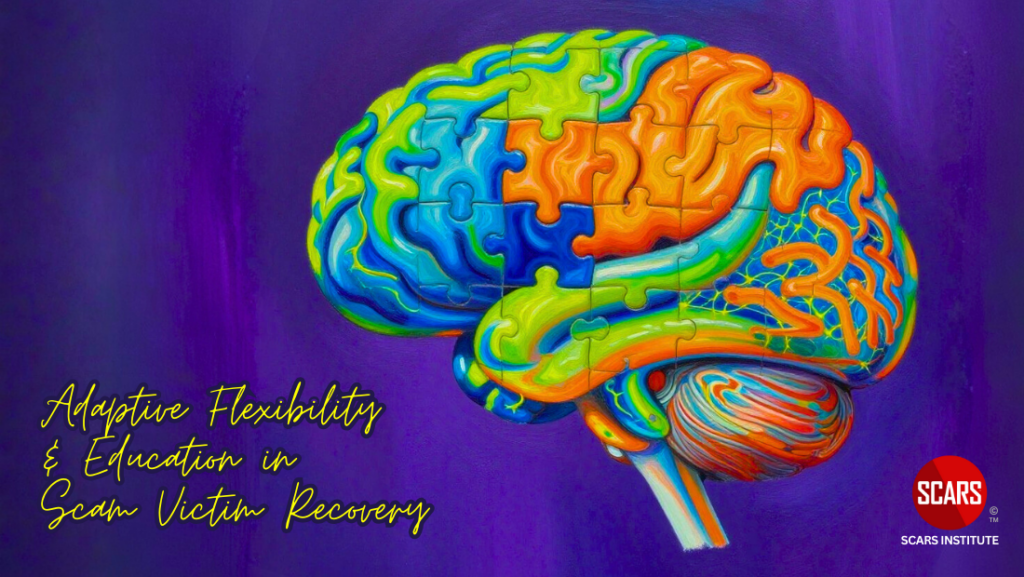
This is but one component, one piece of the puzzle …
Understanding how the human mind is manipulated and controlled involves recognizing that the tactics employed by deceivers are multifaceted and complex. This information is just one aspect of a broader spectrum of vulnerabilities, tendencies, and techniques that permit us to be influenced and deceived. To grasp the full extent of how our minds can be influenced, it is essential to examine all the various processes and functions of our brains and minds, methods and strategies used the criminals, and our psychological tendencies (such as cognitive biases) that enable deception. Each part contributes to a larger puzzle, revealing how our perceptions and decisions can be subtly swayed. By appreciating the diverse ways in which manipulation occurs, we gain a more comprehensive understanding of the challenges we face in avoiding deception in its many forms.
“Thufir Hawat: Now, remember, the first step in avoiding a *trap* – is knowing of its existence.” — DUNE
“If you can fully understand your own mind, you can avoid any deception!” — Tim McGuinness, Ph.D.
“The essence of bravery is being without self-deception.” — Pema Chödrön