




ScamsNOW!
The SCARS Institute Magazine about Scam Victims-Survivors, Scams, Fraud & Cybercrime




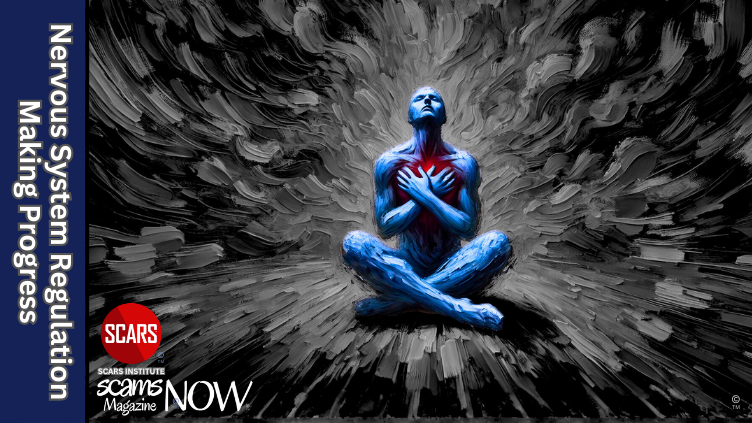
Nervous System Regulation – Making Progress Can Still Feel Bad!
The In-Between State: When the Nervous System Is Calmer but Life Still Feels Impossible
Primary Category: Scam Victim Recovery Psychology
Authors:
• Vianey Gonzalez B.Sc(Psych) – Licensed Psychologist, Specialty in Crime Victim Trauma Therapy, Neuropsychologist, Certified Deception Professional, Psychology Advisory Panel & Director of the Society of Citizens Against Relationship Scams Inc.
• Tim McGuinness, Ph.D., DFin, MCPO, MAnth – Anthropologist, Scientist, Polymath, Director of the Society of Citizens Against Relationship Scams Inc.
Author Biographies Below
About This Article
Survivors of scams and prolonged psychological manipulation often enter a recovery phase where acute distress eases, but functional capacity remains limited. This period reflects a mismatch between cognitive understanding and nervous system readiness. Although insight may arrive early, the nervous system continues to prioritize stabilization, energy conservation, and threat monitoring. Early regulation can quiet symptoms without restoring motivation or confidence. Shame frequently emerges when survivors misinterpret this phase as personal failure rather than biological recalibration. Pushing for performance too soon can trigger setbacks, while pacing, consistency, and embodied safety support gradual recovery. Functional improvement follows sustained signals of safety, not force or insight alone, as the nervous system slowly reallocates energy toward engagement, problem solving, and relational trust.
Note: This article is intended for informational purposes and does not replace professional medical advice. If you are experiencing distress, please consult a qualified mental health professional.

The In-Between State: When the Nervous System Is Calmer but Life Still Feels Impossible
For many survivors of relationship scams, financial fraud, and prolonged psychological manipulation, recovery does not move in a straight line.
One of the most confusing and destabilizing phases occurs after the initial crisis has passed, when panic has softened, sleep may have improved slightly, and the nervous system is no longer in constant alarm. On the surface, this appears to be progress. Internally, however, survivors often feel stuck, frustrated, and ashamed because functioning still feels out of reach.
This “in-between” state (part of what the SCARs Institute calls “STEP 1”) can still be deeply disorienting. Survivors may intellectually understand what happened to them, recognize that they are safer now, and even have insight into trauma responses through learning. Yet despite this awareness, their bodies resist cooperation. Tasks feel overwhelming. Motivation remains low. Emotional regulation feels fragile. The internal question becomes relentless: “Why can’t I just do better if I know what’s happening?”
This question is not a failure of willpower or intelligence. It reflects a fundamental mismatch between cognitive understanding and nervous system readiness. Trauma recovery requires both. When one advances faster than the other, distress often increases rather than resolves.
Trauma Is Stored in Systems, Not Just Thoughts
Scam victimization is not only a cognitive injury. It is a full-body experience that impacts threat detection, attachment systems, memory, and autonomic regulation. During the grooming and manipulation phase of a scam, the nervous system is repeatedly trained to oscillate between hope and fear, connection and abandonment, urgency and collapse. Over time, this conditioning reshapes how safety and danger are perceived.
This is what is meant by Bessel van der Kolk’s book “The Body Keeps the Score.”
When the scam ends, the nervous system does not immediately recalibrate. Even after the threat is gone, the body continues to behave as if danger could return at any moment. This is not imagination or emotional weakness. It is a learned survival pattern reinforced over weeks, months, or years.
As recovery begins, survivors may work hard to gain insight. They read, attend support groups, speak with therapists, and reframe what happened. Cognitively, many reach clarity far earlier than they expect. Yet the nervous system operates on different rules. It does not respond to logic alone. It responds to repetition, predictability, and embodied experiences of safety over time.
Why Feeling “Better” Does Not Mean Functioning Better
One of the most painful aspects of this stage is the false expectation that improvement should be linear. Survivors may notice fewer panic attacks or slightly improved sleep and assume that productivity, emotional resilience, and confidence should automatically follow. When they do not, self-criticism often intensifies.
In reality, early regulation often produces a quieter nervous system without yet producing capacity. The body may no longer be screaming, but it is still bracing. It is still conserving energy. It is still uncertain whether this calm will last.
From a biological perspective, this makes sense. A nervous system emerging from prolonged threat does not immediately invest energy into growth, risk-taking, or complex problem-solving. It first tests stability. It watches for patterns. It waits to see whether safety is reliable.
This waiting period can feel like stagnation, but it is not. It is a recalibration phase. The body is learning whether it is safe enough to move forward without being punished for doing so.
The Psychological Cost of Operating in a New Reality
Betrayal trauma from scams forces survivors into a radically altered worldview. Trust has been shattered. Identity has been disrupted. Financial, relational, and moral assumptions may no longer hold. Even when danger has passed, survivors are asked to operate in a reality that feels unfamiliar and unsafe.
This is a heavy cognitive and emotional demand. The nervous system is not only recovering from the previous threats but is now also being asked to adapt to a new map of the world. Familiar strategies no longer feel reliable. Old instincts may feel dangerous. New behaviors feel unnatural and untested.
This creates internal conflict. The thinking mind says, “I know what’s happening now. I know I’m not in danger.” The nervous system responds, “Knowing is not the same as proof.”
Until proof accumulates through lived experience, the body hesitates. This hesitation is protective, not defective.
Why Shame Appears During This Phase
Shame frequently emerges during this stage of recovery, if it has not already, even when survivors are otherwise making progress. This shame often takes subtle forms: frustration with low motivation, embarrassment about avoiding tasks, self-judgment for not “moving on,” or comparisons to others who appear to be functioning better.
This shame is particularly harmful because it misattributes the cause. Survivors may believe they are failing to try hard enough when, in reality, their nervous systems are still prioritizing stabilization over expansion.
Shame itself is a nervous system stressor. It activates threat responses, increases withdrawal, and reinforces freeze states. When survivors criticize themselves for not functioning well enough yet, they inadvertently slow the very recovery they are trying to accelerate.
Understanding this dynamic is essential. Recovery is usually not delayed by lack of insight. It is usually delayed when the nervous system does not yet trust safety.
Stabilization is Not the Same as Healing Completion
Most survivors misunderstand stabilization as the end goal rather than the foundation. Stabilization means the nervous system can return to baseline after activation. It does not mean the baseline has fully reset.
In early stabilization, survivors may feel emotionally flat, disconnected, or exhausted. This is not regression. It is often the nervous system finally releasing hypervigilance without yet reclaiming vitality.
True functional recovery occurs later, when the body begins to reallocate energy toward engagement, creativity, problem-solving, and relational risk. This shift cannot be forced. It emerges gradually as safety becomes familiar rather than novel.
Why Pushing Too Hard Backfires
Survivors often attempt to push themselves into normal functioning once acute symptoms ease. They may force productivity, social interaction, or emotional processing before their systems are ready. While this is understandable, it often leads to setbacks.
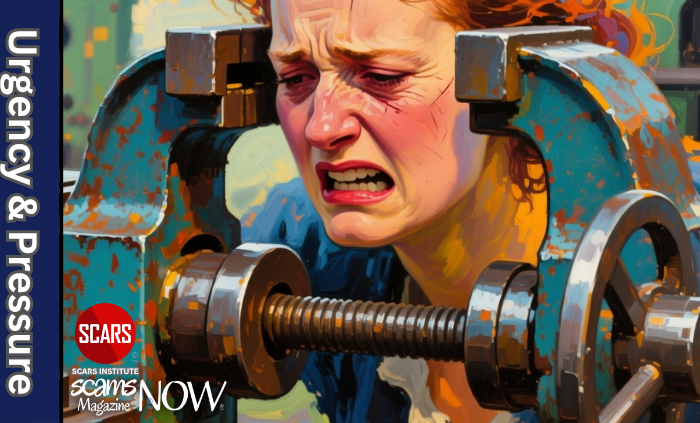
When the nervous system is pressured to perform beyond its current capacity, it interprets the demand as yet another threat. Symptoms may return in new forms, including shutdown, irritability, dissociation, or sudden anxiety. This reinforces the belief that recovery is fragile or impossible.
In reality, the issue is pacing. Healing requires titration. Small, tolerable challenges followed by rest and regulation teach the nervous system that engagement does not lead to collapse.
Learning to Trust the Process
One of the most difficult tasks for scam survivors is learning to trust a process that feels invisible. Unlike cognitive insight, nervous system change is slow and nonlinear. Progress may appear in subtle ways: slightly quicker recovery after stress & triggers, less catastrophic thinking, or brief moments of ease that come without effort.
These signs matter. They indicate that the system is learning. The absence of immediate functional improvement does not mean nothing is happening. It means the groundwork is being laid.
Clinicians working with scam survivors often emphasize consistency over intensity. Daily routines, predictable sleep and meals, gentle movement, and safe social contact all send signals of stability. Over time, these signals accumulate into embodied trust.
What Survivors Need During the In-Between Phase
During this stage, survivors benefit most from validation rather than pressure. Understanding that their experience is normal reduces secondary trauma. Education about nervous system recovery helps counter self-blame.
Support should focus on knowledge and capacity building rather than performance. The goal is not to return to who the survivor was before the scam. The goal is to help the nervous system learn that life can be engaged again without catastrophic consequences.
Therapeutic approaches that integrate body-based regulation, meaning-making, and relational repair are often most effective. These approaches respect the nervous system’s timeline rather than imposing an external one.
Reframing the Question
The question “Why can’t I just do it?” is understandable, but it rests on a false premise. It assumes that understanding should automatically produce capacity. Trauma recovery demonstrates that capacity follows safety, not insight, though the insight is required.
A more accurate question might be: “What does my nervous system still need in order to feel safe enough to move forward?”
This reframing shifts the focus from self-criticism to self-support. It recognizes that recovery is not a moral test or a productivity challenge. It is a biological and psychological process unfolding at its own pace.
Moving Forward without Forcing
Eventually, with sufficient stability, the nervous system begins to reengage. This can take from between 6 months to a year and a half for many survivors doing the work. Motivation returns in small doses. Confidence grows through repetition, not reassurance. Survivors begin to act not because they force themselves to, but because action no longer feels dangerous.
This transition is often very quiet. There is no dramatic moment of arrival. Instead, survivors may look back and realize that tasks feel less heavy, decisions feel clearer, and life feels more inhabitable. They are reacting better to triggers.
The in-between state is not a failure point. It is a necessary passage. For scam survivors, understanding this phase can prevent unnecessary suffering and reduce the risk of retraumatization.
Recovery is not about pushing through resistance. It is about listening to it, understanding its origins, and allowing the nervous system the time it needs to learn that safety is real and enduring.
Conclusion
The in-between state asks something difficult of you. It asks patience when you want momentum, and self-respect when shame is loud. When your nervous system is calmer, but life still feels unmanageable, it can feel as if something is wrong with you. Nothing is wrong. What you are experiencing is a system that is no longer in crisis but is still deciding whether safety is dependable.
This phase is not wasted time. It is the period when your body learns, through repetition and consistency, that calm does not vanish without warning. Each day you regulate, rest, and choose containment over force, you are teaching your nervous system that engagement does not equal danger. That learning cannot be rushed, argued with, or shamed into existence.
Progress during this stage often looks unimpressive from the outside. Internally, however, it is profound. You are rebuilding trust at a biological level. You are allowing capacity to return instead of demanding it. You are interrupting the cycle of pressure and collapse that trauma creates.
Recovery does not reward intensity. It responds to steadiness. The work now is not to push yourself into a version of functioning that feels unsafe, but to support the conditions that make functioning possible. When your nervous system finally shifts from testing safety to trusting it, movement will follow. Not because you forced it, but because your body no longer needs to hold you back.

Glossary
- Action Without Forcing — the gradual return of behavior that occurs when the nervous system no longer interprets action as dangerous. It reflects restored internal safety rather than discipline or pressure. Survivors experience movement as natural instead of threatening.
- Altered Worldview — the fundamental shift in beliefs about safety, trust, identity, and meaning that follows betrayal trauma. Scam survivors often must relearn how the world works after deception collapses previous assumptions. This adjustment places sustained cognitive and emotional demands on recovery.
- Autonomic Regulation — the nervous system’s ability to shift between activation and rest without becoming stuck. Scam trauma disrupts this regulation through prolonged threat exposure. Recovery requires repeated experiences of safety rather than insight alone.
- Biological Recalibration Phase — the period when the nervous system quietly tests whether safety is consistent. During this time, visible progress may feel slow or absent. Internally, systems are reorganizing for future capacity.
- Body-Based Learning — the process by which safety is relearned through physical experience rather than logic. The nervous system relies on repetition, predictability, and sensory input. This explains why understanding alone does not restore functioning.
- Capacity Building — the gradual expansion of what the nervous system can tolerate without triggering threat responses. Capacity increases only after stabilization becomes familiar. Pushing ahead of capacity often produces setbacks.
- Cognitive Understanding — intellectual clarity about what happened and why reactions exist. Many survivors reach this early in recovery. Understanding does not automatically produce behavioral or emotional capacity.
- Cognitive and Nervous System Mismatch — the gap between knowing something is safe and feeling safe. This mismatch explains frustration during the in-between state. Healing requires both systems to align over time.
- Conservation of Energy — the nervous system’s tendency to limit output after prolonged threat exposure. Reduced motivation and fatigue reflect protection rather than laziness. Energy returns once safety feels reliable.
- Consistency Over Intensity — a recovery principle emphasizing steady, predictable routines instead of dramatic effort. Nervous systems respond to repetition more than bursts of activity. This approach supports long-term stabilization.
- Containment — the practice of limiting demands placed on a recovering nervous system. Containment prevents overload and collapse. It allows learning to occur without triggering threat responses.
- Disorientation Phase — the stage where external calm contrasts with internal confusion. Survivors often feel stuck despite improvement. This reflects recalibration rather than failure.
- Embodied Proof of Safety — lived experiences that demonstrate danger is no longer present. The nervous system requires proof through repetition. Verbal reassurance alone is insufficient.
- Emotional Flatness — reduced emotional intensity that appears after hypervigilance subsides. This state reflects nervous system rest rather than numbness or regression. Vitality often returns later.
- Engagement Readiness — the point at which the nervous system reallocates energy toward connection, creativity, and problem solving. This readiness cannot be forced. It emerges once safety feels familiar.
- False Linearity Expectation — the belief that recovery should improve in a straight upward progression. This assumption fuels shame when progress fluctuates. Trauma recovery follows nonlinear patterns.
- Freeze-State Reinforcement — the strengthening of shutdown responses when pressure or shame is applied too early. Criticism signals a threat to the nervous system. This delays recovery rather than accelerating it.
- Functional Recovery — the return of everyday capacity, such as decision making, productivity, and emotional resilience. Functional recovery follows stabilization, not insight. It develops gradually through safety.
- Groundwork Phase — the early recovery period where invisible changes prepare future functioning. Survivors may feel nothing is happening. Internally, systems are reorganizing.
- Hypervigilance Release — the easing of constant threat monitoring after danger ends. This release can feel exhausting rather than relieving. The nervous system is adjusting to rest.
- In-Between State — the phase where symptoms ease but functioning remains limited. Survivors often misinterpret this as failure. It reflects nervous system testing and recalibration.
- Internal Conflict — the tension between cognitive reassurance and bodily hesitation. The mind recognizes safety while the body waits for confirmation. This conflict is protective rather than pathological.
- Invisible Progress Markers — subtle signs of healing such as faster recovery from stress or reduced catastrophic thinking. These changes indicate nervous system learning. They precede functional gains.
- Meaning-Making Integration — therapeutic work that helps survivors understand experiences while respecting bodily limits. Meaning alone is insufficient without regulation. Integration supports coherent recovery.
- Motivation Suppression — reduced drive caused by energy conservation after trauma. This is a biological response rather than lack of effort. Motivation returns with safety.
- Nervous System Readiness — the system’s capacity to tolerate challenge without perceiving danger. Readiness determines what actions are possible. Forcing action before readiness triggers symptoms.
- Nonlinear Recovery — healing that includes pauses, plateaus, and fluctuations. Nervous systems do not recover in straight lines. Understanding this reduces self-blame.
- Overextension Backfire — symptom return triggered by exceeding current capacity. The nervous system interprets pressure as threat. Recovery requires pacing rather than endurance.
- Pacing — deliberate regulation of effort to remain within tolerable limits. Pacing prevents shutdown and relapse. It teaches safety through successful engagement.
- Predictability Signals — consistent routines that inform the nervous system that life is stable. Meals, sleep, and gentle movement serve as anchors. These signals accumulate over time.
- Protective Hesitation — the nervous system’s delay in reengaging after trauma. Hesitation prevents premature exposure to danger. It reflects intelligence rather than dysfunction.
- Recalibration Testing — the process of observing whether calm persists without punishment. The nervous system watches patterns before committing energy. This stage feels like waiting.
- Relational Repair — rebuilding trust through safe, consistent connection. Trauma disrupts attachment systems. Repair requires patience and predictability.
- Secondary Trauma Reduction — relief gained when survivors learn their experience is normal. Validation decreases shame-based stress. Education supports nervous system stabilization.
- Shame Activation Loop — the cycle where self-criticism increases threat responses. Shame slows recovery by reinforcing freeze states. Interrupting this loop supports healing.
- Stabilization Foundation — the ability to return to baseline after activation. Stabilization is a starting point, not an endpoint. Functional recovery builds on this base.
- System Learning — gradual adaptation of the nervous system through repeated safe experiences. Learning occurs outside conscious control. Time and consistency are required.
- Testing for Reliability — the nervous system’s need to confirm safety over time. Single moments of calm are insufficient. Reliability builds trust.
- Threat Reinterpretation — mislabeling recovery demands as danger due to prior conditioning. This leads to symptoms when pushed too early. Reinterpretation requires pacing.
- Titration — introducing challenges in small, manageable amounts. Titration prevents overwhelm. It teaches that engagement does not lead to collapse.
- Trust Accumulation — the slow building of confidence through lived experience. Trust develops biologically, not intellectually. Accumulation precedes action.
- Validation Over Pressure — support that affirms current limits instead of demanding performance. Validation reduces nervous system stress. Pressure increases threat perception.
- Vitality Return — the gradual reemergence of energy and interest once safety stabilizes. Vitality follows rest and predictability. It cannot be commanded.
Author Biographies
-/ 30 /-
What do you think about this?
Please share your thoughts in a comment below!
2 Comments
Leave A Comment
TABLE OF CONTENTS








CATEGORIES
ARTICLE META
Important Information for New Scam Victims
- Please visit www.ScamVictimsSupport.org – a SCARS Website for New Scam Victims & Sextortion Victims.
- SCARS Institute now offers its free, safe, and private Scam Survivor’s Support Community at www.SCARScommunity.org – this is not on a social media platform, it is our own safe & secure platform created by the SCARS Institute especially for scam victims & survivors.
- SCARS Institute now offers a free recovery learning program at www.SCARSeducation.org.
- Please visit www.ScamPsychology.org – to more fully understand the psychological concepts involved in scams and scam victim recovery.
If you are looking for local trauma counselors, please visit counseling.AgainstScams.org
If you need to speak with someone now, you can dial 988 or find phone numbers for crisis hotlines all around the world here: www.opencounseling.com/suicide-hotlines
Statement About Victim Blaming
Some of our articles discuss various aspects of victims. This is both about better understanding victims (the science of victimology) and their behaviors and psychology. This helps us to educate victims/survivors about why these crimes happened and not to blame themselves, better develop recovery programs, and help victims avoid scams in the future. At times, this may sound like blaming the victim, but it does not blame scam victims; we are simply explaining the hows and whys of the experience victims have.
These articles, about the Psychology of Scams or Victim Psychology – meaning that all humans have psychological or cognitive characteristics in common that can either be exploited or work against us – help us all to understand the unique challenges victims face before, during, and after scams, fraud, or cybercrimes. These sometimes talk about some of the vulnerabilities the scammers exploit. Victims rarely have control of them or are even aware of them, until something like a scam happens, and then they can learn how their mind works and how to overcome these mechanisms.
Articles like these help victims and others understand these processes and how to help prevent them from being exploited again or to help them recover more easily by understanding their post-scam behaviors. Learn more about the Psychology of Scams at www.ScamPsychology.org
SCARS INSTITUTE RESOURCES:
If You Have Been Victimized By A Scam Or Cybercrime
♦ If you are a victim of scams, go to www.ScamVictimsSupport.org for real knowledge and help
♦ SCARS Institute now offers its free, safe, and private Scam Survivor’s Support Community at www.SCARScommunity.org/register – this is not on a social media platform, it is our own safe & secure platform created by the SCARS Institute especially for scam victims & survivors.
♦ Enroll in SCARS Scam Survivor’s School now at www.SCARSeducation.org
♦ To report criminals, visit https://reporting.AgainstScams.org – we will NEVER give your data to money recovery companies like some do!
♦ Follow us and find our podcasts, webinars, and helpful videos on YouTube: https://www.youtube.com/@RomancescamsNowcom
♦ Learn about the Psychology of Scams at www.ScamPsychology.org
♦ Dig deeper into the reality of scams, fraud, and cybercrime at www.ScamsNOW.com and www.RomanceScamsNOW.com
♦ Scam Survivor’s Stories: www.ScamSurvivorStories.org
♦ For Scam Victim Advocates visit www.ScamVictimsAdvocates.org
♦ See more scammer photos on www.ScammerPhotos.com
You can also find the SCARS Institute’s knowledge and information on Facebook, Instagram, X, LinkedIn, and TruthSocial
Psychology Disclaimer:
All articles about psychology and the human brain on this website are for information & education only
The information provided in this and other SCARS articles are intended for educational and self-help purposes only and should not be construed as a substitute for professional therapy or counseling.
Note about Mindfulness: Mindfulness practices have the potential to create psychological distress for some individuals. Please consult a mental health professional or experienced meditation instructor for guidance should you encounter difficulties.
While any self-help techniques outlined herein may be beneficial for scam victims seeking to recover from their experience and move towards recovery, it is important to consult with a qualified mental health professional before initiating any course of action. Each individual’s experience and needs are unique, and what works for one person may not be suitable for another.
Additionally, any approach may not be appropriate for individuals with certain pre-existing mental health conditions or trauma histories. It is advisable to seek guidance from a licensed therapist or counselor who can provide personalized support, guidance, and treatment tailored to your specific needs.
If you are experiencing significant distress or emotional difficulties related to a scam or other traumatic event, please consult your doctor or mental health provider for appropriate care and support.
Also read our SCARS Institute Statement about Professional Care for Scam Victims – click here
If you are in crisis, feeling desperate, or in despair, please call 988 or your local crisis hotline – international numbers here.
More ScamsNOW.com Articles







A Question of Trust
At the SCARS Institute, we invite you to do your own research on the topics we speak about and publish. Our team investigates the subject being discussed, especially when it comes to understanding the scam victims-survivors’ experience. You can do Google searches, but in many cases, you will have to wade through scientific papers and studies. However, remember that biases and perspectives matter and influence the outcome. Regardless, we encourage you to explore these topics as thoroughly as you can for your own awareness.



I know this feeling
now I understand myself I thought I was just lazy not being motivated now I understand