



Scam Victim Recovery Insights
From the SCARS Institute
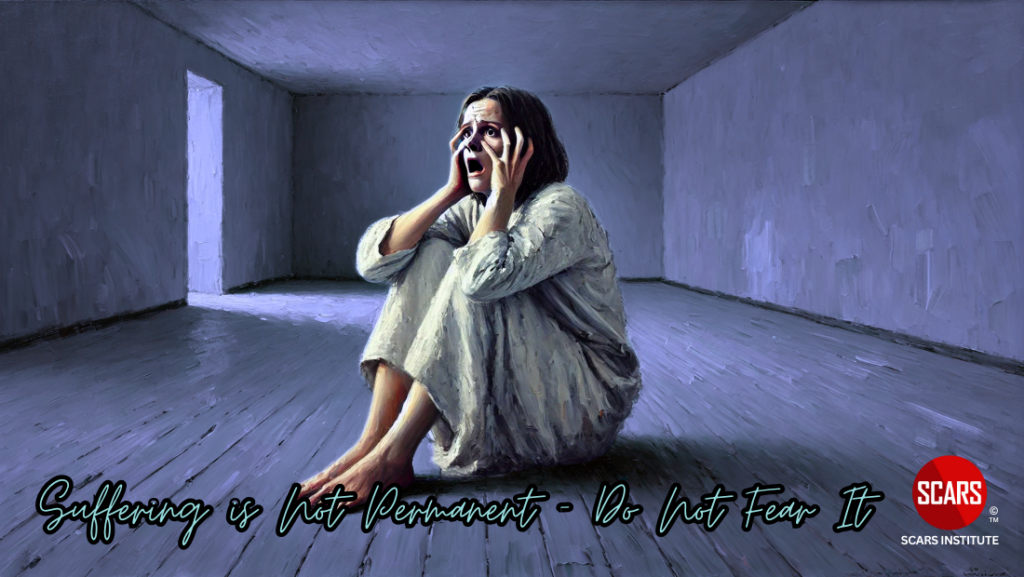
Suffering is Not Permanent – Do Not Fear It
Suffering is an inescapable and fundamental aspect of the human condition.
It is not a personal failing or a sign of cosmic punishment, but a natural occurrence woven into the very fabric of existence. From the minor sting of a paper cut to the profound agony of losing a loved one, pain is a universal language spoken by all intelligent life. However, while the experience of pain is inevitable, the extent of our misery is not. The true amplifier of suffering is not the event itself, but our fear and resistance to it.
Fearing suffering is like trying to hold water in your hands; the tighter you squeeze, the more it slips through your fingers, leaving you with nothing but the strain of the effort. When we encounter pain, our immediate, instinctual reaction is to push it away. We tense our bodies, we ruminate on the injustice of it, and we build a narrative around our pain, solidifying it into a permanent part of our identity. This resistance creates a secondary layer of suffering, a mental anguish that is often far more debilitating than the initial trigger.
The fear of future pain can be paralyzing, causing us to shrink from life, avoid risks, and live in a state of constant anxiety. We suffer in anticipation of suffering, creating a self-perpetuating cycle of misery. By treating pain as an enemy to be vanquished, we give it immense power over us, ensuring that its shadow looms large and long in our minds.
Over two and a half millennia ago, the Buddha offered a radical alternative to this futile struggle. His core teachings, encapsulated in the Four Noble Truths, begin not with a promise of a painless life, but with a stark and liberating acknowledgment: life is suffering (dukkha). This is not a pessimistic view, but the starting point of freedom. The second truth identifies the cause of this suffering not as the pain itself, but as our craving, aversion, and ignorance, our desperate desire for things to be other than they are. The third truth offers the hope of an end to this suffering, and the fourth provides the path: the Noble Eightfold Path1.
This path is a practical guide to unhooking ourselves from the cycle of fear and resistance. It teaches us to see reality clearly, without the distorting lens of our wants and fears. Through practices like mindfulness and meditation, we learn to observe our pain as a transient phenomenon, like a cloud passing in the sky. We feel the physical sensation without layering it with judgment or panic. We acknowledge the sadness without building a fortress of despair around it. This is not about becoming numb or apathetic; it is about developing a wise and compassionate relationship with our own experience. By accepting the natural presence of suffering and ceasing our war against it, we rob it of its power. We discover a profound peace that is not dependent on the absence of pain, but on our capacity to meet it with an open, aware, and fearless heart.
When you are in the throes of suffering, it can seem like an endless, all-consuming pain. The darkness fills the world, and it feels impossible to imagine a time when it will recede. Yet, one of the most profound lessons from Buddhist philosophy is the principle of impermanence, the assurance that no matter how heavy the darkness feels, it will not last forever. The pain will pass. You can learn how to manage what caused the pain, so that it becomes a visitor rather than a permanent resident, passing through you without taking up residence.
This is especially true for traumatized individuals, such as scam victims beginning their recovery. Trauma is a concentrated form of dukkha that lodges in the body and mind, distorting perception and fueling reactive emotions. The path of healing can feel overwhelming, but knowing that there is a path is one of the most important lessons. Buddhism supports trauma healing by transforming how we relate to pain, offering mindfulness and compassion as tools. By practicing self-compassion, saying to yourself, “This is a moment of suffering. Suffering is a part of life. May I be kind to myself in this moment”, you can directly soothe emotional overwhelm and begin to hold your pain with love and patience. While the pain can be extreme, suffering is mostly temporary. Through mindful practice and the cultivation of compassion, you can move through the darkness and find that joy is not only possible, but is your birthright, waiting to be rediscovered.
Prof. Tim McGuinness, Ph.D.
December 2025
This is but one component, one piece of the puzzle …
Understanding how the human mind is manipulated and controlled involves recognizing that the tactics employed by deceivers are multifaceted and complex. This information is just one aspect of a broader spectrum of vulnerabilities, tendencies, and techniques that permit us to be influenced and deceived. To grasp the full extent of how our minds can be influenced, it is essential to examine all the various processes and functions of our brains and minds, methods and strategies used the criminals, and our psychological tendencies (such as cognitive biases) that enable deception. Each part contributes to a larger puzzle, revealing how our perceptions and decisions can be subtly swayed. By appreciating the diverse ways in which manipulation occurs, we gain a more comprehensive understanding of the challenges we face in avoiding deception in its many forms.
“Thufir Hawat: Now, remember, the first step in avoiding a *trap* – is knowing of its existence.” — DUNE
“If you can fully understand your own mind, you can avoid any deception!” — Tim McGuinness, Ph.D.
“The essence of bravery is being without self-deception.” — Pema Chödrön