


Scam Victim Recovery Insights
From the SCARS Institute
What Is Normal?
A SCARS Institute Scam Victim Recovery Insight
One of the most common questions traumatized scam victims ask during recovery is, “When will I feel normal again?” Beneath that question lies an assumption that normal is a fixed thing or destination, a place that can be lost and later recovered exactly as it once existed.
The reality is much more complicated.
Normal is not a permanent condition. It is not a fixed point in time. It is not a stable emotional state that remains unchanged throughout life. For every human being, normal is constantly evolving. Experiences change people. Relationships change people. Success changes people. Loss changes people. Trauma changes people. Recovery changes people.
The person who existed before the scam is not the same person who exists afterward. That is not a failure. It is simply how life works.
Many survivors compare their present feelings to how they felt before victimization. They remember a time when trust felt easier, when anxiety was lower, when life seemed more predictable, and when they were not carrying the emotional burden of betrayal, grief, and trauma. Because of this comparison, they often conclude that something is wrong with them because they no longer feel the way they once did.
What they are actually experiencing is change.
Recovery is not a process of returning to a previous version of oneself. Recovery is the process of becoming a new version of oneself that incorporates what has been learned, survived, and overcome.
This is why normal becomes a moving target during recovery.
In the early days after discovering the scam, normal simply means getting out of bed, eating regular meals, and making it through the day without becoming overwhelmed. A few months later, normal means being able to concentrate for an hour or enjoy a conversation without constantly thinking about the crime. Even later, normal may involve reconnecting with hobbies, friendships, work, or future plans. Each stage represents progress, even though none of them look exactly the same.
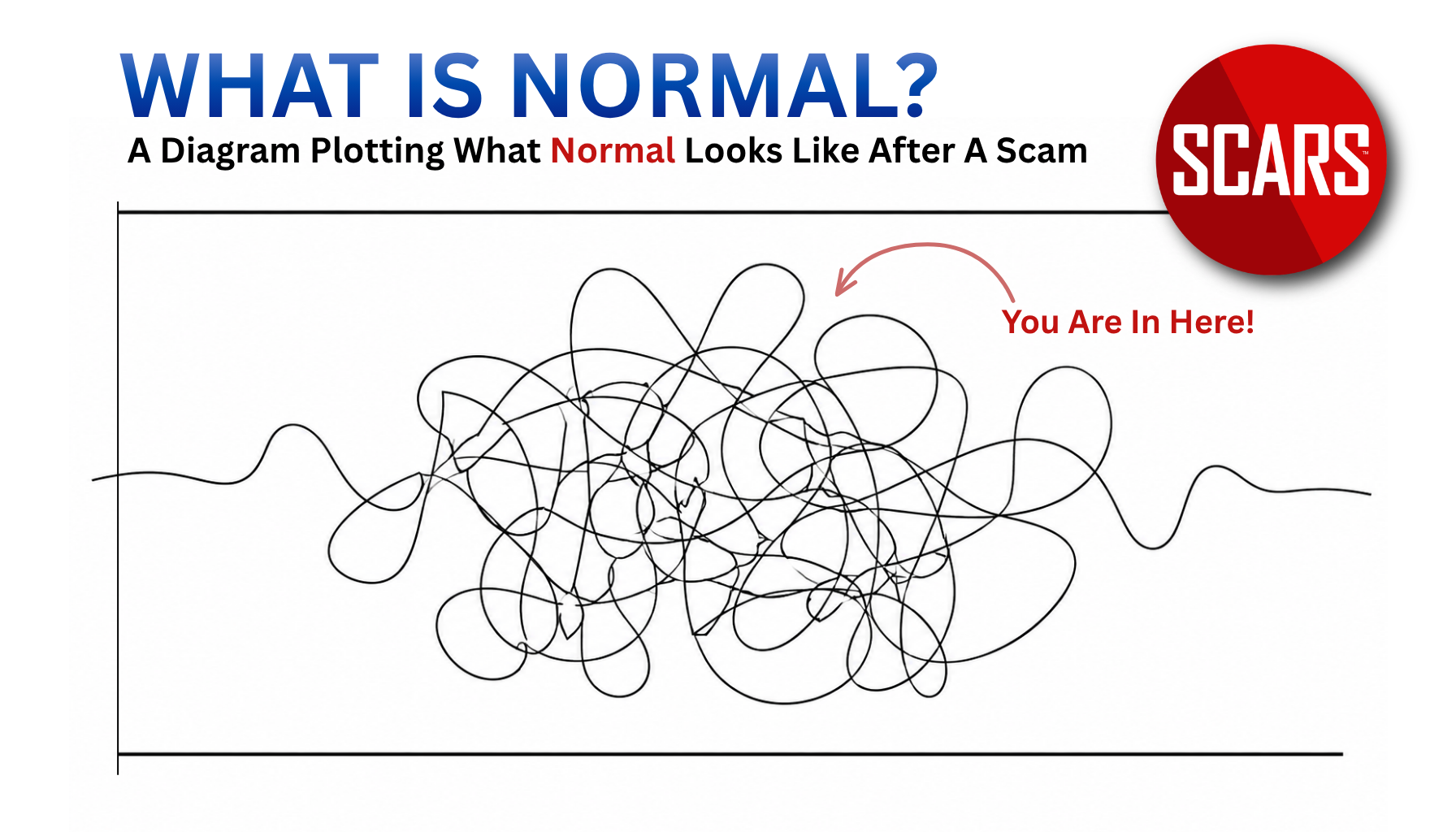
The mistake most survivors make is comparing today’s normal to yesterday’s normal, or comparing their current condition to a version of themselves that no longer exists. Such comparisons often create frustration because recovery rarely moves in a straight line. Good days are followed by difficult days. Confidence grows and then temporarily retreats. Triggers become weaker and then unexpectedly return.
None of this means recovery is failing. It means recovery is happening. Normal changes because people change. Though, in all truth, there will be days – gaps – when you are not normal.
In trauma recovery, normal is best understood as whatever is healthy, manageable, and realistic for the current stage of healing. Some days, that normal will feel strong and confident. Other days, it may feel fragile and uncertain. Both can be normal. Both can be part of recovery.
The goal is not to recreate the exact person who existed before the scam. That person lived before experiencing this particular injury. The goal is to build a life that works in the present, with the knowledge, wisdom, caution, strength, and resilience gained through recovery.
Perhaps the most important realization is that normal is not a destination waiting somewhere in the future. Normal exists right now. It exists in this moment, with all of its challenges, improvements, setbacks, lessons, and victories. As recovery progresses, what is normal will continue to change, just as all healthy human beings continue to change throughout their lives.
Recovery does not lead back to an old normal. Recovery creates a new one.
Prof. Tim McGuinness, Ph.D.
June 2026
This is but one component, one piece of the puzzle …
Understanding how the human mind is manipulated and controlled involves recognizing that the tactics employed by deceivers are multifaceted and complex. This information is just one aspect of a broader spectrum of vulnerabilities, tendencies, and techniques that permit us to be influenced and deceived. To grasp the full extent of how our minds can be influenced, it is essential to examine all the various processes and functions of our brains and minds, methods and strategies used the criminals, and our psychological tendencies (such as cognitive biases) that enable deception. Each part contributes to a larger puzzle, revealing how our perceptions and decisions can be subtly swayed. By appreciating the diverse ways in which manipulation occurs, we gain a more comprehensive understanding of the challenges we face in avoiding deception in its many forms.
“Thufir Hawat: Now, remember, the first step in avoiding a *trap* – is knowing of its existence.” — DUNE
“If you can fully understand your own mind, you can avoid any deception!” — Tim McGuinness, Ph.D.
“The essence of bravery is being without self-deception.” — Pema Chödrön