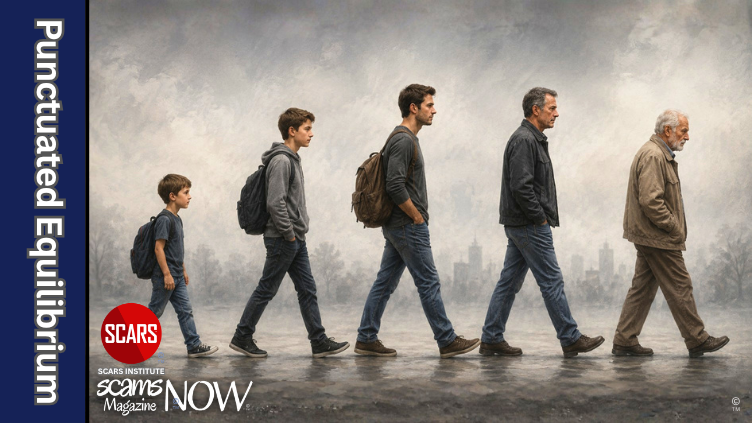


“A Voice in the Quiet”
About Loneliness
An Original Song for Survivors
“A Voice in the Quiet”
An Original Song by Tim McGuinness, Ph.D.
Music & Lyrics Copyright © 2026 – All Rights Reserved Worldwide
LYRICS
The evening folds its coat of blue,
The window holds a fading view.
Across the street, the curtains glow;
There’s laughter somewhere I don’t know.
I set one plate, I pour one cup,
And turn the kitchen music up.
The empty chair, the cooling tea,
The things that keep their eyes on me.
I miss a voice that knows my name,
A little warmth, a steady flame.
A hand that reaches through the night
To say, “Come sit here in the light.”
When I feel lonely, I talk to myself
Like a letter left waiting on somebody’s shelf.
I say, “You are here, and your heart’s beating still;
There is room for your sorrow, a seat it can fill.”
Let the tears find the words that my lips cannot say;
Let the night take its time turning slowly to day.
I am more than the silence, more than this ache;
I am someone worth knowing when morning awakes.
I hear the neighbors on the stair;
I almost call, then leave it there.
I write a message, let it lie,
And watch a plane divide the sky.
I tell myself they’re busy now;
They’d hear the hurt in me somehow.
But every word I leave unsent
Becomes another hour misspent.
I need no perfect thing to say;
“Are you free?” can find a way.
A little bridge of words will do;
Perhaps they need somebody too.
When I feel lonely, I talk to myself
Like a letter left waiting on somebody’s shelf.
I say, “You are here, and your heart’s beating still;
There is room for your sorrow, a seat it can fill.”
Let the tears find the words that my lips cannot say;
Let the night take its time turning slowly to day.
I am more than the silence, more than this ache;
I am someone worth knowing when morning awakes.
The moon keeps watch above the town;
I put my guarded answers down.
I send the words, “It’s been a while.”
The little screen returns a smile.
We speak of rain, of bread, of spring,
Then slowly of the harder thing.
No grand reply, no perfect art,
Just room enough to show my heart.
Some nights the chair stays empty still;
The rain runs silver down the sill.
I let myself admit the pain,
Then call a friend and try again.
I learn the names at places near;
I find a reason to appear.
A greeting grows, a friendship starts,
In little rooms with open hearts.
When I feel lonely, I talk to myself,
Then I take down the letter that waits on the shelf.
I say, “There is someone I’m longing to know;
I can knock on a door, I can ask, I can go.”
Let my voice cross the distance, uncertain but clear;
Let somebody know that I’m glad they are here.
I am more than the silence, more than this ache;
I have love left to give and connections to make.
The evening folds its coat of blue;
I set a second cup for you.
And if tonight there’s only me,
I’ll sit with kindness, drink my tea.
I was told
This is the way.
Why?
“A Voice in the Quiet” explores loneliness through the ordinary details of an evening alone and the longing to be known by another person. Compassionate self-talk gives the speaker room to acknowledge sorrow without treating isolation as a measure of personal worth. The movement toward connection begins with modest actions: sending a message, admitting that things are difficult, calling a friend, and becoming familiar with people nearby. Friendship develops through these repeated openings, while some evenings remain solitary. The second cup represents welcome and possibility, and the willingness to drink tea alone with kindness shows growing self-acceptance. The song brings together two needs: learning to offer oneself companionship and continuing to reach for meaningful relationships with others.
Why the SCARS Institute Provides Songs for Scam Survivors
Traumatic scam victimization affects far more than a person’s finances. It disrupts attention, memory, emotional regulation, trust, identity, and the ability to absorb new information.
For many scam survivors, especially during periods of intense emotional activation, ordinary educational material can be difficult to process. The mind can remain focused on threat, loss, betrayal, shame, and unanswered questions. When the amygdala and related threat systems are highly activated, concentration and deliberate reasoning can become more difficult. A message that is intellectually understood can still struggle to reach the emotional places where it is most needed.
Music provides another pathway!
Rhythm, melody, repetition, imagery, and emotion can carry meaning differently from ordinary instruction. A survivor who struggles to concentrate on several pages of educational material can sometimes hear a song and retain a phrase, an image, or a central truth. Messages such as “you were deceived,” “you are not alone,” “this was not your fault,” “others have survived this,” and “healing requires continued participation” can be encountered without demanding the same sustained cognitive effort required by formal learning.
There is another important reason.
Scammers frequently weaponize music. Scammers choose a victim’s favorite songs, and then they often become associated with grooming, romantic attachment, imagined futures, declarations of love, anniversaries, private rituals, and emotionally intense conversations. After the crime is revealed, music that once brought comfort can suddenly become painful. A favorite song can become a trauma cue and a trigger because it is connected to the criminal and the false relationship.
New music offers survivors an opportunity to reclaim that territory!
A song created around survival, understanding, grief, learning, courage, or rebuilding can become something new to enjoy without belonging to the scam. Music no longer has to remain the property of the criminal memory. New emotional associations can gradually be created around different experiences and meanings.
Songs also communicate something every survivor needs to hear repeatedly: other people understand.
Hearing fear, confusion, betrayal, shame, grief, and recovery expressed through another human voice can reduce the sense of isolation that frequently follows scam victimization. The survivor hears that these experiences are recognizable, shared, and survivable.
SCARS provides songs because education does not have to exist only in books, articles, lectures, or support discussions. Sometimes knowledge needs melody. Sometimes reassurance needs rhythm. Sometimes an important truth needs to be heard many times before it can finally be felt:
You are not alone. You were deceived. It was not your fault. And there is still life ahead.
Also, you can find more music on our SCARS Institute YouTube Channel: SCARS Institute (Romance Scams Now) – YouTube
SCARS Institute
September 2026
Please Tell Us What You Took From This?
Please Leave A Comment!
Commenting Is An Essential Part Of Healing
Read • Think • Write