


Understanding New Grief After A Scam’s Trauma – 2026

The SCARS Institute Magazine about Scam Victims-Survivors, Scams, Fraud & Cybercrime

- Published: 8/11/26
- Modified: 8/11/26
- Comments: 2
- Read Status:

Understanding New Grief After A Scam’s Trauma
After the Scam, Understanding Grief When You Lose a Real Friend or Family Member – Grieving Again
What Japanese Mourning Traditions Can Teach You About Grief After Trauma
Primary Category: Psychology / Recoverology
Authors:
• Tim McGuinness, Ph.D., DFin, MCPO, MAnth – Anthropologist, Scientist, Polymath, Managing Director of the Society of Citizens Against Relationship Scams Inc.
Author Biographies Below
About This Article
Japanese mourning traditions provide a framework for understanding grief as an ongoing process of remembrance rather than requiring emotional separation from the deceased. Rituals surrounding funerals, memorial observances, graves, and household remembrance can give structure to loss and help mourners maintain continuing bonds through memory, meaning, and symbolic connection. For relationship scam survivors, a new death can reactivate earlier feelings associated with betrayal trauma, attachment disruption, loneliness, and helplessness. A home memorial can help distinguish grief for a genuine friend or family member from grief associated with a fraudulent relationship. Photographs, meaningful objects, flowers, writing, prayer, or quiet reflection can create an intentional place for remembrance while allowing the survivor to continue participating in daily life and gradually integrate the loss.
Note: This article is intended for informational purposes and does not replace professional medical advice. If you are experiencing distress, please consult a qualified mental health professional.
Keywords
Japanese Mourning Traditions, Grief Recovery, Continuing Bonds, Betrayal Trauma, Relationship Scam Recovery, Bereavement, Memorial Space, Funeral Rituals, Remembrance, Attachment Trauma

What Japanese Mourning Traditions Can Teach You About Grief After Trauma
Author’s Note
Grief becomes especially complicated when a new loss or death occurs while someone is still recovering from the psychological consequences of a relationship scam. Betrayal trauma can leave attachment, trust, identity, and emotional regulation unsettled, allowing a new bereavement to awaken pain associated with earlier losses.
It is not a question of if; it is just a question of when the next loss or trauma will occur. The next one will be that much harder because of this.
It also offers you an opportunity to reconnect with grief that is grounded in a real and known relationship, rather than the confusing grief created by deception. After a relationship scam, grief can become tangled with uncertainty because you are mourning someone who did not exist as represented, a future that was deliberately fabricated, and memories whose meaning has been altered by betrayal. The death of a genuine friend or family member is different. The person was real, the relationship was real, and the shared history does not have to be questioned or reconstructed. Mourning that person through a funeral, memorial, or small place of remembrance can help your mind rediscover what ordinary human grief feels like when it is connected to an authentic relationship. That distinction can be deeply grounding. It allows you to grieve without investigating, remember without doubting every memory, and experience sadness without the additional burden of deception. In time, this can also help you separate the grief of bereavement from the complicated attachment and betrayal grief left behind by the scam.
As an anthropologist, I have had the opportunity to study and work with a very broad range of cultures, traditions, belief systems, and rituals from around the world. That perspective is especially useful when supporting traumatized scam victims because different cultures have developed meaningful ways of understanding grief, loss, betrayal, identity, community, remembrance, transition, and recovery. Some of these practices can offer valuable insights or adaptable tools when they are approached respectfully and without removing them from their cultural context. By looking beyond a single cultural model, it becomes possible to identify traditions and rituals that can help victims create structure around overwhelming experiences, reconnect with community, restore meaning, and find healthier ways to carry grief and trauma forward.
Japanese traditions of continued remembrance offer a valuable perspective because they do not require love or connection for the lost or deceased to disappear in order for life to continue. The idea of creating a respectful place for memory, participating in meaningful rituals, and allowing the relationship with the deceased to change rather than vanish can help survivors understand that recovery and remembrance can coexist. A person can mourn someone deeply, carry their influence forward, and still continue building a meaningful life.
Prof. Emeritus Tim McGuinness, Ph.D.
August, 2026
Giving Grief a Place to Exist
When someone you love dies, you are not confronted only with the fact that they are gone. You are confronted with everything that remains. Their voice remains in your memory, their habits remain familiar to you, their place in your life remains emotionally occupied, and your mind can continue reaching toward them even when you know they cannot answer. Grief develops inside that contradiction. You understand what has happened, but your emotional life takes much longer to reorganize itself around the absence.
If you are already recovering from a relationship scam, the death of a friend or family member can become even more difficult to absorb. You are not approaching the new loss from a place of emotional stability. You can already be carrying attachment trauma, betrayal trauma, grief, shame, disrupted trust, and the exhaustion that comes from trying to understand how someone you loved could have been part of a deception. When another important person dies, the new grief can stir the older grief as well. Feelings of abandonment, helplessness, loneliness, longing, and fear can begin overlapping until it becomes difficult to know which loss you are reacting to at any given moment.
This is where some Japanese mourning traditions offer a valuable perspective. There is no single Japanese funeral tradition, and practices vary according to family, region, Buddhist school, Shinto beliefs, secular preferences, and modern lifestyles. Yet many Japanese approaches to death share an important principle: the relationship with the deceased does not have to disappear simply because the person’s physical life has ended. Instead, the relationship changes form. The deceased is remembered, spoken about, honored through ritual, and often given a continuing symbolic place within family life.
For someone recovering from trauma, that approach can be deeply meaningful because it gives grief somewhere to go.
The Value of Ritual After Loss
One of the strengths of traditional Japanese mourning is that death is not treated as a single event that everyone is expected to acknowledge and then quickly leave behind. In many Buddhist funeral traditions, there is a progression that can include a wake, a funeral, cremation, the gathering of the cremated remains, later memorial observances, visits to graves, and continued remembrance within the household. Each step acknowledges the same reality from a slightly different emotional position.
There is psychological value in that gradual movement. Death can occur in a moment, but your mind does not necessarily absorb its meaning in a moment. One minute the person exists within your living world, and shortly afterward everyone around you begins speaking about them in the past tense. The change is enormous, yet there is no corresponding change in the attachment that you carried into that moment.
Ritual slows that transition. It creates actions around something over which you otherwise have no control. You cannot prevent the death after it has happened, but you can attend a funeral, place a flower, light incense, say the person’s name, sit beside others who knew them, visit their grave, write something about them, or establish a place of remembrance. These acts do not remove grief, but they allow you to participate in the process of acknowledging the loss rather than simply having the loss happen to you.
That distinction can be particularly important after psychological trauma. Trauma often involves helplessness. Events happened that you could not control, information was concealed from you, decisions were influenced by manipulation, and reality changed before you understood what was happening. Meaningful mourning rituals do not restore control over death, but they can restore some sense of agency over how you meet the loss and how you carry the person forward.
A Different Relationship With the Dead
Many Western ideas about grieving have historically emphasized the idea of letting go, moving on, or achieving closure. Those phrases can be useful in some contexts, but they can also imply that successful grieving requires the deceased person to become increasingly absent from your emotional life.
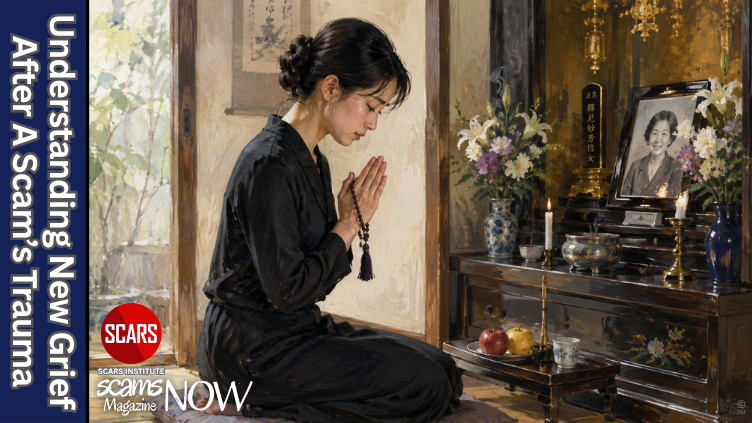
Japanese traditions can offer a different way of thinking about this. In many households, especially those influenced by Buddhist practice, a butsudan or household altar provides a place where deceased family members and ancestors can be remembered. Photographs, tablets bearing posthumous names, incense, flowers, food, water, or other offerings can become part of that continuing relationship with memory.
The psychological value is not that the mourner pretends the person is still physically alive. The value is that love and memory are given permission to continue after death.
Modern grief psychology increasingly recognizes this idea through what is often called continuing bonds. You do not necessarily recover from bereavement by severing your psychological relationship with the person who died. You can instead develop a different relationship with them, one based on memory, meaning, values, stories, influence, and the place they continue to occupy within your personal history.
You can miss your friend and still recover. You can keep their photograph and still move forward. You can talk about them years later without being trapped in the moment of their death. Continuing to love someone who died is not the same as refusing to accept that they are gone.
Why This Matters After a Relationship Scam
This distinction becomes especially important when you have already experienced the strange and complicated grief created by a relationship scam. Scam-related grief often requires you to dismantle an attachment because the person you believed you knew did not exist as represented. You are forced to question memories, promises, conversations, photographs, intentions, and even the identity of the person you loved. You can find yourself grieving someone while simultaneously learning that much of what surrounded that person was deliberately fabricated.
Then someone real dies.
Your friend was real. Your parent was real. Your sibling was real. Your relationship with them existed outside a manufactured criminal identity. The conversations you remember happened between the people you believed were having them. The shared meals, arguments, jokes, holidays, acts of kindness, disappointments, and ordinary days belong to an actual relationship.
That distinction matters enormously.
After a relationship scam, your mind can become accustomed to questioning everything. You learn to examine photographs, identities, messages, promises, motives, and memories. You can become suspicious even of your own perceptions because betrayal taught you that something that felt real could conceal an entirely different reality.
When a genuine friend or family member dies, you do not need to investigate the relationship in the same way. You can grieve it.
You can look at their photograph and know that the person existed. You can remember a conversation without wondering whether someone else wrote it. You can recall kindness without asking whether it was merely a manipulation technique. You can remember their faults and imperfections without discovering that the entire identity behind them was invented.
That kind of grief can still be devastating, but it is fundamentally different from the ambiguous grief created by deception.
The Value of a Small Memorial Space at Home
A particularly useful practice that can be adapted from Japanese household remembrance is the creation of a small memorial space in your home. If you are not Buddhist or do not belong to a tradition that uses a butsudan, there is no need to imitate a sacred religious practice or claim that you are practicing Japanese Buddhism. You can simply borrow the underlying principle that memory benefits from having a respectful place.
The space does not need to be elaborate. It can contain a photograph of the person, perhaps accompanied by a flower, a meaningful object, a letter, a small piece of artwork, or something connected with a shared experience. If your beliefs allow it, you might include a candle or incense used safely and intentionally. You might place a favorite book nearby, a seashell from a trip you took together, a card they sent you, or another object that brings forward the person rather than merely the circumstances of their death.
The important thing is not the object itself. The important thing is that you have deliberately created a place where remembering is allowed.
Grief can otherwise seem to appear everywhere. A song begins playing unexpectedly, and you are transported back into the loss. You notice an empty chair, see an old photograph, pass a familiar restaurant, or instinctively reach for the phone because something happened that you would normally have told them. When grief has no defined place, the entire environment can begin feeling saturated with the person’s absence.
A memorial space changes the relationship slightly. It gives you somewhere you can intentionally approach the memory rather than experiencing every reminder as an ambush.
You can sit there when you want to remember. You can speak to the person if that feels meaningful. You can tell them what happened during your day, even while understanding that this is an act of remembrance rather than a literal conversation. You can cry there, smile there, write there, pray there, or simply sit quietly with the photograph.
Then you can stand up and return to the rest of your life.
That movement is psychologically significant. You are not locking grief away, but you are also not allowing grief to occupy every room of your existence.
A Place for a Real Person
For a relationship scam survivor, the memorial space can serve another important purpose. It can help your mind distinguish the person who truly existed from the fraudulent persona whose loss you previously had to process.
You can look at the photograph of your friend and know that there is nothing hidden behind the face. The person was who they were. Their life had continuity before you knew them and continued through the years you shared. Their strengths belonged to them, their faults belonged to them, and the relationship you remember developed between two actual people.
That can be profoundly grounding after deception.
Your grief does not have to be accompanied by an investigation. You do not need to discover who they really were because you already knew them. You do not need to wonder whether another person was operating the account, whether the photograph was stolen, whether the loving words were copied, or whether an intimate conversation was being shared with strangers.
You are simply grieving someone you loved.
There is great sadness in that simplicity, but there can also be a kind of psychological relief. The relationship existed. The person mattered. The memories belong to you without requiring reinterpretation through the machinery of fraud.
Repetition Gives Grief a Rhythm
Another useful element of Japanese mourning traditions is the idea that remembrance continues over time. The funeral is important, but it is not necessarily treated as the final occasion on which grief is given formal recognition. Memorial observances can occur afterward, families can visit graves, ancestors can remain part of household remembrance, and seasonal traditions such as Obon can reconnect families with those who came before them.
The deeper value is repetition.
Grief rarely changes because of one powerful conversation or one ceremony. You encounter the loss repeatedly because life continually presents new situations in which the person’s absence becomes relevant. Their birthday arrives. A holiday returns. Something happens that they would have found hilarious. You accomplish something they would have been proud of. You experience a crisis and realize that they are no longer among the people you can call.
Each moment requires the mind to understand the loss again from a slightly different position.
Repeated rituals can give those moments shape. You might place fresh flowers beside the photograph every week. You might prepare something they enjoyed on their birthday. You might write about them on the anniversary of their death. You might occasionally sit beside the memorial and recall one specific story rather than concentrating on the fact that they died.
Over time, this can change the emotional content of remembrance.
At first, almost every memory can end at the death. You remember the person and immediately remember that they are gone. Later, memory can become larger than the death itself. You can remember their ridiculous sense of humor, the way they pronounced a particular word, something they always complained about, a trip you took together, or the advice they gave you at an important moment.
The person gradually becomes more than the circumstances of losing them.
That is an important movement in grief.
Grief Does Not Need to Be Erased
There is sometimes a fear that keeping a memorial, speaking to the deceased, visiting a grave, or continuing rituals of remembrance will prevent recovery. This concern assumes that healing requires emotional distance from the person who died.
A healthier understanding is that acute grief can change while love remains.
You do not have to choose between remembering someone and continuing your own life. You can do both without contradiction. The relationship can become quieter, symbolic, and integrated rather than remaining an open wound dominating every day.
A photograph that initially makes you cry can someday make you smile. A birthday that first feels unbearable can later become an occasion for telling stories. A favorite song that once forces you to leave the room can eventually become something you deliberately play because it brings the person close in memory.
Nothing about that process requires forgetting.
The person becomes incorporated into your life story rather than remaining trapped only at the moment where their life ended.
When One Grief Awakens Another
If you are already recovering from a relationship scam, a new death can sometimes feel disproportionately overwhelming. You can wonder why the loss seems to be affecting you more intensely than you expected, or why thoughts about the scam have suddenly returned alongside grief for the deceased.
Your emotional system does not necessarily file every loss into a separate compartment. New grief can activate older pathways associated with abandonment, attachment, loneliness, helplessness, and separation. The death of a friend can therefore awaken grief connected with the scam without making the two losses identical.
You do not need to force them apart immediately.
You can recognize that your friend died while you were already carrying significant emotional injuries. The new loss arrived before the older wounds had fully settled. Your grief can therefore contain several layers at once, and those layers can require time to distinguish from one another.
A memorial space can help with that separation. When you sit before your friend’s photograph, you can intentionally focus on that relationship. You can remember who they were, what you loved about them, what they gave you, what frustrated you, what you learned from them, and why their absence hurts.
The scam does not need to own this grief.
Your friend deserves to be remembered as themselves, and you deserve the opportunity to grieve them without every emotion being absorbed into the trauma that came before.
Letting the Relationship Change Instead of Disappear
Perhaps the most useful idea found within Japanese mourning traditions is that death does not require an immediate severing of the bond between the living and the dead. The form of the relationship changes because physical presence is gone, but memory, gratitude, influence, love, and identity can continue.
This can be especially valuable when you have already experienced a form of grief in which you were required to dismantle a relationship because its foundation was deceptive. With the scammer, recovery can require breaking the attachment to a constructed identity and accepting that the imagined future cannot be restored. With someone who genuinely lived and loved you, the task is different.
You do not have to dismantle the relationship.
You transform it.
You carry forward what was good. You remember what was difficult. You preserve the stories that deserve preservation. You allow the person to remain part of who you became without allowing their death to become the end of your own emotional life.
The funeral can help you acknowledge that the physical relationship has ended. Continued ritual can help your mind revisit that reality gradually. A home memorial can give memory a respectful place. Family, friends, and community can provide witnesses to the person’s life and to your grief.
Eventually, you can learn that continuing to live is not an act of abandonment.
You are not leaving the deceased behind because you begin laughing again, traveling again, loving again, or finding meaning in another part of your life. Their importance does not depend upon your remaining miserable.
You can carry them forward without carrying the first intensity of their death forever.
That is one of the most compassionate lessons available in the idea of continuing remembrance. Someone can be gone and still matter. You can be deeply changed by their death and still recover. You can preserve a place for them in your home and within yourself while continuing to build a life beyond the loss.
The purpose of remembrance is not to keep the wound open.
It is to allow love to remain after the wound begins to heal.
Conclusion
When you experience the death of a friend or family member while you are still recovering from a relationship scam, you can find yourself carrying several forms of grief at the same time. The new loss can awaken the loneliness, attachment pain, helplessness, and separation already associated with betrayal trauma. That does not make the losses identical. It means your emotional system is being asked to absorb another profound change while it is still reorganizing itself around what came before.
Japanese mourning traditions offer a useful way to understand how you can approach that grief without trying to erase the person you lost. Ritual can give structure to something that otherwise feels uncontrollable. A funeral can help acknowledge that physical presence has ended. Continued remembrance can allow the relationship to change rather than disappear. A small memorial space in your home can provide a place where memory is welcomed intentionally instead of appearing unexpectedly throughout every part of your life.
This distinction can be particularly meaningful after a relationship scam. Recovery from the scam often requires you to question a constructed identity, reinterpret memories, and detach from a relationship built through deception. The death of a genuine friend or family member asks something different of you. You do not have to dismantle that relationship. You can preserve it through memory, gratitude, stories, rituals, photographs, and the influence that person continues to have upon your life.
Over time, grief can change without requiring love to disappear. The photograph that initially brings tears can eventually bring warmth. Memories can become larger than the circumstances of the death. Anniversaries can become opportunities for remembrance rather than only reminders of absence.
Continuing your own life does not mean that you have left the person behind. You can laugh again, travel again, build relationships, make plans, and experience happiness while continuing to carry someone important within your personal history. Their place in your life does not depend upon your remaining in pain.
You can remember them, honor them, and continue living.
The wound can gradually heal while the love remains.

Glossary
- Acute Grief — Acute grief is the intense early period of bereavement in which memories of the deceased are closely tied to the fact of their death. A photograph, birthday, song, or familiar place can trigger strong sadness because the mourner has not yet fully integrated the person’s absence into daily life. With time, remembrance can become less dominated by the circumstances of the death while love and memory remain. — Grief Response
- Ancestor Remembrance — Ancestor remembrance is the continued acknowledgment of deceased family members through household, family, or seasonal practices. Japanese traditions can preserve a symbolic relationship with those who died instead of treating remembrance as something that should end after the funeral. This continuing connection allows memory and family identity to remain active while the living continue with their own lives. — Cultural Mourning Practice
- Authentic Relationship Grief — Authentic relationship grief is mourning connected with a person who genuinely existed and shared an actual history with the mourner. The memories, conversations, kindness, conflicts, and ordinary experiences do not require the same investigation or reinterpretation that follows a fraudulent relationship. For scam survivors, this form of grief can help restore confidence that genuine attachment and trustworthy memory remain possible. — Grief Response
- Bereavement Layering — Bereavement layering occurs when a new death is experienced while earlier grief, trauma, or attachment injuries remain emotionally active. The newer loss can awaken loneliness, helplessness, abandonment, or separation connected with previous experiences without making the different losses identical. Recognizing these layers can help a survivor understand why a new bereavement can feel more intense than expected. — Grief Response
- Buddhist Funeral Progression — Buddhist funeral progression refers to the sequence of mourning practices that can include a wake, funeral, cremation, collection of remains, memorial observances, grave visits, and continued household remembrance. Each stage allows the reality of death to be encountered from a different emotional position. The gradual progression can help mourners absorb a major transition that the mind cannot always process immediately. — Cultural Mourning Practice
- Butsudan — A butsudan is a Buddhist household altar used in many Japanese homes as a place for religious devotion and remembrance of deceased family members and ancestors. It can contain photographs, posthumous name tablets, incense, flowers, food, water, or other meaningful offerings. Its relevance to grief lies in providing memory and continuing family connection with a defined and respected place within everyday life. — Memorial Practice
- Carrying the Person Forward — Carrying the person forward is the process of allowing a deceased person’s memory, influence, values, and place in personal history to continue without requiring the mourner to remain in acute pain. The relationship changes because physical presence has ended, but its meaning does not have to disappear. This perspective allows continued living to coexist with enduring love and remembrance. — Continuing Bonds
- Continuing Bonds — Continuing bonds describe an ongoing psychological relationship with a deceased person based on memory, meaning, values, stories, gratitude, and influence. Bereavement does not necessarily require the mourner to sever emotional connection with someone who died. The bond can gradually become quieter and more integrated while the mourner accepts the physical reality of the person’s absence. — Grief Process
- Continued Remembrance — Continued remembrance is the practice of intentionally keeping a deceased person’s memory present after the formal funeral period has ended. It can occur through photographs, household memorials, grave visits, anniversaries, stories, seasonal observances, and other meaningful rituals. Continued remembrance allows love to remain while the mourner gradually adapts to life without the person’s physical presence. — Memorial Practice
- Cremation — Cremation is part of the progression found in many Japanese Buddhist funeral traditions and occurs after the deceased has been formally mourned and acknowledged. The gathering of cremated remains can become another structured encounter with the reality that physical life has ended. Within a broader mourning sequence, cremation functions as one stage of transition rather than the entire grieving process. — Funeral Practice
- Cultural Mourning Framework — A cultural mourning framework is a socially developed system of rituals, beliefs, symbols, and practices that helps people understand and respond to death. Different cultures have created different ways of organizing grief, remembrance, community participation, and the continuing relationship with the deceased. Scam survivors can sometimes benefit from respectfully adapting useful principles from these traditions without claiming religious or cultural practices that are not their own. — Cultural Practice
- Death Anniversary Ritual — A death anniversary ritual is a repeated act of remembrance performed around the date on which a person died. A mourner might write about the person, prepare something they enjoyed, visit a memorial, or spend deliberate time remembering a specific part of the relationship. Repetition gives changing grief a predictable structure while allowing memories to develop beyond the circumstances of the death. — Memorial Practice
- Emotional Reorganization — Emotional reorganization is the gradual process through which a mourner’s inner life adjusts to the physical absence of someone who remains psychologically important. Intellectual understanding of death can occur much faster than emotional attachment changes, leaving the mind continuing to expect the person’s presence. Ritual, remembrance, time, and repeated encounters with the loss can support this gradual adjustment. — Grief Process
- Funeral — A funeral is a structured communal acknowledgment that a person’s physical life has ended and that the relationship with the living must now change form. Its value extends beyond ceremony because it creates a recognized time for farewell, remembrance, witness, and emotional transition. For trauma survivors, participation can provide structure around a loss that otherwise feels uncontrollable. — Funeral Practice
- Grave Visit — A grave visit is an intentional act of returning to a physical place associated with the deceased for remembrance, reflection, respect, or ritual. Japanese mourning practices can include continued grave visits after the funeral rather than treating burial or cremation as the end of formal remembrance. Repeated visits can provide a stable location where grief and memory are approached deliberately. — Memorial Practice
- Grief Ambush — A grief ambush occurs when an unexpected reminder suddenly activates intense memories or sadness connected with someone who died. Songs, restaurants, photographs, empty chairs, familiar places, or the impulse to call the deceased can make grief appear without warning. Creating an intentional memorial space can help balance these unexpected encounters by also giving remembrance a place that the mourner chooses to approach. — Grief Response
- Grief Differentiation — Grief differentiation is the gradual ability to recognize that different losses can activate similar emotions while still representing different relationships and experiences. A scam survivor can experience grief connected with betrayal alongside bereavement for a genuine friend or family member. Distinguishing those losses can help prevent the earlier scam from absorbing the meaning of every later experience of sadness and separation. — Recovery Process
- Grief Grounding — Grief grounding occurs when remembrance is connected with a known person, genuine shared history, and memories that do not require investigation for deception. For a relationship scam survivor, grieving someone who truly existed can provide a stabilizing contrast with the uncertainty surrounding a fraudulent persona. The mourner can remember the deceased without questioning whether the person’s identity, intentions, or shared experiences were fabricated. — Recovery Process
- Grief Integration — Grief integration is the process through which the deceased gradually becomes incorporated into the mourner’s life story instead of remaining associated only with the moment of death. Memories can eventually include humor, advice, shared experiences, personality, and ordinary life without immediately collapsing into acute sadness. Integration allows the person’s importance to remain while the mourner continues developing a meaningful life. — Grief Process
- Grief Repetition — Grief repetition describes the repeated encounters with loss that occur as birthdays, holidays, milestones, songs, memories, and new life events reveal the person’s absence in different ways. Each experience asks the mind to understand the loss from another position. Repeated rituals can provide structure for these recurring moments and gradually change the emotional character of remembrance. — Grief Response
- Home Memorial Space — A home memorial space is a deliberately chosen place where photographs, flowers, letters, meaningful objects, artwork, or other reminders of the deceased can be kept respectfully. It gives memory a defined location that the mourner can intentionally approach instead of experiencing remembrance only through unexpected triggers. The space can support both continuing connection and the ability to return afterward to ordinary daily life. — Memorial Practice
- Household Remembrance — Household remembrance is the integration of memory for deceased family members into the home rather than limiting mourning to cemeteries or formal ceremonies. Japanese traditions can maintain this connection through household altars, photographs, offerings, and routine acts of remembrance. The practice allows memory to remain part of family life while acknowledging that the deceased is no longer physically present. — Cultural Mourning Practice
- Incense Offering — An incense offering is a ritual act that can accompany remembrance, prayer, respect, or household mourning in Japanese Buddhist traditions. Within an adapted personal memorial practice, incense can provide sensory structure and intentionality when it is consistent with the mourner’s beliefs and used safely. Its value comes from the meaningful act of pausing and remembering rather than from treating the object itself as psychologically curative. — Memorial Practice
- Japanese Mourning Traditions — Japanese mourning traditions include varied Buddhist, Shinto, secular, regional, family, and modern approaches to death and remembrance. Many of these traditions recognize that the relationship with a deceased person can change form rather than disappearing immediately after death. Their use of ritual, household remembrance, memorial observances, and continuing bonds can offer useful perspectives for trauma survivors confronting later bereavement. — Cultural Mourning Practice
- Layered Grief — Layered grief develops when several losses remain emotionally active and begin influencing one another. A relationship scam survivor who later loses a friend or family member can experience current bereavement together with older loneliness, abandonment, attachment pain, or helplessness. Recognizing the layers helps explain emotional intensity without assuming that all of the grief comes from the same source. — Grief Response
- Living Beyond Loss — Living beyond loss means continuing to build relationships, experience happiness, make plans, travel, laugh, and find meaning while still preserving an important place for the deceased. Continued living does not require forgetting or minimizing the relationship that ended. The deceased person’s importance can remain part of personal history without requiring permanent suffering as proof of love. — Recovery Process
- Loss Reactivation — Loss reactivation occurs when a new bereavement awakens emotional pathways associated with previous loss, trauma, loneliness, attachment disruption, helplessness, or separation. The resulting distress can feel unexpectedly powerful because the emotional system is responding to more than one layer of experience. Recognizing reactivation can help survivors distinguish the current death from the earlier trauma without denying the connection between them. — Trauma Activation
- Memorial Objects — Memorial objects are photographs, letters, books, artwork, cards, flowers, keepsakes, or other items deliberately associated with the person who died. Their purpose is to bring forward the person’s life and relationship rather than keeping attention fixed exclusively on the circumstances of death. When placed thoughtfully, these objects can support intentional remembrance and continuing bonds. — Memorial Practice
- Memorial Observance — A memorial observance is a deliberate occasion for remembering the deceased after the funeral or immediate period of loss. It can occur on anniversaries, birthdays, seasonal occasions, or other meaningful dates and can involve visiting, writing, preparing food, sharing stories, or quiet reflection. Continued observances provide recurring opportunities for grief and memory to change over time. — Memorial Practice
- Memory Saturation — Memory saturation occurs when reminders of a deceased person seem to occupy many parts of the mourner’s environment and daily routine. Chairs, music, restaurants, photographs, telephones, and familiar places can repeatedly activate the person’s absence until grief appears to be everywhere. A defined place of remembrance can help create intentional moments of memory without attempting to remove reminders from the rest of life. — Grief Response
- Mourning Ritual — A mourning ritual is a meaningful repeated or ceremonial action used to acknowledge death, remember the deceased, express grief, or mark a transition. Ritual can include funerals, flowers, incense, grave visits, writing, prayer, household remembrance, or other culturally appropriate practices. For trauma survivors, these actions can provide structure and participation after an event that otherwise reinforces helplessness. — Grief Practice
- Obon — Obon is a Japanese seasonal tradition associated with remembering and honoring deceased ancestors and family members. Its presence within the broader mourning framework illustrates that remembrance can continue well beyond the funeral and remain integrated into family and cultural life. For recovery purposes, the underlying principle demonstrates how scheduled remembrance can give recurring grief a meaningful and socially recognized rhythm. — Cultural Mourning Practice
- Ordinary Human Grief — Ordinary human grief refers to bereavement grounded in the death of a genuine person and an authentic shared relationship. For scam survivors, experiencing this kind of grief can contrast sharply with mourning a fraudulent identity, fabricated future, and memories altered by betrayal. Reconnecting with grief based on reality can help separate bereavement from the complicated attachment and uncertainty created by the scam. — Grief Response
- Place of Remembrance — A place of remembrance is a deliberately established physical location where memories of the deceased can be approached with intention and respect. It can include a photograph, meaningful objects, flowers, writing, or other personally appropriate items without requiring the mourner to adopt another culture’s religious practices. The defined location gives memory somewhere to exist while leaving space for ordinary life to continue elsewhere. — Memorial Practice
- Posthumous Name Tablet — A posthumous name tablet is an object that can be placed within a Japanese Buddhist household altar as part of remembrance for someone who has died. It represents one element within a larger tradition of maintaining symbolic connection between deceased family members and the household. Its significance demonstrates how memory can be given a recognized physical and ritual presence after death. — Cultural Mourning Practice
- Psychological Agency in Mourning — Psychological agency in mourning is the survivor’s ability to choose meaningful actions in response to a loss that could not be prevented or controlled. Attending a funeral, placing flowers, writing, visiting a grave, creating a memorial, or participating with others allows the mourner to become an active participant in remembrance. This can be particularly valuable after trauma because helplessness is often central to earlier traumatic experiences. — Recovery Process
- Real-Person Remembrance — Real-person remembrance centers memory on someone whose identity, history, personality, and relationship with the mourner were genuine. Scam survivors can find this distinction grounding because remembrance does not require verification of photographs, messages, motives, or hidden identities. The deceased can be remembered as a complete person whose strengths, faults, shared experiences, and influence genuinely belonged to them. — Grief Grounding
- Recovery and Remembrance — Recovery and remembrance describe the ability to continue healing and building life while maintaining an emotional and symbolic connection with someone who died. Remembrance does not require the survivor to remain immobilized by grief, and recovery does not require the person to be forgotten. The two processes can coexist as memories become integrated into personal history rather than remaining permanently attached to acute pain. — Recovery Process
- Relationship Transformation After Death — Relationship transformation after death is the shift from a relationship based on physical presence to one sustained through memory, gratitude, stories, values, influence, and symbolic connection. The bond changes because direct interaction is no longer possible, but emotional significance does not have to disappear. This process differs from scam recovery, where the survivor often must dismantle attachment to an identity that was constructed through deception. — Continuing Bonds
- Repeated Ritual — A repeated ritual is a meaningful remembrance practice performed regularly rather than only once after a death. Fresh flowers, anniversary writing, birthday remembrance, grave visits, prayer, storytelling, or time spent at a memorial can provide recurring structure as grief changes. Repetition allows the mourner to encounter the loss from different emotional positions while gradually expanding memory beyond the circumstances of death. — Memorial Practice
- Ritual Structure — Ritual structure is the organization of mourning into recognizable actions, stages, occasions, or practices that help give form to an otherwise overwhelming experience. A sequence of wake, funeral, cremation, memorial observance, grave visit, and household remembrance allows death to be acknowledged repeatedly rather than processed in a single moment. Structure can be especially useful after trauma because it creates purposeful action where helplessness might otherwise dominate. — Grief Practice
- Scam-Related Grief — Scam-related grief is the complicated mourning that follows attachment to a person who did not exist as represented and a future that was deliberately fabricated. Survivors can be forced to question memories, conversations, promises, photographs, intentions, and the identity connected with their emotional attachment. This grief differs from ordinary bereavement because loss is inseparable from betrayal, uncertainty, and the reconstruction of reality. — Betrayal Grief
- Seasonal Remembrance — Seasonal remembrance is the practice of returning to memory at culturally or personally meaningful times throughout the year. Japanese traditions such as Obon demonstrate how remembrance of deceased family members can remain part of recurring family and community life. Predictable remembrance can help grief acquire rhythm by creating recognized occasions for memory instead of leaving all encounters with loss to happen unexpectedly. — Cultural Mourning Practice
- Shared History — Shared history is the collection of genuine experiences, conversations, disagreements, celebrations, routines, kindnesses, disappointments, and ordinary moments that developed between actual people. After a genuine death, these memories do not require the same fundamental reinterpretation imposed by discovery of a fraudulent relationship identity. For scam survivors, trusted shared history can help reestablish the difference between authentic human connection and manufactured intimacy. — Relationship Memory
- Symbolic Connection — Symbolic connection is the continuing relationship a mourner maintains with the deceased through photographs, objects, stories, rituals, values, memories, prayer, or personal meaning. It acknowledges physical absence without requiring emotional significance to disappear. Symbolic connection can become a healthy part of grief when it supports remembrance while allowing the living person to continue engaging with present life. — Continuing Bonds
- Transition After Death — Transition after death is the gradual psychological movement from relating to someone as physically present to understanding the relationship through memory and continuing bonds. The mind often requires more time for this transition than intellectual knowledge of the death would suggest. Funeral rituals, memorial practices, and repeated remembrance can help the mourner revisit the reality of the loss until it becomes more integrated. — Grief Process
- Trauma-Complicated Bereavement — Trauma-complicated bereavement occurs when the death of a friend or family member is experienced while earlier psychological injuries remain unsettled. Attachment disruption, betrayal, shame, loneliness, and helplessness associated with a relationship scam can increase the emotional burden of the new loss. Recognizing this interaction can help survivors understand why bereavement can feel unusually intense without confusing the genuine death with the earlier deceptive relationship. — Trauma Response
- Wake — A wake is a mourning gathering that occurs before the funeral within many Japanese Buddhist funeral traditions. It forms part of a larger progression that gives family and community repeated opportunities to acknowledge the death rather than forcing the entire transition into a single ceremony. The wake can contribute to the gradual psychological recognition that the person’s physical presence has ended. — Funeral Practice
- Western Closure Model — The Western closure model refers to common cultural ideas that successful grieving requires letting go, moving on, or reducing the deceased person’s emotional presence. These ideas can imply that continued connection represents failure to recover, even though grief can also develop through continuing bonds and integrated remembrance. Japanese traditions provide a contrasting perspective in which memory and symbolic relationship can remain active while life continues. — Cultural Grief Model
- Witnessed Grief — Witnessed grief occurs when family, friends, community members, or others acknowledge both the life of the deceased and the mourner’s loss. Funerals, memorials, grave visits, shared stories, and community participation prevent grief from remaining entirely private and unsupported. This social recognition can be especially meaningful for scam survivors whose earlier grief was often difficult for outsiders to understand or validate. — Support Systems
Author Biographies
Author Biography
Prof. (Emeritus) Tim McGuinness, Ph.D. DFin is a co-founder, Managing Director, and Chairman of the SCARS Institute (Society of Citizens Against Relationship Scams Inc.), where he serves as an unsalaried volunteer officer dedicated to supporting scam victims and survivors around the world. With over 34 years of experience in scam education and awareness, he is perhaps the longest-serving advocate in the field.
Dr. McGuinness has an extensive background as a business pioneer, having co-founded several technology-driven enterprises, including the former e-commerce giant TigerDirect.com. Beyond his corporate achievements, he is actively engaged with multiple global think tanks where he helps develop forward-looking policy strategies that address the intersection of technology, ethics, and societal well-being. He is also a computer industry pioneer (he was an Assistant Director of Corporate Research Engineering at Atari Inc. in the early 1980s) and invented core technologies still in use today.
His professional identity spans a wide range of disciplines. He is a scientist, strategic analyst, solution architect, advisor, public speaker, published author, roboticist, Navy veteran, and recognized polymath. He holds numerous certifications, including those in cybersecurity from the United States Department of Defense under DITSCAP & DIACAP, continuous process improvement and engineering and quality assurance, trauma-informed care, grief counseling, crisis intervention, and related disciplines that support his work with crime victims.
Dr. McGuinness was instrumental in developing U.S. regulatory standards for medical data privacy called HIPAA and financial industry cybersecurity called GLBA. His professional contributions include authoring more than 1,000 papers and publications in fields ranging from scam victim psychology and neuroscience to cybercrime prevention and behavioral science.
“I have dedicated my career to advancing and communicating the impact of emerging technologies, with a strong focus on both their transformative potential and the risks they create for individuals, businesses, and society. My background combines global experience in business process innovation, strategic technology development, and operational efficiency across diverse industries.”
“Throughout my work, I have engaged with enterprise leaders, governments, and think tanks to address the intersection of technology, business, and global risk. I have served as an advisor and board member for numerous organizations shaping strategy in digital transformation and responsible innovation at scale.”
“In addition to my corporate and advisory roles, I remain deeply committed to addressing the rising human cost of cybercrime. As a global advocate for victim support and scam awareness, I have helped educate millions of individuals, protect vulnerable populations, and guide international collaborations aimed at reducing online fraud and digital exploitation.”
“With a unique combination of technical insight, business acumen, and humanitarian drive, I continue to focus on solutions that not only fuel innovation but also safeguard the people and communities impacted by today’s evolving digital landscape.”
Dr. McGuinness brings a rare depth of knowledge, compassion, and leadership to scam victim advocacy. His ongoing mission is to help victims not only survive their experiences but transform through recovery, education, and empowerment.
-/ 30 /-
What do you think about this?
Please share your thoughts in a comment below!
GLOSSARY SEARCH
TOPIC SEARCH
TABLE OF CONTENTS







CATEGORIES
Understanding New Grief After A Scam’s Trauma – 2026
Please Leave a Comment
Please Tell Us What You Learned From This?
Commenting Is An Essential Part Of Healing
Read • Think • Write
2 Comments
Leave A Comment Cancel reply
More ScamsNOW.com Articles







I’ve been friends with my friend Cathy who died for about 3 years. It was still a new friendship. I have a picture of her from her service. I keep that on my mirror. Every now n then it falls down n I remember to talk to her. I dont know if I would preserve anything else. I should have done something like the Japanese do for my father. I was very close to him n I dont have too many memories lying around.
Three years might feel like a new friendship, but the importance of a relationship does not depend on how many years it lasted. Cathy clearly became part of your life, and keeping her photograph on your mirror gives her a continuing place within it. When the picture falls and reminds you to speak to her, that small moment becomes its own remembrance ritual. It reconnects you with the friendship, the person she was, and what her presence meant to you.
It is also not too late to create something meaningful for your father. You do not need a large collection of possessions or photographs to preserve your connection with him. You could establish a small place for his photograph, a meaningful object, a candle, or a written memory. You could speak to him, write down the stories you still remember, prepare a food he enjoyed, or observe a particular day in his honor.
The Japanese tradition offers an important lesson because remembrance does not have to end with the funeral. A relationship continues through memory, ritual, gratitude, and the ways a loved one remains part of daily life. You did not miss your opportunity with your father. You can begin now, using whatever feels personal and true to the relationship you shared.