




Tōrō Nagashi (灯籠流し) – A Monthly Lantern Ritual For Scam Victims – 2025

The SCARS Institute Magazine about Scam Victims-Survivors, Scams, Fraud & Cybercrime

- Published: 9/11/25
- Modified: 9/11/25
- Comments: 0
- Words: 2,851
- Reading Time: 15 Minutes
- Read Status:

Tōrō Nagashi (灯籠流し) – A Monthly Lantern Ritual For Scam Victims
Japanese Floating Lanterns for Monthly Healing: Tōrō Nagashi and a Gentle 21-Month Practice
Primary Category: Scam Victim Recovery Psychology
Author:
• Tim McGuinness, Ph.D., DFin, MCPO, MAnth – Anthropologist, Scientist, Polymath, Managing Director of the Society of Citizens Against Relationship Scams Inc.
Author Biographies Below
About This Article
This is a ritual for scam victims and survivors involving gentle light on water, which offers a kind way to heal. With tōrō nagashi, “flowing lanterns,” you create a month-end ritual that honors grief without denying it. Each month for twenty-one months, you write three short lines on a small, water-safe lantern, one truth, one gratitude, one release, then set it afloat, watch the glow fade, and record a few notes. The repetition builds steadiness, marks progress you can see, and pairs release with calm. Quiet consistency, clear intentions, and gentle care turn a hard season into a measured path forward.
Note: This article is intended for informational purposes and does not replace professional medical advice. If you are experiencing distress, please consult a qualified mental health professional.

Japanese Floating Lanterns for Monthly Healing: Tōrō Nagashi (灯籠流し) and a Gentle 21-Month Practice
Grief after a relationship scam often arrives in waves that feel larger at night and quieter by day. By using a Tōrō Nagashi (灯籠流し) ritual, you can overcome more and more of the emotions that can be so difficult to sustain.
This involves a small, steady ritual that can help those waves lose force without denying what happened. The Japanese custom of tōrō nagashi (灯籠流し), the setting of paper lanterns on water or in the air, offers a calm image of remembrance and release. Adapted with care, a monthly lantern ceremony can give a kind rhythm to recovery, a way to mark progress at month’s end, and a soft place to set down a little of what feels heavy.
What are Tōrō Nagashi?
Tōrō nagashi means “flowing lanterns.” Lanterns made of paper and a small light are placed on rivers, lakes, or the sea so that a line of warm points moves out across the surface and into the dark, though they can also float in the air. The gesture is simple and kind: honor what matters, say what must be said, and release the light to travel on. In this form, lanterns become symbols of guidance, gratitude, and safe parting.
History and traditional uses:
Origins with Obon
Families in Japan observe Obon, a summer period of remembrance that welcomes ancestors, shares meals and stories, and then sends loved ones off with care. Floating lanterns often close the season, guiding spirits back to the far shore with quiet respect. Dates vary by region, though the rhythm remains stable: light to invite, light to release.
Memorial and peace ceremonies
Communities also place lanterns to remember tragedy and to call for peace. In Hiroshima, for example, lanterns bearing names and wishes drift along the Motoyasu River each year on August 6. The sight is public and personal at once, a gentle statement that memory endures and that hope still has work to do.
Contemporary and diaspora practice
Lantern-floating gatherings now appear in many places beyond Japan. Forms differ, yet the meaning holds: light on water for remembrance, gratitude, and release. Adaptations that keep the spirit respectful and the environment protected carry the tradition forward with care.
Why a Monthly Lantern Ritual Supports Recovery
Recovery rarely turns on a single act. A repeating practice at the end of each month asks little on any one evening and yet accumulates meaning over time. A lantern on water provides a sensory cue that the moment is contained: cool air, quiet light, and a small task completed with steady hands. The action acknowledges loss, names one truth, and lets a little of the weight go. Over months, changes become visible on paper and in language, which helps the heart believe what the mind hopes is true.
The SCARS Institute 21-Month Lantern Practice
Preparation
A calm and lawful location matters first. A shoreline, dock, or pond with safe footing and easy cleanup sets the right tone. Water-safe paper lanterns and LED tealights avoid fire risk, though on water, a real tea light candle is probably safe and is lighter. A pen or brush is useful for brief messages, and a small bag ensures that non-biodegradable parts come home after the ceremony. A pocket notebook/journal or phone note labeled “21 Lanterns” becomes the log/journal of this ritual.
The Monthly Ceremony
After sunset on the month’s final evening, breathing slows and posture settles. Three short lines are written on the lantern: one truth about the month, one note of gratitude, and one release. The lines are spoken softly. The lantern is set on the water and watched until the light grows small. Any frame or tealight that must be retrieved is gathered, and the area is left cleaner than it was found. However, most of the lanterns available biodegrade quickly if you cannot retrieve them. Five lines go into your journal: what was released, one body sensation, one helpful thought, one challenge, and one next step.
Monthly Prompts (1–21)
Try to do the ritual on the same day each month, but it is the ritual itself that matters.
-
- Month 1: “I name what happened. I honor effort. I release self-blame.”
- Month 2: “I record one win. I thank one helper. I release one intrusive thought.”
- Month 3: “I note one boundary. I thank my body. I release rushed timelines.”
- Month 4: “I name a fear. I thank courage. I release secrecy that isolates.”
- Month 5: “I name a trigger. I thank my breath. I release the urge to explain.”
- Month 6: “I name a skill learned. I thank patience. I release comparisons.”
- Month 7: “I name a cost. I thank persistence. I release perfection.”
- Month 8: “I name a support to use. I thank allies. I release reluctance to ask.”
- Month 9: “I name a financial step. I thank discipline. I release avoidance.”
- Month 10: “I name one joyful hour. I thank my senses. I release hypervigilance.”
- Month 11: “I name a boundary kept. I thank my voice. I release second-guessing.”
- Month 12: “I name a hard day survived. I thank steadiness. I release shame.”
- Month 13: “I name a lesson. I thank teachers. I release resentment.”
- Month 14: “I name a helpful habit. I thank routine. I release late-night scrolling.”
- Month 15: “I name a relationship to nourish. I thank companionship. I release isolation.”
- Month 16: “I name a plan revised. I thank flexibility. I release rigid expectations.”
- Month 17: “I name a place of safety. I thank refuge. I release draining environments.”
- Month 18: “I name a truth to speak. I thank honesty. I release self-silencing.”
- Month 19: “I name a way to help others. I thank purpose. I release helplessness.”
- Month 20: “I name a boundary with technology. I thank discernment. I release impulsive replies.”
- Month 21: “I name who I am becoming. I thank past selves. I release what I no longer need.”
Safety, legality, and environmental respect
-
- Floating versus flying
Sky lanterns that rise into the air differ from tōrō nagashi and are restricted or banned in many places due to fire risk and hazards to aircraft and wildlife. Water-based lanterns with LED lights, or an indoor bowl-of-water version, keep the meaning while staying safe. - Fire and local rules
Local ordinances and park rules may limit open flames, especially in dry seasons. LED tealights provide the same quiet glow with lower risk. Organized events usually secure permits and set safety procedures, which makes participation simple and respectful. - Materials and cleanup
Biodegradable paper and wood reduce impact. Frames, tealights, and any other non-biodegradable pieces are always retrieved. A hand net helps with retrieval, and the guiding rule remains to leave the site better than it was found.
Why 21 Months?
It has been our experience that this is the length of time most survivors can maintain. After that point, they often lose interest in continuing their recovery, even though the science is clear that it takes many more years to full recovery. But 21 months is something most survivors can do before recovery-fatigue sets in.
The Psychology Behind Repetition And Release
The nervous system learns through small exposures that end well. A monthly ritual offers twenty-one chances to approach, express, and step back without overwhelm. Water, light, and the quiet of evening tell the body that this is a limited moment held with care. Over time, release becomes linked to calm rather than to panic, and dual awareness grows: harm is acknowledged while attention rests in the present. That combination often makes speaking, reporting, and boundary setting more possible.
Adapting the practice when water access is hard
A wide ceramic bowl filled with water, a small paper lantern, and an LED light create a home version that holds the same meaning. Lights are dimmed, the three lines are written, and the lantern is floated and watched for five quiet minutes. A single photo goes into the “21 Lanterns” folder, the lantern is disassembled for reuse, and the notes are written. Community fountains with permission or a backyard kiddie pool can also serve as settings. Meaning rests in intent, words, and consistency.
Optionally, to create a finite end to the ritual, you can light the lantern on fire at the end. This keeps the intent of the ritual and a finite closure to it. Don’t do it indoors though!
Documenting progress without pressure
One notebook or your journal, or a phone notebook app, keeps the record clear. During each ceremony, take a photo to capture the moment. These photos can be shared on social media and in your support group as your commitment to your recovery. This helps you shift your language from shock to steadiness, to purpose, and that shift becomes evidence that the work is taking hold. Selected notebook or journal pages may be shared with a therapist, a trusted friend, or a support group if that feels supportive.
How ritual complements reporting and support
Rituals help to regulate your emotions; reporting and support rebuild. Calm gathered from a lantern evening ritual can help you find the courage for other next steps. Inviting one ally to join at a future lantern night, with boundaries, spreads the load and reduces isolation.
Common questions, answered gently
Twenty-one months is a suggested time frame. Missing a month does not undo the work; the next lantern simply begins where things left off. Tears, numbness, or relief can all appear, and each is welcome; this helps you to process your emotions. When words do not come, a symbol, words written on the sides of the lantern, or one whispered word, such as “courage,” can define the moment. The weather can move the ritual indoors or to the next calm evening if necessary. Rhythm matters more than precision.
Conclusion
A single lantern on water will not erase grief, yet it can mark a month with dignity and make room for breath. Twenty-one lanterns create a quiet line across time, each one carrying a little of what is ready to go and each one returning with a note of gratitude for what remains. The practice honors a tradition that understands memory and farewell, and treats adaptation with respect, safety, and care. A small light at month’s end is enough. Gentle repetition does the rest.
- Floating versus flying
Floating Lanterns Available At Amazon
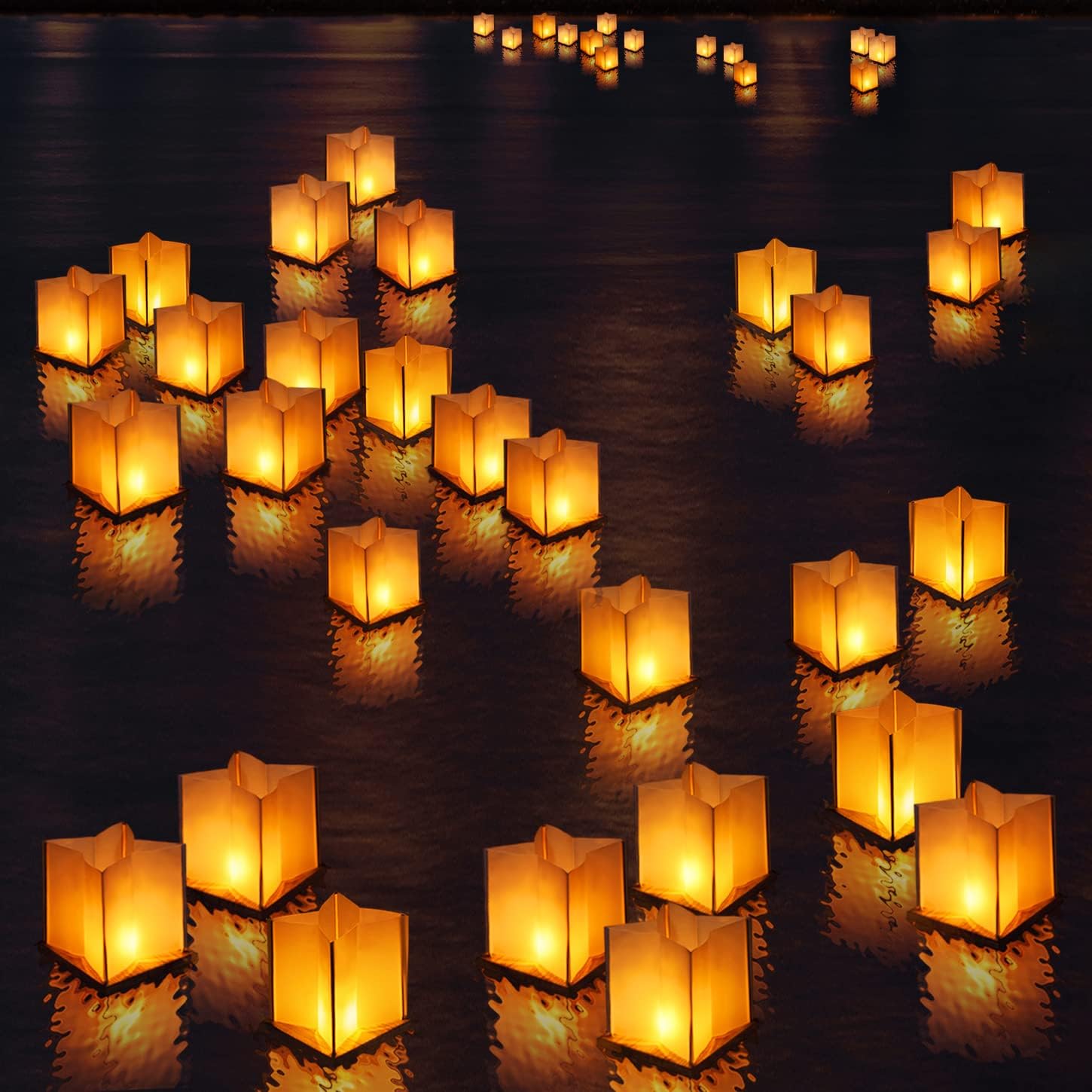
Aerial Lanterns Available At Amazon

Glossary
- Adaptation — A respectful adjustment of the lantern ritual so it fits daily life while keeping its spirit intact. Small changes like using an LED light, choosing a calmer shoreline, or shortening the script still help you keep the practice steady.
- Allies — Trusted people invited to support the ceremony when that feels right. An ally can assist with safety, cleanup, and follow-through, and can check in afterward so isolation eases for you.
- Biodegradable materials — Paper and wood that break down naturally to protect water and shorelines. Choosing these, then retrieving frames and lights, keeps the site clean and keeps responsibility with you.
- Boundary setting — Clear limits around who attends, what is shared, and how photos are used. Boundaries keep the moment calm, reduce pressure to perform, and protect your privacy.
- Breathwork — Slow, deliberate breathing before launch to steady body and voice. A simple pattern with longer exhales lowers stress and makes the ceremony feel contained for you.
- Ceremony log — One notebook or phone note labeled “21 Lanterns” to capture lines and reflections each month. A consistent record turns memories into evidence of progress you can review.
- Consistency — Repeating the ritual near the same day of the month and time so the rhythm becomes familiar. Predictable timing makes starting easier, and trust in the practice grows for you.
- Dual awareness — Holding two truths at once: harm happened, and safety exists in this moment. This balanced stance lets feeling and thinking work together, which prevents overwhelm for you.
- Floating lanterns — Small, water-safe lanterns set on a river, lake, or pond to drift gently. The steady movement becomes a cue that release can happen without force, which reassures your body.
- Gratitude line — One brief sentence of thanks written on the lantern each month. Gratitude balances loss with what remains supportive and builds resilience for you over time.
- Grounding — Simple sensory steps like feeling feet on the ground or naming five things seen and heard. Grounding quiets alarms so speaking the three lines comes more easily for you.
- Hypervigilance — Constant scanning for threats that drains energy and sleep. A predictable, low-risk ritual gives the nervous system practice standing down, so rest returns for you.
- Intent — A clear purpose named before beginning, such as honoring effort or releasing self-blame. Stating intent focuses the moment and reduces second-guessing for you.
- Intrusive thoughts — Sudden, unwanted thoughts that spike during stress. A monthly release line gives those thoughts a safe exit so they do not run the evening for you.
- Journal photo — One simple image of the lantern or setting to mark the month. Photos help progress become visible when feelings lag, and can be shared selectively for support by you.
- Lantern retrieval — A plan to collect frames or lights after the drift, using a hand net or easy shoreline access. Retrieval prevents litter and keeps responsibility centered with you.
- LED tealight — A small battery light that keeps the glow while avoiding fire risk. This option often meets park rules, works in wind, and simplifies safety for you.
- Obon — A summer period in Japan dedicated to remembrance, welcoming ancestors, and a gentle send-off. Understanding this context encourages gratitude and respectful adaptation by you.
- Paper lantern — A light paper shade with a simple base designed to float briefly. Writing on the sides turns it into a temporary vessel for truth, gratitude, and release that serves you.
- Prompts — Three short cues for writing: one truth, one gratitude, one release. Clear prompts keep the ritual focused on difficult days and make changes easier to track for you.
- Recovery fatigue — A drop in motivation that arrives during long healing efforts. A ceremony helps to prevent burnout and keeps engagement going for you long enough to benefit.
- Release line — One concise sentence about what is ready to be set down for now. Naming release reduces looping thoughts and grants permission to rest for you.
- Reporting — Practical steps taken after the ritual, such as filing complaints or updating a case log. Pairing action with calm increases follow-through and lowers dread for you.
- Ritual closure — A consistent ending like a moment of silence or a small bow. A clear finish tells the body the hard work is complete today, which supports sleep and recovery for you.
- Sensory cues — Sounds of water, cooler air, and gentle light that mark the moment as safe and limited. Repetition links these cues with calm, so release becomes easier for you.
- Sky lanterns — Paper lanterns released into the air that pose fire and wildlife risks and are often restricted. A water-based or indoor bowl version keeps the spirit without the hazards for you.
- Support circle — A therapist, a trusted friend, or a moderated group updated after selected ceremonies. Sharing chosen entries reduces isolation and strengthens accountability for you.
- Tōrō nagashi — The phrase meaning “flowing lanterns,” pointing to a tradition of remembrance and release. Knowing the meaning encourages a humble approach to adaptation by you.
- Twenty-one-month practice — A long, realistic runway that invites steady change without demanding perfection. Missing a month does not erase progress, because rhythm, not streaks, carries the work for you.
- Venue selection — A calm, lawful location with safe footing and easy retrieval. The right setting keeps attention on healing rather than logistics and supports consistency for you.
- Water-bowl ritual — A home adaptation with a wide bowl, a small lantern, and an LED light. This version keeps intent and repetition intact when outdoor access is limited for you.
Author Biographies
-/ 30 /-
What do you think about this?
Please share your thoughts in a comment below!
Tōrō Nagashi (灯籠流し) – A Monthly Lantern Ritual For Scam Victims – 2025
Please Leave a Comment
Please Tell Us What You Learned From This?
Commenting Is An Essential Part Of Healing
Read • Think • Write
TABLE OF CONTENTS








CATEGORIES
More ScamsNOW.com Articles