




You Already Have the Power to Heal – You Are Just Not Ready Yet – 2026

The SCARS Institute Magazine about Scam Victims-Survivors, Scams, Fraud & Cybercrime
- Published: 8/19/26
- Modified: 8/19/26
- Comments: 1
- Read Status:

You Already Have the Power to Heal – You Are Just Not Ready Yet
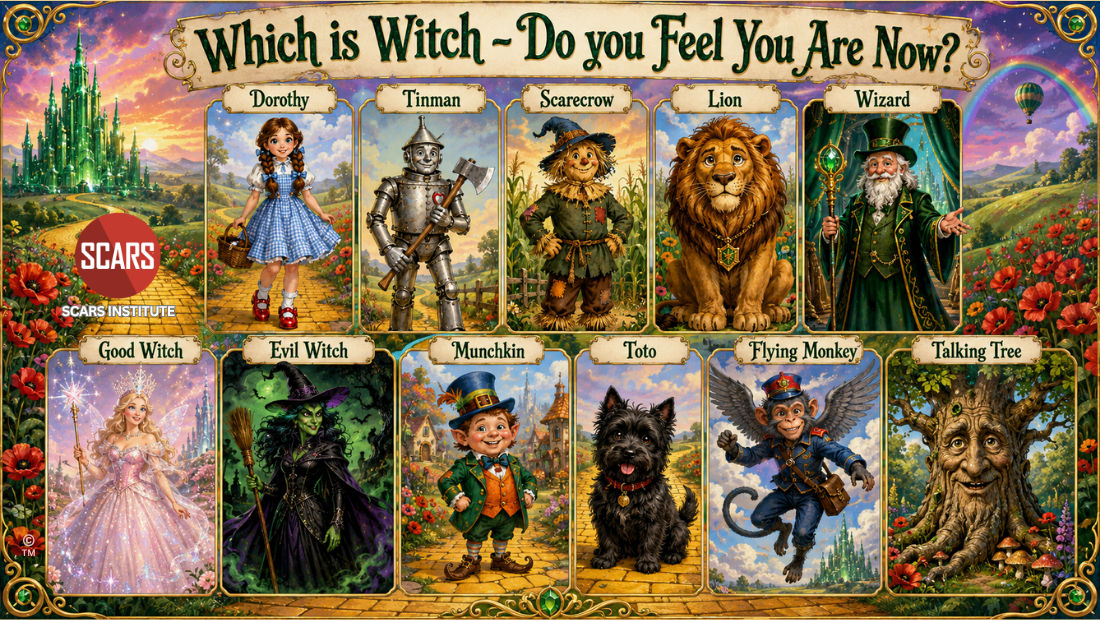
What Dorothy’s Journey Can Teach You About After-Scam Healing
Primary Category: Psychology / Philosophy
Author:
• Tim McGuinness, Ph.D., DFin, MCPO, MAnth – Anthropologist, Scientist, Polymath, Managing Director of the Society of Citizens Against Relationship Scams Inc.
Author Biographies Below
About This Article
After-Scam Healing involves gradually restoring confidence in capacities that betrayal trauma can cause a victim to question, including judgment, courage, compassion, agency, and reality testing. Dorothy’s journey in The Wizard of Oz provides a useful metaphor because she possesses the means to return home before she understands or trusts that ability. The Scarecrow, Tin Man, and Lion similarly demonstrate intelligence, compassion, and courage before recognizing those qualities in themselves. Structured healing experiences help victims accumulate evidence that their abilities remain available despite manipulation and trauma. External support can provide education, guidance, perspective, and encouragement, but lasting healing also requires increasing personal agency. The goal is not to return unchanged to a former self, but to become more discerning, self-trusting, emotionally protected, and capable of moving forward.
Note: This article is intended for informational purposes and does not replace professional medical advice. If you are experiencing distress, please consult a qualified mental health professional.
Keywords
After-Scam Healing, Betrayal Trauma, Personal Agency, Self-Trust, Dorothy, Yellow Brick Road, Reality Testing, Emotional Healing, Scam Victim Support, Trauma Recovery Skills

You Had the Power All Along
Author’s Note
The image of Dorothy discovering that she possessed the means to return home all along offers an important way to think about the psychology of After-Scam Healing. I am especially interested in the distinction between possessing a capacity and being psychologically ready to recognize, trust, and use it. Betrayal trauma can temporarily obscure a victim’s sense of intelligence, courage, judgment, compassion, and agency without actually erasing those qualities. The Yellow Brick Road becomes a useful metaphor for the experiences that prepare the mind to rediscover them. The purpose of support is therefore not to convince victims that they possess some magical hidden power, but to help them accumulate enough knowledge, experience, evidence, and successful action that they can begin believing in their own capacities again.
Prof. Emeritus Tim McGuinness, Ph.D.
August, 2026
What Dorothy’s Journey Can Teach You About After-Scam Healing
At the end of The Wizard of Oz, Dorothy discovers something that changes the meaning of her entire journey. She has spent most of the story trying to find a way home. She followed the Yellow Brick Road, searched for the Wizard, faced danger, survived the Wicked Witch, and placed her hope in the belief that someone powerful would finally solve the problem for her. Then, just when she thinks the solution has arrived, the Wizard’s balloon rises without her and leaves her behind.
Dorothy feels stranded because the route she trusted has disappeared. She believes the person who was supposed to take her home is gone, which makes it seem as though her future has disappeared with him. Then Glinda tells Dorothy that the ruby slippers she has been wearing all along already have the power to take her home. Dorothy immediately asks why Glinda did not simply tell her this at the beginning, and Glinda explains that Dorothy would not have believed it. She had to learn it for herself.
That moment offers a powerful way to understand After-Scam Healing. You can possess intelligence, judgment, courage, emotional strength, adaptability, and the ability to rebuild your life while being temporarily unable to recognize or trust those capacities. Trauma can interfere with your access to them. It can make qualities that were always part of you feel absent, unreliable, or lost.
You did not become unintelligent because someone deceived you. You did not lose your ability to make sound judgments because someone manipulated you under carefully constructed circumstances. You did not become weak because you were traumatized, and you did not lose your capacity for love, courage, learning, or self-protection. Those abilities remain part of you, but After-Scam Healing often requires time and experience before your mind can trust them again.
Why You Cannot Simply Be Told That You Will Heal
When you first begin After-Scam Healing, people can tell you that you will get through what happened. They can tell you that your judgment can return, that your confidence can rebuild, and that the pain will not always feel as overwhelming as it does now. You can understand those words intellectually and still find them almost impossible to believe emotionally.
Your recent experience appears to argue against them. You trusted someone who betrayed you. You believed a story that turned out to be false. You made decisions that you now wish you could change, and the collapse of the relationship can make you question your entire ability to understand people. When someone tells you that you can trust yourself again, your mind can answer with the memory of what happened and ask how that could possibly be true.
That is why reassurance alone rarely creates deep healing. Your mind needs evidence that contradicts what trauma taught it. You need to make decisions and discover that they were sound. You need to recognize manipulation that you once would have missed. You need to experience emotional triggers, regulate yourself, and discover that the distress passes. You need to remember painful events without being completely overtaken by them, and you need to learn enough about deception to understand the difference between being foolish and being deliberately manipulated.
Over time, these experiences accumulate. What once sounded like an encouraging statement from someone else begins to become a conclusion supported by your own experience. You stop merely hearing that you are capable and begin discovering evidence that you are capable. That is the psychological meaning of your own Yellow Brick Road.
The Yellow Brick Road Prepares Your Mind
After-Scam Healing can feel repetitive, especially when you are asked to read, write, reflect, participate, practice grounding, learn about manipulation, understand trauma responses, strengthen boundaries, and examine the decisions that were made during the scam. You can wonder why all of this is necessary when what you really want is to stop hurting and move forward.
The answer is that understanding something once is not the same as integrating it. Your mind changes through repeated experience, not simply through information. Each time you examine what happened from a clearer perspective, you weaken the distorted meaning that trauma attached to it. Each time you write about your thoughts, you practice observing them instead of immediately accepting them as facts. Each time you participate in a support community, you challenge the isolation that trauma encourages. Each time you make a small decision and allow yourself to trust that decision, you practice agency.
This is why the road matters. You are not completing exercises because you are powerless. You are creating the experiences your mind needs in order to recognize that power has been present within you all along. The journey prepares you to believe what you could not have believed at the beginning.
Dorothy could have worn the ruby slippers on her first day in Oz and still not understood what they meant. The power of the slippers did not change during the story. Dorothy’s understanding changed.
The Scarecrow and the Return of Your Thinking
The Scarecrow believes he has no brain, yet throughout the journey he repeatedly thinks through problems, develops plans, recognizes danger, and helps the others find solutions. His belief about himself is contradicted by his own behavior. He possesses the very ability he is convinced he lacks.
You can experience the same contradiction after a relationship scam. Betrayal can leave you telling yourself that you are stupid, gullible, incapable of making decisions, or unable to trust your own judgment. Those conclusions can feel convincing because the scam has become the evidence you use against yourself.
The problem is that those conclusions ignore the circumstances under which the decisions were made. Scammers manipulate information, attachment, urgency, hope, fear, trust, and emotional expectations. They construct situations designed to interfere with ordinary judgment and then repeatedly reinforce the false reality they have created. Being manipulated under those conditions does not prove that your ability to think disappeared.
After-Scam Healing gives you opportunities to rebuild confidence in your thinking through experience. You learn to slow decisions down, verify information, recognize inconsistencies, question assumptions, and separate what you knew at the time from what you learned later. As you practice those skills, you begin to discover that your ability to reason was not destroyed. It was placed under extraordinary pressure and manipulated by someone who understood how to exploit normal human responses.
The Scarecrow did not suddenly become intelligent when the Wizard gave him recognition. He had been demonstrating intelligence throughout the journey. In the same way, your task is not to manufacture a completely new mind. It is to relearn how to recognize and trust the mind you already have.
The Tin Man and the Return of Your Heart
The Tin Man believes he has no heart, yet he consistently demonstrates compassion, loyalty, affection, and concern for others. His emotional life is visible to everyone except himself. What he believes is missing has been present all along.
After betrayal, you can begin to treat your own emotional qualities as evidence against yourself. You cared deeply, trusted someone, hoped for a future, tried to help, gave emotional support, or responded with generosity. Once you discover that those qualities were exploited, you can start thinking that your compassion caused the problem.
That interpretation can lead you toward emotional withdrawal. You can decide that the safest future is one in which you trust no one, need no one, and allow no one close enough to hurt you again. Although that reaction can feel protective, it also gives the scammer more influence over the person you become afterward.
After-Scam Healing is not about removing your heart. It is about learning how to protect it without abandoning it. You can trust while also verifying. You can care while maintaining boundaries. You can love someone while still paying attention to inconsistencies. You can help another person without assuming responsibility for every crisis they present to you. Compassion and discernment do not oppose each other. Healthy relationships require both.
The qualities the scammer exploited are not automatically defects. They were qualities used against you by someone who understood how to manipulate them. Your task is to bring knowledge, boundaries, reality testing, and self-respect alongside those qualities so they can remain strengths rather than vulnerabilities.
The Lion and the Return of Your Courage
The Cowardly Lion believes that courage means the absence of fear. Because he feels afraid, he concludes that he must be a coward. Yet he repeatedly acts while frightened, which demonstrates exactly what courage is.
You can make the same mistake during After-Scam Healing. You can assume that healing should mean no longer feeling afraid, ashamed, angry, confused, grief-stricken, or triggered. When those feelings return, you can conclude that you are failing or moving backward.
Your emotional state does not determine whether you are courageous. You can be frightened and still act wisely. You can cry and still continue. You can miss the person you believed existed while still refusing contact with the scammer. You can experience a painful trigger and still use the skills you have learned. You can have a difficult day without erasing the progress of the previous weeks.
Courage becomes visible in what you do while fear is present. The Lion does not become courageous when someone finally labels him courageous. He becomes able to recognize a quality that his actions had already demonstrated. Your own courage can emerge in the same way. As you look back over your healing, you can begin to see that you have already survived experiences you once believed would destroy you.
The Wizard and the Desire for Someone Else to Fix Everything
When the pain becomes overwhelming, it is natural to want someone else to solve the problem. You can imagine that the right therapist will make the distress disappear, that law enforcement will provide the closure you need, that recovering the money will restore your life, or that understanding exactly why the scammer chose you will finally bring peace.
Seeking help is appropriate. Dorothy was not foolish for going to the Wizard because the Wizard actually had a balloon that could have taken her home. External resources can be genuinely useful, and professional treatment, education, peer support, legal assistance, financial guidance, and community can all play important roles in After-Scam Healing.
The danger comes when you begin believing that your future depends entirely on one of those external sources. No therapist can hand you self-trust. No support organization can simply give you agency. No arrest can automatically resolve grief. No recovered money can restore every part of your former identity. Other people can help you rebuild these things, but they cannot simply place them inside you.
That is part of what Dorothy discovers when the Wizard leaves without her. The disappearance of the person she expected to solve the problem forces her to discover that the ultimate means of returning home has been with her all along.
Toto and the Importance of Pulling Back the Curtain
Toto contributes another important lesson because he exposes the machinery behind the Wizard. Everyone else is overwhelmed by the spectacle of the great and powerful figure before them. Toto simply pulls back the curtain and reveals an ordinary man controlling the illusion.
Relationship scams depend on the same power of constructed appearances. The person you believed you knew was created through stories, photographs, messages, promises, emotional reactions, manufactured emergencies, declarations of love, and carefully managed information. The illusion became convincing because you experienced the presentation rather than seeing the machinery behind it.
After-Scam Healing requires you to learn how to pull back curtains again. You begin asking what evidence supports a claim, what assumptions you are making, whether something can be independently verified, and whether another person’s actions actually match their words. You learn to distinguish emotional conviction from factual confirmation.
This is not about becoming cynical or suspicious of everyone. It is about strengthening your ability to recognize when appearances are being used to replace evidence. The more clearly you understand how deception was constructed, the less mysterious and overwhelming it becomes. What once looked like extraordinary power begins to look like a system of manipulation that can be studied, understood, and recognized.
The Ruby Slippers Were Both the Danger and the Way Home
The ruby slippers have a particularly important meaning because they serve two roles in Dorothy’s story. For much of the journey, they appear to be the reason the Wicked Witch is pursuing her. Dorothy experiences them as part of the danger without understanding that they will eventually become the means of returning home.
Something similar can happen with the qualities that were exploited during the scam. Your trust, empathy, hope, generosity, desire for connection, and willingness to love can begin to look like weaknesses after betrayal. You can look back and tell yourself that these qualities are what caused you to be harmed.
That interpretation is incomplete. Those qualities were exploited, but exploitation does not make them defective. Your empathy can help you reconnect with other people. Your capacity for love can support healthy relationships in the future. Your hope can help you imagine a life beyond the scam, and your desire for connection can bring you back into community instead of leaving you isolated.
The goal is not to destroy these qualities in order to become safe. The goal is to surround them with stronger judgment, boundaries, verification, and self-respect. What once seemed like the source of your vulnerability can become part of the strength you use to rebuild your life.
Glinda’s Role Is Guidance, Not Rescue
Glinda understands the power of the slippers before Dorothy does, but she does not use them for Dorothy. She explains, guides, and eventually helps Dorothy understand what she has already learned through experience. Dorothy still has to perform the final action herself.
Good support during After-Scam Healing should work in much the same way. The people helping you can provide information, structure, encouragement, perspective, education, and guidance. They can help you understand what happened and help you recognize patterns that are difficult to see while you are overwhelmed by trauma.
Their purpose should not be to replace your judgment permanently. Effective support gradually helps you reclaim more of your own decision-making, confidence, and agency. You need opportunities to evaluate information, make choices, question assumptions, tolerate ordinary uncertainty, and learn that mistakes do not mean catastrophe.
The purpose of good support is not to create dependence on the person providing it. The purpose is to help you reach the point where you can increasingly trust your own capacity to stand, think, decide, and act.
You Needed the Road Before You Could Understand the Slippers
One of the most difficult parts of After-Scam Healing is realizing that some truths only become believable after you have lived enough experience to support them. Someone can tell you very early that you will eventually stop longing for the scammer, that your shame will lessen, that your judgment will return, and that your life can become meaningful again. At the beginning, those statements can sound impossible.
Months later, you can suddenly realize that something you once rejected now makes sense. You can discover that you went an entire day without thinking about the scammer. You can recognize a manipulation technique immediately. You can make a difficult decision without needing someone else to approve it. You can remember the relationship and experience sadness without being overwhelmed by the memory.
When that happens, you can wonder why you could not understand it sooner. The answer is not that you were refusing to heal. Your mind needed enough evidence to make a different understanding believable.
Dorothy could have been given the correct information at the beginning of her journey, but the information alone would not have created the understanding she possessed at the end. The slippers remained the same throughout the story. What changed was Dorothy’s capacity to understand what they meant and trust what they could do.
This is why After-Scam Healing takes time even when some of its deepest lessons eventually sound simple. The mind has to experience enough safety, learning, mastery, emotional regulation, and successful action before certain truths can become psychologically real.
You Are Not Becoming Someone Else
After-Scam Healing does not require you to return to exactly the person you were before the scam. You cannot erase what happened, and you cannot unknow what you have learned about manipulation, trust, vulnerability, grief, and human behavior. Your experience becomes part of your life history.
You can still return to yourself in a deeper sense. You can become someone who understands that making manipulated decisions does not eliminate intelligence, that feeling afraid does not eliminate courage, and that being betrayed does not eliminate your capacity to love. You can understand that asking for help does not surrender your agency and that needing support does not mean you are incapable of eventually standing on your own.
The Yellow Brick Road is not evidence that Dorothy lacked power. It is the journey through which she became able to recognize what she already possessed.
Your After-Scam Healing can work in the same way. Every lesson you learn, every difficult truth you face, every boundary you strengthen, every decision you make, and every moment in which you refuse to surrender your future becomes part of the evidence your mind needs.
The Scarecrow discovers that he can think. The Tin Man discovers that he can feel. The Lion discovers that he can act courageously while afraid. Dorothy discovers that the power she was searching for was already with her, but she had to travel far enough to understand it.
Your own journey is not about waiting for someone to hand you the missing piece that will suddenly make you whole. It is about gradually rediscovering the capacities that betrayal trauma caused you to question. You are learning to trust your thinking again, protect your heart without closing it, act despite fear, recognize illusion, test reality, make decisions, and reclaim ownership of your life.
The power was not created at the end of the road.
The road prepared you to recognize it, trust it, and finally use it.
Conclusion
Your After-Scam Healing is not a search for some missing quality that another person must give you. Betrayal trauma can leave you feeling as though your intelligence, judgment, courage, emotional strength, and ability to trust yourself disappeared when the scam was exposed. Yet the deeper task is often learning how to recognize and use capacities that remain within you, even when trauma has made them difficult to feel or believe. Like Dorothy, you can carry something valuable throughout the entire journey without understanding what it means until experience has prepared you to recognize it.
This is why the Yellow Brick Road matters. Healing develops through repeated experiences of learning, thinking, participating, testing reality, strengthening boundaries, making decisions, tolerating uncertainty, and discovering that difficult emotions can be survived. These experiences gradually provide your mind with evidence that contradicts the conclusions created by betrayal. You begin to discover that being deceived did not erase your intelligence, being afraid did not remove your courage, and having your compassion exploited did not make compassion a weakness. The qualities represented by the Scarecrow, Tin Man, and Lion were never truly absent. Their journey allowed them to recognize what their own actions had already demonstrated.
Other people remain important along the way. Therapists, support communities, educators, family members, friends, and other helpers can provide knowledge, perspective, structure, encouragement, and guidance. They can walk beside you and help you see what trauma makes difficult to see. They cannot permanently substitute for your own judgment or agency. Effective support ultimately helps you become increasingly capable of thinking, choosing, evaluating, trusting, and acting for yourself.
Your destination is therefore not simply a return to who you were before the scam. You carry what you have learned with you. You can become more discerning without becoming cynical, more careful without becoming afraid of everyone, and more protective of your heart without closing it. The power at the end of your journey is not something suddenly created there. The journey prepares your mind to recognize, trust, and finally use what betrayal trauma once taught you to doubt.

Glossary
- Adaptability — Adaptability is the continuing human capacity to adjust thinking, behavior, expectations, and responses after circumstances change. Betrayal trauma can temporarily make adaptation feel impossible because the victim is struggling to understand a reality that suddenly changed. After-Scam Healing allows adaptability to become visible again as the victim learns, adjusts, and develops new ways of responding to uncertainty. — After-Scam Healing Process
- After-Scam Healing™ — After-Scam Healing is the gradual process through which scam victims regain psychological stability, self-trust, judgment, emotional balance, agency, and confidence after betrayal and manipulation. The process does not require victims to become the same people they were before victimization. Healing helps them integrate what happened while developing stronger boundaries, discernment, reality testing, and confidence in their existing human capacities. — After-Scam Healing Process — After-Scam Healing™ is a trademark of the SCARS Institute
- Agency — Agency is a person’s capacity to make choices, take action, evaluate consequences, and exercise meaningful influence over personal direction. Betrayal trauma can weaken the victim’s confidence in agency by making previous choices appear unreliable or dangerous. After-Scam Healing strengthens agency through repeated opportunities to make decisions, evaluate results, and recognize that the victim remains capable of directing life beyond the scam. — Decision-Making Pattern
- Attachment Manipulation — Attachment manipulation occurs when a scammer deliberately uses affection, attention, intimacy, hope, emotional dependency, or fear of loss to influence another person’s decisions. The resulting attachment can interfere with ordinary judgment because emotional meaning becomes connected to the scammer’s constructed identity and promises. Understanding attachment manipulation helps victims separate normal human attachment from the criminal exploitation of that attachment. — Emotional Manipulation
- Boundary Strengthening — Boundary strengthening is the process of developing clearer limits around trust, emotional responsibility, personal information, financial decisions, relationships, and responses to other people’s demands. Betrayal can leave victims uncertain about where healthy limits should exist because previous boundaries were gradually manipulated or bypassed. Stronger boundaries allow compassion and connection to continue without requiring the victim to surrender judgment or self-protection. — Victim Safety
- Capacity Recognition — Capacity recognition occurs when scam victims begin identifying abilities that trauma caused them to doubt, including reasoning, courage, compassion, judgment, adaptability, and decision-making. These capacities can remain present even when the victim temporarily feels unable to trust or access them. Recognition grows when repeated actions provide evidence that the abilities were impaired in confidence rather than permanently lost. — After-Scam Healing Process
- Compassion — Compassion is the capacity to recognize another person’s distress and respond with concern, care, or a desire to help. Scammers can exploit compassion by presenting manufactured emergencies, emotional suffering, or urgent needs that encourage victims to override caution. After-Scam Healing helps victims understand that compassion itself is not defective and can remain a strength when combined with boundaries, verification, and discernment. — Emotional Vulnerability
- Constructed Appearances — Constructed appearances are deliberately created impressions that make a false person, relationship, crisis, or situation appear authentic. Relationship scammers create these appearances through photographs, stories, messages, emotional reactions, promises, and carefully controlled information. Recognizing constructed appearances helps victims understand that deception succeeded because evidence was manipulated, not because the victim lacked ordinary intelligence. — Scam Tactics
- Courage — Courage is the ability to act constructively while fear, uncertainty, grief, or emotional discomfort remains present. Scam victims can mistakenly judge themselves as weak because they continue experiencing distress during After-Scam Healing. Courage becomes visible through continued participation, boundary setting, decision-making, reality testing, and movement forward even when difficult emotions have not completely disappeared. — Emotional Regulation
- Decision-Making Confidence — Decision-making confidence is the growing belief that a person can evaluate information, make reasonable choices, and tolerate the possibility of ordinary mistakes. Betrayal trauma can severely weaken this confidence because manipulated decisions become evidence the victim uses against personal judgment. Repeated successful decisions help restore confidence by demonstrating that one episode of deception does not define the person’s overall ability to choose wisely. — Decision-Making Pattern
- Deception Machinery — Deception machinery refers to the underlying methods, systems, stories, emotional techniques, communications, and controlled information that create a scam’s convincing appearance. Victims initially encounter the presentation rather than the mechanisms producing it. Learning how the deception was constructed helps reduce its mystery and allows the victim to examine the scam as an understandable system of manipulation rather than an inexplicable personal failure. — Scam Tactics
- Discernment — Discernment is the ability to evaluate people, claims, situations, motives, and evidence with thoughtful judgment rather than relying entirely on emotional impressions. Scam victims can strengthen discernment without becoming cynical or suspicious of everyone. After-Scam Healing develops discernment by combining observation, verification, boundaries, accumulated experience, and greater awareness of how deceptive appearances can be constructed. — Reality Testing
- Emotional Conviction — Emotional conviction occurs when a feeling of certainty becomes so strong that it is experienced as evidence that something must be true. Relationship scammers can strengthen emotional conviction through attachment, repetition, urgency, promises, and carefully reinforced narratives. After-Scam Healing helps victims distinguish the intensity of a feeling from factual confirmation so that emotional certainty does not automatically replace evidence. — Belief Distortion
- Emotional Regulation — Emotional regulation is the ability to experience distressing emotions while maintaining enough stability to think, choose, communicate, and act constructively. After betrayal, triggers, grief, fear, anger, and confusion can temporarily overwhelm this ability. Repeated practice helps victims discover that difficult emotional states can rise, change, and pass without controlling every decision or determining whether healing is progressing. — Emotional Regulation
- Emotional Strength — Emotional strength is the capacity to endure difficult feelings, remain engaged with reality, and continue functioning while psychological pain is present. Victims can overlook this strength because distress itself can be mistaken for evidence of weakness. After-Scam Healing makes emotional strength more visible as the victim survives painful memories, tolerates uncertainty, maintains boundaries, and continues participating in life despite emotional difficulty. — Trauma Response
- Emotional Withdrawal — Emotional withdrawal is the tendency to reduce trust, closeness, vulnerability, or connection after betrayal in an attempt to prevent further harm. The response can feel protective because emotional distance appears to eliminate opportunities for another person to exploit compassion or attachment. After-Scam Healing helps victims develop protection through stronger discernment and boundaries rather than requiring permanent isolation or the abandonment of healthy relationships. — Withdrawal Pattern
- Evidence Accumulation — Evidence accumulation is the gradual collection of experiences that demonstrate a victim’s continuing ability to think, decide, regulate emotions, recognize manipulation, and protect personal boundaries. Reassurance from others can feel unconvincing when trauma has created powerful evidence for self-doubt. Repeated successful experiences create competing evidence that gradually makes confidence, self-trust, and personal capability psychologically believable again. — Recovery Insight
- Experience-Based Belief — Experience-based belief develops when personal experience provides enough evidence for an idea to become credible rather than merely intellectually understandable. A victim can hear that healing is possible long before the statement feels emotionally true. Successful decisions, improved regulation, stronger boundaries, and increased recognition of manipulation gradually transform an external reassurance into a conclusion supported by lived experience. — Belief Formation
- External Rescue Expectation — External rescue expectation is the belief that healing, closure, safety, or personal restoration depends primarily on another person, institution, professional, legal outcome, or recovered asset. External resources can provide important assistance, but they cannot permanently substitute for the victim’s own agency and judgment. After-Scam Healing gradually shifts the center of action back toward the victim while preserving appropriate use of professional and community support. — Support Relationship
- Factual Confirmation — Factual confirmation is information that can be supported through evidence rather than accepted only because it feels convincing or emotionally meaningful. Relationship scams often succeed by surrounding unsupported claims with emotional urgency, intimacy, repetition, and apparent credibility. Strengthening factual confirmation helps victims evaluate whether another person’s claims can be independently supported before those claims influence important decisions. — Verification Practice
- Fear-Based Self-Judgment — Fear-based self-judgment occurs when a person interprets the continued presence of fear as evidence of weakness, failure, or lack of progress. After betrayal, victims can believe that genuine healing should eliminate fear completely. Recognizing that courage can coexist with fear allows victims to evaluate progress according to constructive actions rather than according to whether uncomfortable emotions have disappeared. — Trauma Response
- Glinda Guidance Metaphor — The Glinda guidance metaphor represents support that provides knowledge, perspective, encouragement, and direction without taking permanent control away from the person being helped. Glinda understands Dorothy’s capacity before Dorothy understands it herself, yet Dorothy must ultimately act. In After-Scam Healing, effective guidance helps victims increasingly recognize, trust, and use their own judgment rather than developing permanent dependence on the helper. — Support Relationship
- Healthy Relationship Protection — Healthy relationship protection combines emotional openness with boundaries, judgment, verification, self-respect, and awareness of inconsistent behavior. Betrayal can lead victims to believe that complete emotional withdrawal is the only reliable form of safety. After-Scam Healing supports a more balanced approach in which connection remains possible while the victim becomes better prepared to recognize manipulation and protect personal interests. — Victim Safety
- Hope — Hope is the capacity to imagine that a meaningful future remains possible despite present pain, uncertainty, or loss. Scammers can exploit hope by attaching desired futures to fabricated promises, relationships, opportunities, or emergencies. After-Scam Healing does not require victims to abandon hope but helps them connect future expectations with evidence, realistic judgment, boundaries, and personal agency. — Future Orientation
- Illusion Exposure — Illusion exposure occurs when the mechanisms behind a convincing false appearance become visible and understandable. The exposure of the Wizard behind the curtain symbolizes the moment when an apparently powerful presentation is revealed as something constructed. Scam victims can experience a similar shift when they understand how stories, images, emotional techniques, and controlled information created the false relationship they previously experienced as real. — Reality Testing
- Independent Verification — Independent verification is the practice of checking important information through sources that do not depend on the person making the original claim. Relationship scammers often discourage verification by creating urgency, secrecy, emotional pressure, or explanations that keep the victim inside the scammer’s information system. Independent verification strengthens safety by separating evidence from persuasion and reducing reliance on a single source of information. — Verification Practice
- Intellectual Understanding — Intellectual understanding occurs when a person can logically comprehend an idea before that idea has become emotionally convincing or fully integrated. Scam victims can intellectually understand that they were manipulated while continuing to feel ashamed, foolish, attached, or uncertain. After-Scam Healing requires repeated experiences that help emotional learning gradually catch up with information the person already understands cognitively. — Cognitive Process
- Judgment Restoration — Judgment restoration is the rebuilding of confidence in a victim’s ability to evaluate information, recognize inconsistencies, question assumptions, and make reasonable decisions. Betrayal can cause one manipulated period of decision-making to overshadow a lifetime of competent judgment. After-Scam Healing restores perspective by helping the victim examine the conditions surrounding the manipulation while creating new experiences of thoughtful and successful decision-making. — Decision-Making Pattern
- Learning Through Experience — Learning through experience occurs when repeated actions and outcomes change a person’s understanding more deeply than information alone can accomplish. After-Scam Healing requires opportunities to practice boundaries, reality testing, emotional regulation, reflection, and decision-making in real situations. These experiences provide the mind with evidence that new responses are possible and that previously doubted capacities remain available. — Learning Process
- Lion Courage Metaphor — The Lion courage metaphor represents the mistaken belief that fear proves an absence of courage. The Cowardly Lion repeatedly acts despite fear, demonstrating that courage is expressed through behavior rather than through complete emotional fearlessness. Scam victims can use this distinction to recognize that continued distress does not erase progress when they continue making protective, thoughtful, and healing-oriented choices. — Recovery Insight
- Manipulated Decision-Making — Manipulated decision-making occurs when choices are shaped by deliberately controlled information, emotional pressure, attachment, urgency, fear, hope, or false circumstances. Scam victims can later judge these decisions as though they were made with complete information and ordinary conditions. Understanding the manipulated environment helps place those decisions in their proper context and reduces inaccurate conclusions about the victim’s intelligence or general judgment. — Scam Tactics
- Manipulation Recognition — Manipulation recognition is the ability to identify techniques that distort perception, increase emotional pressure, influence judgment, or encourage actions that serve the manipulator. Scam victims often develop this ability as they learn how attachment, urgency, fabricated crises, controlled information, and emotional reinforcement were used. Recognition increases future protection because manipulation becomes easier to examine before it automatically shapes behavior. — Awareness and Education
- Personal Agency — Personal agency is the practical ability to think, choose, decide, act, and influence the direction of one’s own life. Relationship scams can weaken the victim’s sense of agency by creating dependency, uncertainty, shame, and distrust of personal judgment. After-Scam Healing strengthens personal agency when victims increasingly make decisions, tolerate uncertainty, evaluate evidence, and recognize that their future does not belong to the scammer or to another authority. — Agency Reclamation
- Psychological Readiness — Psychological readiness is the point at which a person’s mind has gained enough experience, safety, evidence, and understanding to accept an idea that previously felt impossible. Information can be accurate without being emotionally believable when trauma strongly contradicts it. After-Scam Healing gradually prepares the victim to recognize truths about personal strength, self-trust, and capability that reassurance alone could not establish earlier. — Recovery Insight
- Reality Testing — Reality testing is the deliberate process of comparing perceptions, assumptions, emotional beliefs, and another person’s claims against observable evidence. Relationship scams interfere with this process by surrounding false information with convincing emotional and social cues. After-Scam Healing strengthens reality testing through verification, questioning, examination of inconsistencies, and a clearer distinction between emotional conviction and factual confirmation. — Reality Testing
- Reassurance Limits — Reassurance limits describe the point beyond which supportive statements cannot create the psychological change that lived evidence must eventually provide. A victim can repeatedly hear that healing is possible while still feeling incapable, ashamed, frightened, or uncertain. Reassurance becomes more meaningful when the victim’s own experiences begin supplying evidence that supports the hopeful message. — Support Systems
- Repeated Experience — Repeated experience is the continued practice of constructive behaviors that allows new learning to become integrated rather than remaining abstract information. Reading, writing, reflecting, participating, grounding, verifying, and making decisions provide opportunities for the victim to experience personal capability repeatedly. Over time, these experiences strengthen confidence because the mind receives consistent evidence that contradicts trauma-related beliefs about helplessness or incompetence. — Learning Process
- Return to Self — Return to self is the gradual reconnection with personal values, judgment, emotional capacities, identity, and agency after betrayal has disrupted them. The process does not require the victim to erase the experience or become identical to the person who existed before the scam. After-Scam Healing allows the victim to integrate new knowledge while retaining compassion, courage, hope, and the ability to form meaningful connections. — Identity Restoration
- Ruby Slippers Metaphor — The ruby slippers metaphor represents capacities that are already present but remain unrecognized or psychologically inaccessible until experience changes the person’s understanding of them. Dorothy possesses the means to return home before she knows how to use them. For scam victims, the metaphor reflects intelligence, courage, judgment, compassion, and agency that betrayal trauma can cause them to doubt without actually erasing. — Recovery Insight
- Scarecrow Thinking Metaphor — The Scarecrow thinking metaphor represents the difference between believing that intelligence has been lost and actually demonstrating the ability to think effectively. The Scarecrow repeatedly solves problems despite believing that he lacks a brain. Scam victims can similarly mistake manipulated decisions for proof of permanent intellectual failure even while their later actions demonstrate reasoning, learning, and increasingly effective judgment. — Cognitive Process
- Self-Protection — Self-protection is the use of boundaries, verification, judgment, awareness, and deliberate decision-making to reduce vulnerability to manipulation or harm. Betrayal can create pressure to replace healthy self-protection with total distrust or emotional isolation. After-Scam Healing develops protection that allows the victim to remain connected to other people while becoming more capable of identifying and responding to risk. — Victim Safety
- Self-Respect — Self-respect is the recognition that a person’s dignity, needs, boundaries, judgment, and well-being deserve protection even when another person demands sacrifice or emotional compliance. Scam manipulation can gradually weaken self-respect by making the scammer’s crises and needs appear more important than the victim’s concerns. Rebuilding self-respect helps victims place reasonable limits around what they will accept, provide, believe, or tolerate. — Recovery Process
- Self-Trust — Self-trust is confidence that a person can think, evaluate information, make decisions, correct mistakes, and respond constructively when circumstances change. Betrayal trauma can severely damage self-trust because the victim interprets the scam as evidence that personal judgment cannot be relied upon. After-Scam Healing rebuilds self-trust through repeated experiences of verification, decision-making, emotional regulation, boundary setting, and successful action. — Recovery Process
- Support Dependence — Support dependence develops when a person begins treating another individual, professional, organization, or institution as the permanent source of judgment, safety, direction, or emotional stability. Support is valuable, but excessive dependence can prevent the victim from practicing independent decision-making and rebuilding agency. Effective After-Scam Healing gradually increases the victim’s ability to evaluate, choose, and act while continuing to use appropriate support when needed. — Support Relationship
- Support Guidance — Support guidance is structured assistance that provides information, perspective, encouragement, education, and practical direction while preserving the victim’s developing agency. Good guidance does not require the helper to make every decision or become the permanent authority over the victim’s life. Its purpose is to help the victim increasingly recognize personal abilities, evaluate choices, and use independent judgment with greater confidence. — Support Systems
- Tin Man Heart Metaphor — The Tin Man heart metaphor represents the mistaken belief that emotional qualities have disappeared or become defective because they were exploited during betrayal. The Tin Man consistently demonstrates compassion and loyalty despite believing that he lacks a heart. Scam victims can similarly learn that empathy, love, generosity, and emotional connection remain valuable when combined with boundaries, judgment, verification, and self-respect. — Emotional Healing
- Toto Curtain Metaphor — The Toto curtain metaphor represents the act of looking behind a powerful appearance to examine the mechanism producing it. Toto exposes the Wizard by revealing the ordinary person controlling the impressive presentation. In After-Scam Healing, the metaphor reflects reality testing, investigation, verification, and the process of understanding how a convincing fraudulent relationship was deliberately constructed. — Reality Testing
- Trauma-Related Self-Doubt — Trauma-related self-doubt is the loss of confidence in personal intelligence, judgment, emotional responses, or decision-making that can follow betrayal. Scam victims can begin using the victimization itself as proof that they are incapable of making sound choices. After-Scam Healing challenges this conclusion by placing manipulated decisions in context and creating repeated experiences that demonstrate continuing competence. — Trauma Response
- Trust With Verification — Trust with verification is an approach in which emotional openness and interpersonal trust remain possible while important claims are confirmed through evidence and observation. Betrayal can cause victims to view trust itself as dangerous because trust was exploited during the scam. Combining trust with verification allows healthy connection to continue without requiring unquestioning acceptance of another person’s statements, promises, identity, or emergencies. — Verification Practice
- Yellow Brick Road Metaphor — The Yellow Brick Road metaphor represents the structured journey through which experience prepares the mind to recognize capacities that were present before the person could trust them. Dorothy’s journey changes her understanding rather than creating the power contained in the ruby slippers. For scam victims, the road represents learning, participation, reflection, emotional regulation, reality testing, boundary strengthening, and repeated experiences that make self-trust increasingly believable. — After-Scam Healing Process
Reference
Dorothy’s Departure from Oz
(The scene changes to the Emerald City’s square filled with the Ozian people. Dorothy, Toto, and the Wizard are in the hot-air balloon, which says “STATE FAIR OMAHA.”)
Wizard of Oz: My friends. I mean, my friends! (Ozians cheering) This is positively the finest exhibition ever to be shown…be that as it may. I, your Wizard per ardua ad alta, am about to embark upon a hazardous and technically unexplainable journey into the outer stratosphere! (Ozians cheering) To confer, converse and otherwise hobnob with my brother wizards. And I hereby decree that until what time, if any, I return, the Scarecrow, by virtue of his highly superior brains, shall rule in my stead, assisted by the Tin Man by virtue of his magnificent heart and the Lion by virtue of his courage. Obey them as you would me. Thank you. (Toto growls upon seeing the cat in the woman’s arms. Toto jumps out of Dorothy’s arms)
Dorothy Gale: (Comes out of the balloon) Oh, Toto! Come back! Toto! (To Wizard) Oh, don’t go without me. I’ll be right back.
Tin Man: Stop that dog! (Scarecrow and Lion run to help Dorothy get Toto back)
Wizard of Oz: (Starts to float away as the ropes get loose) This is a highly irregular procedure. This is absolutely unprecedented! I’ll ruin my exit!
Dorothy Gale: (Shocked, pleading to the Wizard) Come back! Come back! Don’t go without me! Please come back!
Wizard of Oz: I can’t come back! I don’t know how it works! (To Ozians) Goodbye, folks!
Ozians: (Waving to Wizard) Goodbye!
Dorothy Gale: (Sadly) Oh, now I’ll never get home.
Cowardly Lion: Stay with us then, Dorothy. We all love you. We don’t want you to go.
Dorothy Gale: Well, that’s very kind of you. But this could never be like Kansas. Auntie Em must have stopped wondering what happened to me by now. (To Scarecrow) Oh, Scarecrow, what am I going to do?
Scarecrow: (Points and sees the bubble) Look! Here’s someone who can help you!
(The pink bubble comes down from the sky. Glinda comes out of her bubble as the Ozians kneel to her then she comes to Dorothy and her friends.)
Dorothy’s farewell/There’s no place like home
Dorothy Gale: Oh, will you help me? Can you help me?
Glinda the Good Witch of the North: You don’t need to be helped any longer. You’ve always had the power to go back to Kansas.
Dorothy Gale: (Surprised) I have?
Scarecrow: Then why didn’t you tell her before?
Glinda the Good Witch of the North: Because she wouldn’t have believed me. She has to learn it for herself.
Tin Man: What have you learned, Dorothy?
Dorothy Gale: Well, I think that it… that it wasn’t enough just to want to see Uncle Henry and Auntie Em. And it’s that if I ever go looking for my heart’s desire again I won’t look any further than my own backyard. Because if it isn’t there, I never really lost it to begin with. Is that right?
Glinda the Good Witch of the North: (Nodding her head) That’s all it is.
Scarecrow: But that’s so easy! I should’ve thought for you.
Tin Man: I should’ve felt it in my heart.
Glinda the Good Witch of the North: No, she had to find it out for herself. (To Dorothy) Now those magic slippers will take home in two seconds.
Dorothy Gale: Oh, Toto too?
Glinda the Good Witch of the North: Toto too.
Dorothy Gale: Now?
Glinda the Good Witch of the North: Whatever you wish.
Dorothy Gale: (Happily) Oh, dear. That’s too wonderful to be true! (Sadly) Oh, it’s… It’s gonna be so hard to say goodbye. (To her friends) I love you all too. (To Tin Man) Goodbye, Tin Man. Oh, don’t cry. You’ll rust so dreadfully. Here. Here’s your oilcan. (Gives him the oilcan and kisses him) Goodbye.
Tin Man: (Tearfully) Now I know I’ve got a heart ’cause it’s breaking.
Dorothy Gale: (Kisses Lion) Oh, goodbye, Lion. I know it isn’t right, but I’m gonna miss the way you used to holler for help before you found your courage.
Cowardly Lion: Well, I never would have found it if it hadn’t been for you.
Dorothy Gale: (Hugging Scarecrow, Tearfully) I think I’ll miss you most of all. (Kissed his cheek)
Glinda the Good Witch of the North: Are you ready now?
Dorothy Gale: (Nodding her head) Yes. (To Toto) Say goodbye, Toto. (Makes Toto wave to her friends and her friends wave goodbye to her) (To Glinda) Yes, I’m ready now.
Glinda the Good Witch of the North: Then close your eyes and tap your heels together three times. (Dorothy taps her heels three times) And think to yourself, “There’s no place like home.” (She waves her wand slowly)
Dorothy Gale: There’s no place like home.
(She continues repeating the phrase, and the spiral spins downward onto Dorothy. Then the farmhouse spins and falls back down to the ground. The film changes back into the sepia tone.)
Author Biographies
Author Biography
Prof. (Emeritus) Tim McGuinness, Ph.D. DFin is a co-founder, Managing Director, and Chairman of the SCARS Institute (Society of Citizens Against Relationship Scams Inc.), where he serves as an unsalaried volunteer officer dedicated to supporting scam victims and survivors around the world. With over 34 years of experience in scam education and awareness, he is perhaps the longest-serving advocate in the field.
Dr. McGuinness has an extensive background as a business pioneer, having co-founded several technology-driven enterprises, including the former e-commerce giant TigerDirect.com. Beyond his corporate achievements, he is actively engaged with multiple global think tanks where he helps develop forward-looking policy strategies that address the intersection of technology, ethics, and societal well-being. He is also a computer industry pioneer (he was an Assistant Director of Corporate Research Engineering at Atari Inc. in the early 1980s) and invented core technologies still in use today.
His professional identity spans a wide range of disciplines. He is a scientist, strategic analyst, solution architect, advisor, public speaker, published author, roboticist, Navy veteran, and recognized polymath. He holds numerous certifications, including those in cybersecurity from the United States Department of Defense under DITSCAP & DIACAP, continuous process improvement and engineering and quality assurance, trauma-informed care, grief counseling, crisis intervention, and related disciplines that support his work with crime victims.
Dr. McGuinness was instrumental in developing U.S. regulatory standards for medical data privacy called HIPAA and financial industry cybersecurity called GLBA. His professional contributions include authoring more than 1,000 papers and publications in fields ranging from scam victim psychology and neuroscience to cybercrime prevention and behavioral science.
“I have dedicated my career to advancing and communicating the impact of emerging technologies, with a strong focus on both their transformative potential and the risks they create for individuals, businesses, and society. My background combines global experience in business process innovation, strategic technology development, and operational efficiency across diverse industries.”
“Throughout my work, I have engaged with enterprise leaders, governments, and think tanks to address the intersection of technology, business, and global risk. I have served as an advisor and board member for numerous organizations shaping strategy in digital transformation and responsible innovation at scale.”
“In addition to my corporate and advisory roles, I remain deeply committed to addressing the rising human cost of cybercrime. As a global advocate for victim support and scam awareness, I have helped educate millions of individuals, protect vulnerable populations, and guide international collaborations aimed at reducing online fraud and digital exploitation.”
“With a unique combination of technical insight, business acumen, and humanitarian drive, I continue to focus on solutions that not only fuel innovation but also safeguard the people and communities impacted by today’s evolving digital landscape.”
Dr. McGuinness brings a rare depth of knowledge, compassion, and leadership to scam victim advocacy. His ongoing mission is to help victims not only survive their experiences but transform through recovery, education, and empowerment.
Vianey Gonzalez is a licensed psychologist in Mexico and a survivor of a romance scam that ended eight years ago. Through her recovery and the support she received, she was able to refocus on her future, eventually attending a prestigious university in Mexico City to become a licensed psychologist with a specialization in crime victims and their unique trauma. She was a Board Member and now serves as an Advisor to the SCARS Institute (Society of Citizens Against Relationship Scams Inc.) and holds the position of Chief Psychology Officer. She also manages our Mexican office, providing support to Spanish-speaking victims around the world. Vianey has been instrumental in helping thousands of victims and remains an active contributor to the work we publish on this and other SCARS Institute websites.
La Lic. Vianey Gonzalez es profesional licenciada en psicología en México y sobreviviente de una estafa romántica que terminó hace ocho años. Gracias a su recuperación y al apoyo recibido, pudo reenfocarse en su futuro y, finalmente, cursó sus estudios en una prestigiosa universidad en la Ciudad de México para obtener su licencia como psicóloga con especialización en víctimas de crimen y sus traumas particulares. Actualmente, es miembro de la junta directiva del Instituto SCARS (Sociedad de Ciudadanos Contra las Estafas en las Relaciones) y ocupa el cargo de Directora de Psicología. También dirige nuestra oficina en México, brindando apoyo a víctimas en español en todo el mundo. Vianey ha sido fundamental para ayudar a miles de víctimas y continúa contribuyendo activamente las obras que publicamos en este y otros sitios web del Instituto SCARS.
Debby Montgomery Johnson is a resilient advocate, author, and speaker dedicated to empowering others through her experiences of triumph over adversity. With a diverse background spanning military service, finance, and community leadership, Debby served as a U.S. Air Force Intelligence Officer, earning accolades like the USAF Meritorious Service Medal and Joint Service Commendation Medal. Transitioning to banking, she excelled as Senior Branch Manager at World Savings Bank, was named Manager of the Year in Florida in 2005, and achieved top customer service honors in 2006.
Her personal journey took a dramatic turn after becoming a victim of a million-dollar online romance scam, inspiring her bestselling book, “The Woman Behind the Smile: Triumph Over the Ultimate Online Dating Betrayal.” This memoir, along with “Snapshots from Positive Tribe Stories” and contributions to “A Gift Called Fearless,” shares her path to healing and resilience. As the former Chair of the Board of Directors, she now serves as an Advisor to the Society of Citizens Against Relationship Scams Inc. (SCARS Institute), Debby educates and supports scam victims/survivors worldwide.
As a businesswoman, she is the CEO of BenfoComplete.com, an exceptional vitamin supplement products company developing innovative products for those who suffer from neuropathy.
A passionate volunteer with her church since 2013, she aids over 500 women in temporal and spiritual growth. Involved in organizations like: Women’s Prosperity Network, Holistic Chamber of Commerce, and The Rosie Network, Debby promotes holistic health and military family businesses. Honored as the 2017 California Women’s Conference SPEAK OFF winner, she continues inspiring audiences to embrace their true selves and live fearlessly.
Janina Morcinek is a dedicated and accomplished educator, holding certifications and credentials that underscore her commitment to teaching. With a robust academic background, she graduated from both the Krakow University of Technology and the Catholic University of Lublin, equipping her with a diverse skill set and a deep understanding of various educational methodologies. Currently, she serves as a teacher in a secondary school, where she inspires and guides young minds, and also at a University of the Third Age (UTW), where she fosters lifelong learning and intellectual growth among her mature students.
Despite her professional success, Janina’s life took an unexpected turn six years ago when she fell victim to romance fraud. This traumatic experience left her feeling vulnerable and betrayed, but it also sparked a journey of resilience and recovery. Thanks to the support and guidance provided by SCARS, a nonprofit organization dedicated to educating and assisting victims of romance scams, Janina was able to navigate the complex emotions and challenges that followed. Through their comprehensive resources and compassionate approach, she found the strength to heal and reclaim her life.
Today, Janina is a beacon of hope and a source of inspiration for others who have experienced similar traumas. As a former Director, and now volunteer Advisor to the SCARS Institute, she has taken on the role of supporting and helping fellow scam victims/survivors, both within her country and internationally. Her story serves as a powerful testament to the transformative power of support and community. By sharing her experiences and the valuable knowledge she continues to acquire, Janina not only aids others in their recovery but also contributes to the broader mission of raising awareness about the perils of romance scams and fraud. Her dedication to this cause is a reflection of her unwavering commitment to making a positive impact and ensuring that no one has to suffer alone.
-/ 30 /-
What do you think about this?
Please share your thoughts in a comment below!
GLOSSARY SEARCH
TOPIC SEARCH
TABLE OF CONTENTS








CATEGORIES
You Already Have the Power to Heal – You Are Just Not Ready Yet – 2026
Please Leave a Comment
Please Tell Us What You Learned From This?
Commenting Is An Essential Part Of Healing
Read • Think • Write
One Comment
Leave A Comment Cancel reply
More ScamsNOW.com Articles









Wow. It is true that it takes to gather enough evidence to understand and see for ourselves that we have always had the power of healing. I am starting to see that now. I am also starting to see what trauma did to me. And I think that is also something we learn throught the after-scam healing journey, that what we feel and think is a byproduct of trauma. That what we feel is valid and normal, but that an emotion or a negative thoughts are not facts. And I am starting also to recognize what support is for. It is difficult to recognize our own patterns and it is way difficult to not condemn ourselves for them and change them for more healthy, grounded ones. Yet it takes time to recognize all these and truly believe ourselves deserving of healing and help.